

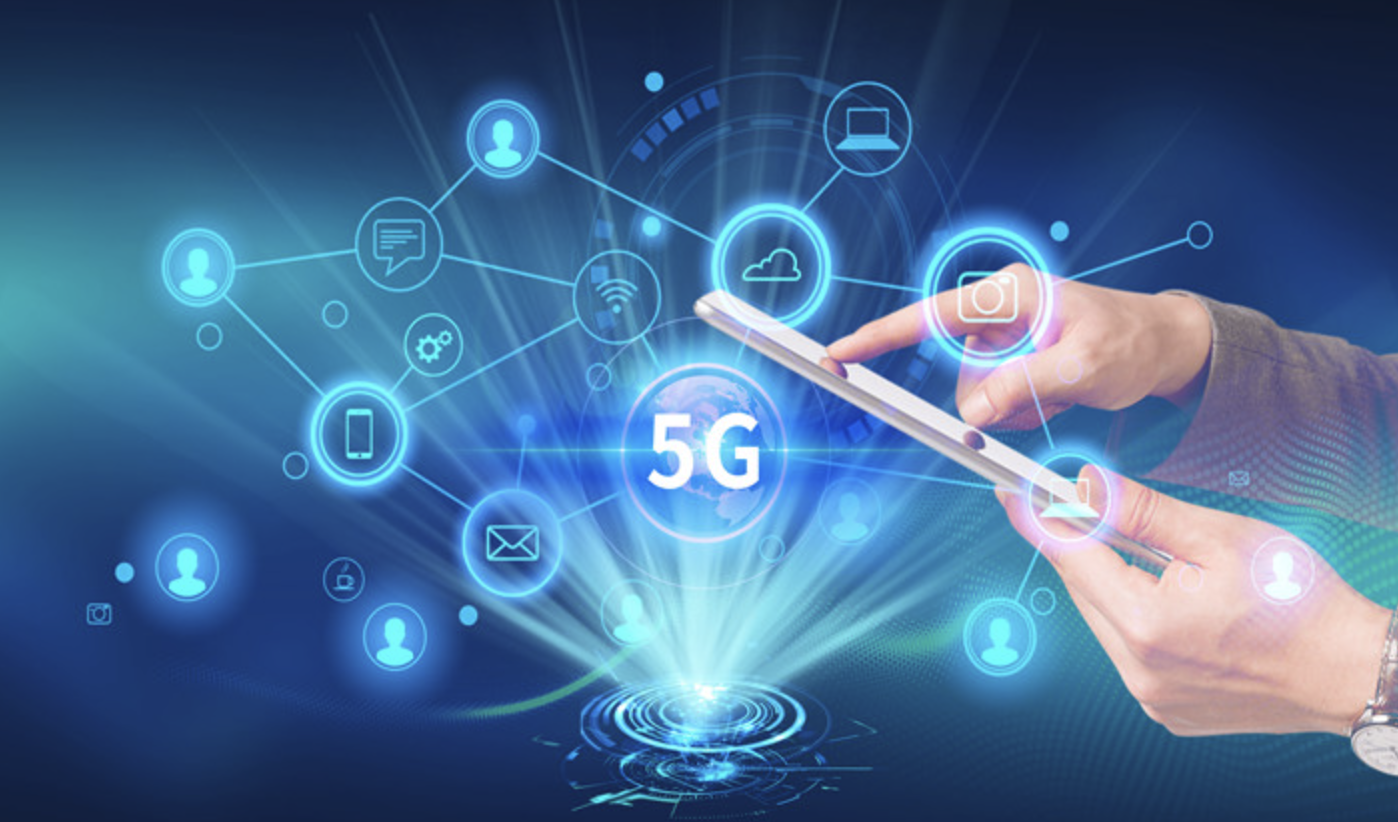
You have probably seen the term 5G on smartphones, mobile network advertisements, or Wi-Fi-related discussions. But what does 5G actually mean, and why is it considered such an important development in wireless technology?
In simple terms, 5G represents the latest, fifth generation of mobile network technology. It is designed to provide faster connections, lower latency, greater network capacity, and more reliable communication than previous generations such as 4G LTE.
However, 5G is about more than simply downloading movies faster. The technology is also being used to support connected cars, smart devices, industrial systems, augmented reality, remote services, and other applications that require fast and responsive wireless connections.
In this guide, you will learn what 5G technology is, how it works, what makes it different from 4G, its advantages and limitations, and where you may encounter it in everyday life.
What Is 5G Technology?
5G stands for fifth-generation mobile network technology.
It is the successor to 4G LTE and was developed to improve the performance of wireless communications. While 4G made activities such as HD video streaming, video calling, mobile gaming, and app-based services much more practical, 5G aims to support even more demanding applications.
The main goals of 5G include:
- Faster data speeds
- Lower latency
- Greater network capacity
- Better support for connected devices
- More reliable wireless connections
- Improved performance in crowded locations
One important thing to understand is that 5G is not a single technology or one specific speed. Different 5G networks can operate using different frequency ranges and technologies, so performance can vary considerably depending on your location, carrier, device, and network conditions.
How Does 5G Work?
To understand 5G, it helps to know how mobile networks communicate.
Your smartphone communicates wirelessly with a nearby cellular base station. That station connects your device to the wider mobile network and ultimately to internet services.
5G uses radio frequencies to transmit information between your device and the network.
One of the major differences is that 5G can use a wider range of frequencies than previous generations.
These frequencies are commonly discussed in three broad categories:
Low-Band 5G
Low-band frequencies travel relatively far and can cover large areas. They also tend to penetrate buildings better than higher frequencies.
However, their speeds may not be dramatically faster than some 4G connections.
Mid-Band 5G
Mid-band 5G offers a useful balance between coverage and speed.
It can provide substantially better performance than many 4G connections while covering more area than extremely high-frequency 5G.
For many networks, mid-band spectrum is an important part of delivering practical 5G performance.
High-Band 5G
High-band 5G, sometimes called millimeter-wave 5G, can provide extremely high speeds and very low latency under suitable conditions.
The trade-off is range. High-frequency signals generally do not travel as far and can be more easily affected by physical obstacles.
This is why a 5G icon on your phone does not necessarily mean you will always receive the maximum speeds associated with the technology.
What Makes 5G Different From 4G?
The easiest way to understand 5G is to compare it with 4G.
4G already provides fast mobile internet for activities such as browsing websites, watching videos, using social media, and making video calls.
5G takes these capabilities further by improving several aspects of network performance.
| Feature | 4G | 5G |
|---|---|---|
| Generation | Fourth generation | Fifth generation |
| Speed | Fast | Potentially much faster |
| Latency | Relatively low | Can be significantly lower |
| Network capacity | High | Designed for much higher capacity |
| Connected devices | Many | Designed to support very large numbers |
| New applications | Mobile internet | Advanced connected and real-time applications |
The exact difference depends on the network. A well-performing 4G connection can sometimes feel similar to a weaker 5G connection.
Therefore, simply seeing “5G” on your phone does not guarantee that every task will be dramatically faster.
What Are the Main Benefits of 5G?
5G offers several important advantages that go beyond faster downloads.
Faster Mobile Internet
One of the most noticeable benefits can be improved download and upload performance.
Depending on the network, you may be able to download large files more quickly, stream high-quality video with less buffering, and load online services faster.
The actual speed you experience depends on factors such as your carrier, signal strength, spectrum, device, network congestion, and location.
Lower Latency
Latency refers to the time it takes for data to travel between your device and a server.
Lower latency makes a connection feel more responsive.
This can be particularly useful for:
- Online gaming
- Video conferencing
- Augmented reality
- Virtual reality
- Cloud applications
- Remote-controlled systems
For example, a low-latency connection can make interactions with an online service feel more immediate.
Greater Network Capacity
Modern cities can have thousands or even millions of connected devices.
5G is designed to handle much greater numbers of connected devices efficiently.
This is particularly important as more objects become connected to the internet.
Better Support for IoT Devices
The Internet of Things, or IoT, refers to physical devices that connect to networks and exchange information.
Examples include:
- Smart home devices
- Sensors
- Connected vehicles
- Industrial equipment
- Smart city infrastructure
- Wearable devices
5G can help networks support large numbers of connected devices and applications.
Where Is 5G Used?
You may already be using 5G without realizing how many different applications the technology can support.
Smartphones
This is currently the most familiar use of 5G.
Compatible smartphones can connect to 5G networks for mobile browsing, streaming, gaming, video calls, downloads, and other online activities.
Smart Homes
5G can contribute to connected home ecosystems containing cameras, sensors, appliances, security systems, and other devices.
However, many smart home devices still rely heavily on Wi-Fi and other wireless technologies.
Connected Vehicles
5G may support communication between vehicles, infrastructure, and cloud services.
This could help enable applications involving traffic information, navigation, fleet management, and other connected transportation services.
Healthcare
Healthcare is another area where reliable, responsive connectivity could be useful.
Potential applications include connected medical equipment, remote monitoring, and communication between healthcare systems.
5G does not automatically make remote medical procedures possible or safe, but its networking capabilities can support certain advanced applications when combined with appropriate systems and safeguards.
Factories and Industry
Manufacturers are increasingly using connected sensors and automated equipment.
5G can provide wireless connectivity for industrial environments where large numbers of machines and sensors need to communicate.
Does 5G Mean You Need a New Phone?
If you want to connect directly to a 5G cellular network, you generally need a 5G-compatible device and access to a carrier’s 5G service.
A phone designed only for 4G cannot simply be upgraded to become a 5G phone through a software update.
If you are purchasing a new smartphone, check its supported 5G bands and make sure they are compatible with the network you plan to use.
You should also check whether 5G service is actually available in your area before paying extra for a 5G device or plan.
Does 5G Replace Wi-Fi?
No.
5G and Wi-Fi serve different purposes, although there can be some overlap.
5G is primarily a cellular network technology provided by mobile network operators. It is useful when you are away from your home or office and need mobile internet.
Wi-Fi typically connects devices to a local network using a wireless router or access point.
For example, you might use 5G while traveling and switch to Wi-Fi when you arrive home.
Some cellular services also use 5G technology for fixed wireless internet, where a 5G connection provides broadband service to a home or business.
What Are the Limitations of 5G?
Despite its advantages, 5G is not perfect.
Coverage Can Vary
5G availability differs between countries, cities, neighborhoods, and even individual locations.
You may receive a strong 5G signal outdoors but experience different performance inside a building.
Performance Isn’t Always the Same
Two people using 5G can experience completely different speeds.
Network congestion, spectrum, signal quality, device hardware, and distance from a cellular site can all affect performance.
Compatible Hardware Is Required
You need compatible hardware to access 5G cellular networks.
This may include a compatible smartphone, modem, router, or other device.
Higher-Frequency Signals Have Shorter Range
Some of the fastest 5G technologies use high-frequency spectrum.
These signals can have shorter effective ranges and may be more affected by walls and other obstacles.
Consequently, service providers might have to install extra equipment to ensure reliable network coverage everywhere.
Is 5G Worth It?
Whether 5G is worth using depends on your needs.
If your current 4G connection is reliable and fast enough for browsing, messaging, streaming, and everyday tasks, you may not notice a dramatic difference immediately.
On the other hand, 5G can be particularly useful if:
- You frequently download large files.
- You use demanding online services.
- You live in an area with strong 5G coverage.
- Your mobile carrier offers 5G as part of your plan.
- You want a phone that will remain compatible with newer networks.
You don’t necessarily need to upgrade just because 5G exists. Consider your actual usage, coverage, device, and plan before making a decision.
What Is the Future of 5G?
5G is expected to remain an important part of the global wireless ecosystem as networks continue to expand and evolve.
The technology can support a growing number of connected devices and more demanding applications.
Future developments may involve:
- More advanced industrial automation
- Connected transportation
- Smart infrastructure
- Immersive digital experiences
- Advanced IoT systems
- More flexible private networks
- New enterprise applications
At the same time, 5G will exist alongside Wi-Fi, fiber-optic broadband, satellite connectivity, and future generations of mobile technology.
Final Thoughts
5G technology is the fifth generation of mobile networking, designed to deliver faster connections, lower latency, greater capacity, and improved support for connected devices.
For everyday smartphone users, the most obvious benefit may be faster and more responsive mobile internet. However, the broader importance of 5G comes from its potential to connect huge numbers of devices and support applications that require reliable, responsive communication.
Still, 5G performance isn’t identical everywhere. Coverage, frequency bands, network congestion, device compatibility, and your carrier’s infrastructure all affect the experience.
The simplest way to think about 5G is this: it isn’t just a faster version of mobile internet. It is a network platform designed to support the increasingly connected world around you.
Frequently Asked Questions
1. What does 5G stand for?
5G stands for fifth generation. It is the latest major generation of cellular network technology following 4G.
2. How fast is 5G?
While 5G has the potential to offer much quicker internet speeds than 4G in optimal situations, the actual speed can vary and isn’t the same for all 5G connections. Performance depends on the network, spectrum, device, coverage, and congestion.
3. Is 5G better than 4G?
5G is designed to provide improvements in speed, latency, capacity, and support for connected devices. However, a strong 4G connection can sometimes perform similarly to a weaker 5G connection.
4. Do I need a 5G phone to use 5G?
Yes. To connect directly to a 5G cellular network, you generally need a device with compatible 5G hardware and a carrier that provides 5G service in your location.
5. Does 5G use more battery?
5G can affect battery consumption, although the impact varies by device, network conditions, signal strength, and how you use your phone. Modern smartphones are designed to manage these connections efficiently.
6. Does 5G replace Wi-Fi?
No. 5G is a cellular technology, while Wi-Fi is primarily used for local wireless networking. Both technologies will continue to be useful for different situations.