

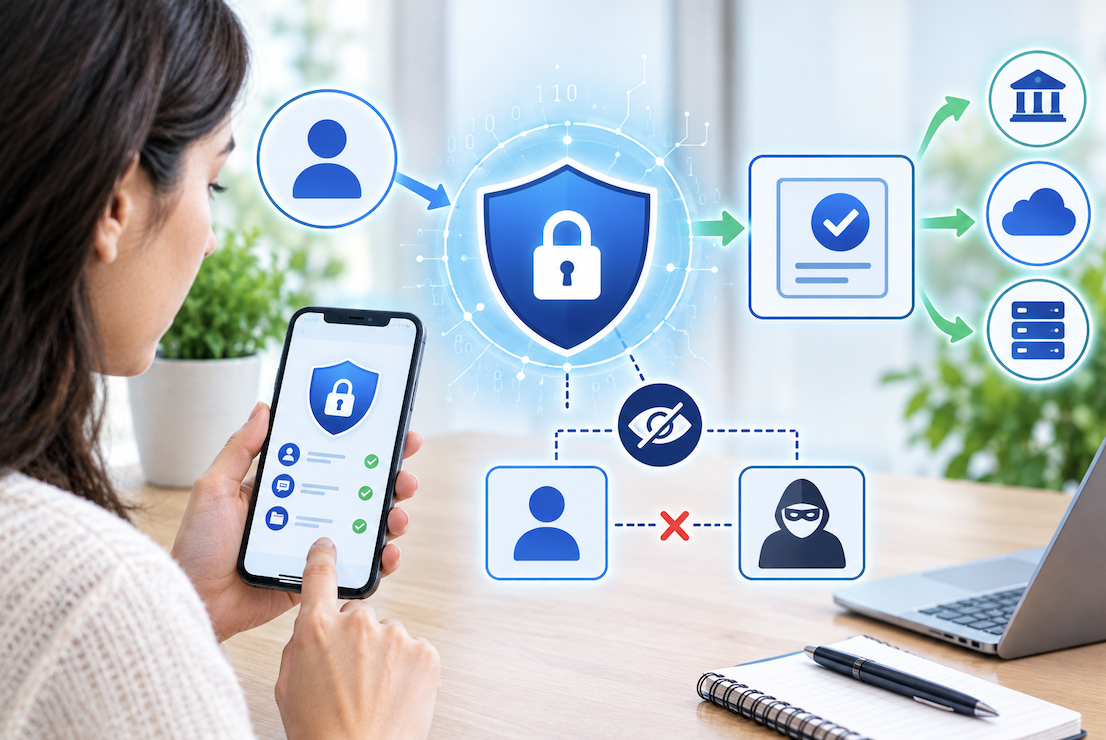
As concerns about data privacy have grown, more technology companies have started highlighting specific security features to reassure users about how their information is protected. Among these, zero-knowledge encryption has become an increasingly common term, particularly among password managers, cloud storage services, and privacy-focused messaging apps. Understanding what this term actually means helps clarify why it matters and what genuine protection it offers.
Despite sounding highly technical, the core concept behind zero-knowledge encryption is relatively straightforward once broken down into plain language, and it represents a meaningfully different approach to data privacy compared to more traditional encryption methods.
What Zero-Knowledge Encryption Actually Means
Zero-knowledge encryption refers to a system where a service provider has absolutely no ability to access or view a user’s unencrypted data, even though that data may be stored on the provider’s own servers. This differs from many traditional encryption approaches, where a company encrypts user data but retains the ability to decrypt it under certain circumstances, such as for legal compliance or account recovery purposes.
In a genuine zero-knowledge system, encryption and decryption happen entirely on the user’s own device, using keys that never leave that device or get shared with the service provider. This means that even if a company’s servers were breached, or if the company itself wanted to access user data for any reason, the encrypted information would remain completely unreadable without the user’s private key.
Key Characteristics of a Zero-Knowledge System
- Encryption and decryption occur locally on the user’s device
- Encryption keys never leave the user’s device or reach company servers
- The service provider cannot access readable user data under any circumstances
- Data breaches on the provider’s end would expose only unreadable, encrypted information
A Relatable Example: Choosing a Password Manager
Imagine someone comparing two password managers, both advertising encryption for stored passwords. On closer inspection of their technical documentation, one company explains that it can technically decrypt user data under certain circumstances, such as to assist with account recovery, while the other explains that encryption keys never leave the user’s device, meaning even their own support team cannot view stored passwords under any circumstances.
For someone specifically prioritizing maximum privacy protection, this distinction matters enormously, even though both products might otherwise look nearly identical on the surface, with similar interfaces, pricing, and general features. Understanding the specific language companies use to describe their encryption approach, rather than assuming all “encrypted” services offer identical protection, empowers users to make more genuinely informed choices about which services align with their personal privacy priorities.
Why This Approach Differs From Standard Encryption
Most people assume that if a company says their data is “encrypted,” it is automatically fully protected from everyone, including the company itself. In reality, many standard encryption implementations, sometimes called encryption at rest or in transit, protect data from external attackers while still allowing the company to access and decrypt that data when necessary for legitimate business or legal purposes.
Zero-knowledge encryption closes this gap entirely, removing the company’s ability to access user data altogether, not just protecting against external threats. This distinction matters significantly for users who want assurance that not even the service provider itself, whether through a rogue employee, a government request, or a company policy change, could access their private information under any circumstances whatsoever.
- Standard encryption often still allows provider access under certain conditions
- Zero-knowledge encryption removes provider access entirely, without exception
- This distinction matters for users concerned about government data requests
- It also protects against insider threats within the company providing the service
Common Applications of Zero-Knowledge Encryption
Password managers were among the earliest widespread adopters of zero-knowledge encryption, recognizing that storing users’ most sensitive credentials required an especially high level of trust that traditional encryption models could not fully provide. If a password manager company itself could access stored passwords, a single compromised employee or legal order could expose enormous amounts of sensitive information.
Cloud storage services and secure messaging apps have increasingly adopted similar principles, recognizing growing consumer demand for genuinely private communication and file storage options that do not rely entirely on trusting a company’s internal policies and security practices indefinitely.
- Password managers protecting login credentials across multiple accounts
- Secure messaging apps ensuring conversations remain private from providers
- Cloud storage services offering genuinely private file backup options
- Cryptocurrency wallets protecting private keys from third-party access
The Trade-Offs That Come With Zero-Knowledge Systems
While zero-knowledge encryption offers significant privacy benefits, it also introduces genuine trade-offs that users should understand. Since the service provider cannot access user data, they also cannot help recover that data if a user forgets their master password or loses their encryption key, a limitation that does not exist with traditional systems where providers retain some level of access.
This means users bear greater personal responsibility for securely storing and remembering their credentials, since there is often no backup recovery option beyond what the user has arranged for themselves in advance. For some users, this trade-off between maximum privacy and convenient recovery options represents a genuinely difficult decision depending on their specific risk tolerance and needs.
Important Trade-Offs to Consider
- Lost master passwords or keys typically cannot be recovered by the provider
- Users bear greater personal responsibility for secure credential storage
- Some convenience features may be limited compared to non-zero-knowledge systems
- Proper backup planning becomes especially important for critical data
How Zero-Knowledge Concepts Extend Beyond Simple Encryption
The broader concept behind zero-knowledge systems has applications extending beyond simply encrypting stored data. Zero-knowledge proofs, a related but distinct concept, allow one party to prove that a statement is true without revealing any of the underlying information behind that statement, a capability with growing relevance in areas like identity verification and blockchain technology.
For example, a zero-knowledge proof could theoretically allow someone to prove they are over a certain age without revealing their actual birthdate, or prove they have sufficient funds for a transaction without revealing their exact account balance. This broader family of privacy-preserving techniques continues expanding into new applications as both the underlying mathematics and practical implementations continue maturing.
- Zero-knowledge proofs allow verification without revealing underlying information
- Growing applications exist in identity verification and blockchain technology
- These techniques allow selective disclosure rather than all-or-nothing data sharing
- Continued research is expanding practical applications across various industries
Industries Increasingly Adopting Zero-Knowledge Approaches
Beyond consumer privacy apps, entire industries have begun exploring zero-knowledge techniques for handling sensitive data. Healthcare organizations, for example, have shown growing interest in these methods as a way to enable certain types of data analysis without exposing individual patient records to researchers or third parties conducting the analysis.
Financial services have similarly explored zero-knowledge approaches for verifying transactions or compliance requirements without exposing complete account details to every party involved in a given process. As regulatory scrutiny around data privacy continues intensifying across industries, this category of technology is likely to see continued investment and broader adoption in the years ahead.
- Healthcare organizations exploring privacy-preserving data analysis methods
- Financial services investigating zero-knowledge approaches for compliance verification
- Growing regulatory attention increasing interest in privacy-preserving technologies
- Broader industry adoption expected as implementations continue maturing
How to Verify a Service Actually Uses Zero-Knowledge Encryption
Not every company that mentions encryption is implementing genuine zero-knowledge architecture, and marketing language can sometimes overstate the actual privacy protections in place. Reputable providers typically publish detailed technical documentation explaining their specific encryption implementation, sometimes accompanied by independent security audits verifying these claims.
Looking for clear, specific technical explanations rather than vague marketing language is an important step for anyone genuinely concerned about verifying a service’s privacy claims. Independent third-party audits, when available, provide additional confidence that a company’s stated privacy architecture matches its actual technical implementation in practice.
- Look for detailed technical documentation explaining the encryption approach
- Check for independent third-party security audits verifying provider claims
- Be cautious of vague marketing language without specific technical backing
- Research whether the company has a history of transparent security practices
Conclusion: Balancing Privacy With Practical Everyday Use
For most people, choosing services with zero-knowledge encryption represents a reasonable middle ground between convenience and strong privacy protection, particularly for sensitive categories of data like passwords, financial information, or private communications. It does not require becoming a security expert, simply choosing reputable providers that have implemented these protections thoughtfully.
Understanding the basic trade-offs, particularly around account recovery, helps users make informed decisions about which services genuinely fit their personal risk tolerance and convenience needs, rather than assuming all encrypted services offer identical levels of protection regardless of their specific technical implementation.
Zero-knowledge encryption represents a meaningful step forward in how technology companies can offer genuine privacy protection, removing themselves entirely from the ability to access user data rather than simply promising responsible handling of that access. As privacy concerns continue growing among everyday users, this approach is likely to become an increasingly important differentiator among privacy-focused technology services.
Frequently Asked Questions
1. What happens if I forget my password with a zero-knowledge service?
In most genuine zero-knowledge systems, the provider cannot recover your password or data, making secure backup of your credentials extremely important before relying on such a service.
2. Is zero-knowledge encryption the same as end-to-end encryption?
They are related but not identical concepts. End-to-end encryption typically refers to securing data in transit between users, while zero-knowledge encryption specifically means the provider cannot access stored data at all.
3. Are zero-knowledge services harder to use than regular apps?
Most modern zero-knowledge services are designed to feel similar to standard apps, though certain recovery features may work differently due to the provider’s inability to access user data.
4. Can governments force companies to break zero-knowledge encryption?
Genuine zero-knowledge systems are designed so the provider technically cannot access the data even if legally compelled, though legal and technical landscapes continue evolving in this area.
5. Should I only use apps that offer zero-knowledge encryption?
For highly sensitive data like passwords or financial information, zero-knowledge encryption offers meaningful benefits, though it may not be necessary for every type of app or service you use.
6. Does zero-knowledge encryption slow down an app’s performance?
Modern implementations are generally optimized well enough that most users notice no meaningful performance difference during everyday use of the app or service.
7. Can businesses build zero-knowledge systems themselves, or is this only for large companies?
While implementation requires genuine cryptographic expertise, many established libraries and frameworks exist that help businesses of various sizes build these systems correctly.
8. Does zero-knowledge encryption protect data shared with other people?
This depends on the specific service, since sharing data with another user often requires that person to also hold the correct decryption key to access the shared information.
9. Are free apps ever likely to offer genuine zero-knowledge encryption?
Some free tiers do offer this protection, though businesses relying entirely on advertising revenue may have less incentive to implement it compared to subscription-based privacy services.