

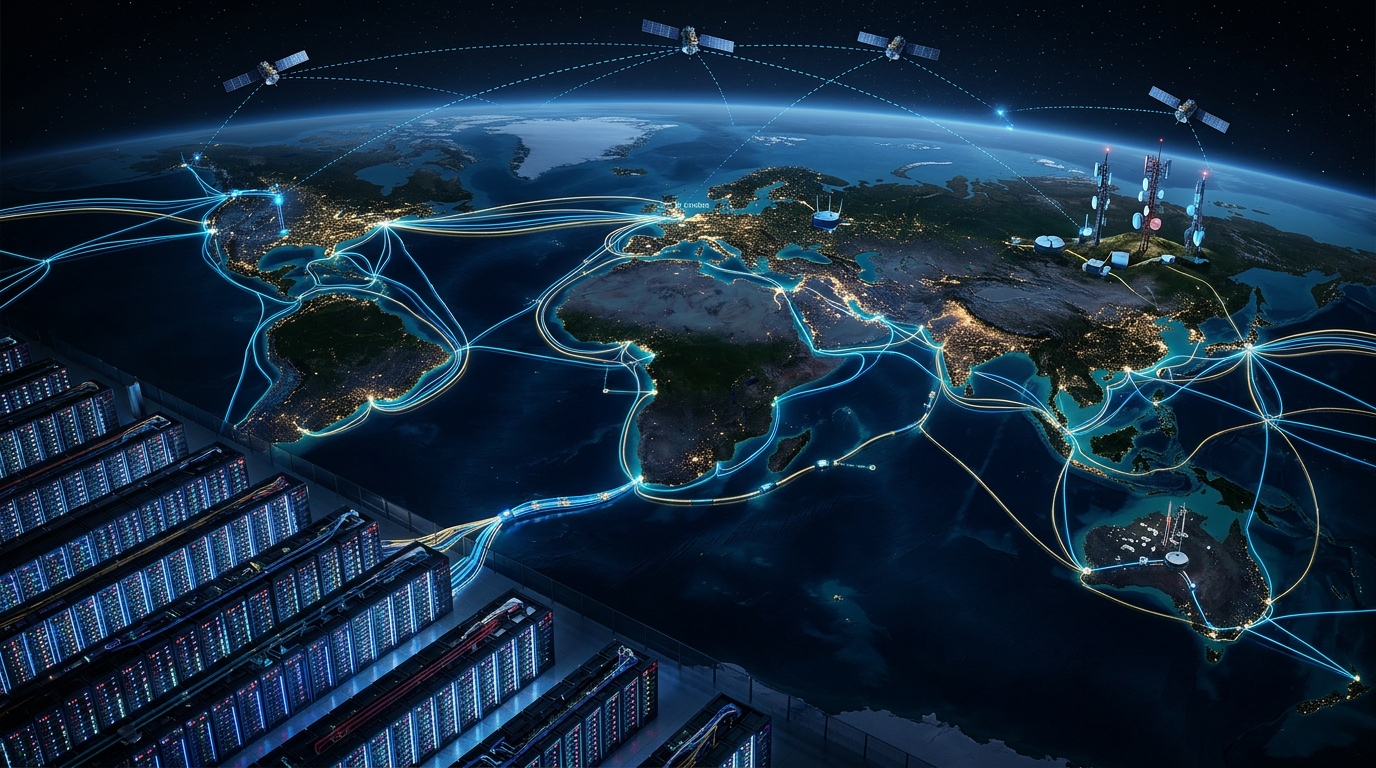
The internet feels invisible because we access it through wireless connections, screens, and cloud-based services. However, the internet is not a mysterious digital space floating somewhere above us. It is a massive physical infrastructure made of fiber-optic cables, data centers, routers, switches, servers, satellites, cellular networks, and countless other machines.
When we open a website, send a message, stream a movie, or upload a photo, information travels through real hardware. Bits of data move across cables, pass through networking equipment, reach computers in data centers, and return to our devices within seconds.
Understanding what the internet is physically made of helps us see how this global network actually works.
The Internet Is a Physical Network
At its simplest level, the internet is a network of interconnected computer networks. There is no single machine called “the internet.” Instead, millions of networks operated by companies, governments, universities, telecommunications providers, businesses, and individuals connect with one another.
Our home internet connection may begin with a modem or optical network terminal. From there, data travels through a local network and reaches an internet service provider. The ISP connects to larger regional and international networks, allowing our data to reach computers anywhere in the world.
This structure is possible because different networks agree on common communication standards and protocols.
The physical infrastructure underneath this system includes:
- Fiber-optic cables
- Copper cables
- Wi-Fi equipment
- Cellular towers
- Routers and switches
- Internet exchange points
- Data centers
- Servers
- Storage systems
- Power infrastructure
- Cooling systems
- Submarine cables
Together, these components form the physical foundation of the modern internet.
Fiber-Optic Cables Carry Huge Amounts of Internet Data
One of the most important physical components of the internet is fiber-optic cable.
Fiber-optic cables are made up of incredibly slender strands of glass or plastic material. Instead of sending information as electrical signals, they transmit data using pulses of light.
This makes fiber exceptionally useful for long-distance communication. A single fiber can carry enormous amounts of information, and multiple fibers can be bundled together inside larger cables.
When we visit a website hosted in another country, our request may travel through several fiber networks before reaching the destination server. The response then follows a network path back to our device.
Fiber networks are found underground, inside buildings, along roads, and beneath oceans.
Submarine Cables Connect Continents
A surprisingly large portion of international internet traffic travels through submarine fiber-optic cables laid across the world’s oceans.
These cables connect continents and provide high-capacity communication routes between major regions. They can stretch for thousands of kilometers across the seabed.
A submarine cable generally contains optical fibers surrounded by layers of protective materials. Depending on its location and design, the cable must withstand significant environmental pressures and potential physical damage.
Ships, fishing activity, earthquakes, and other events can sometimes damage submarine cables. When this happens, specialized cable-repair ships can locate and repair the affected section.
This infrastructure demonstrates an important reality: much of what we call the “online world” physically travels through cables under the ocean.
Data Centers Are the Physical Home of Online Services
When we use a search engine, social media platform, streaming service, online store, or cloud application, the information is usually processed by computers located in data centers.
A data center is a specialized facility containing large numbers of servers and networking systems.
Inside these facilities, we can find:
- Server racks
- Network switches
- Storage systems
- Backup equipment
- Power distribution systems
- Cooling infrastructure
- Security systems
- Fire suppression equipment
- Monitoring systems
The servers inside data centers run applications, process requests, store information, and deliver digital content to users.
For example, when we request a webpage, a server may process the request, retrieve information from a database, and send the necessary files back through the network.
Servers Store and Process Internet Information
A server is fundamentally a specialized computer that offers resources or services to other machines on the network.
Servers can perform many different jobs. Some host websites, while others manage databases, store files, process videos, authenticate users, or run applications.
Modern internet services rarely depend on one physical server. Instead, large platforms often distribute workloads across many servers and locations.
This approach provides greater capacity and resilience. If one machine becomes unavailable, other machines can continue handling requests.
The information we see online therefore exists on physical storage devices such as solid-state drives and hard disks. Even cloud data ultimately occupies physical hardware somewhere.
The Cloud Still Exists in the Real World
The phrase “cloud computing” can make digital services sound completely virtual. In reality, the cloud is simply a convenient way of describing computing resources that we access remotely.
When we save a file to cloud storage, that file is stored on physical storage hardware inside one or more data centers.
Cloud providers operate enormous collections of servers and storage systems. Their software makes these resources available dynamically, allowing customers to rent computing power, storage, databases, and other services without owning the underlying hardware.
The cloud therefore does not eliminate physical infrastructure. It hides much of that infrastructure from the user.
Routers Decide Where Internet Data Goes
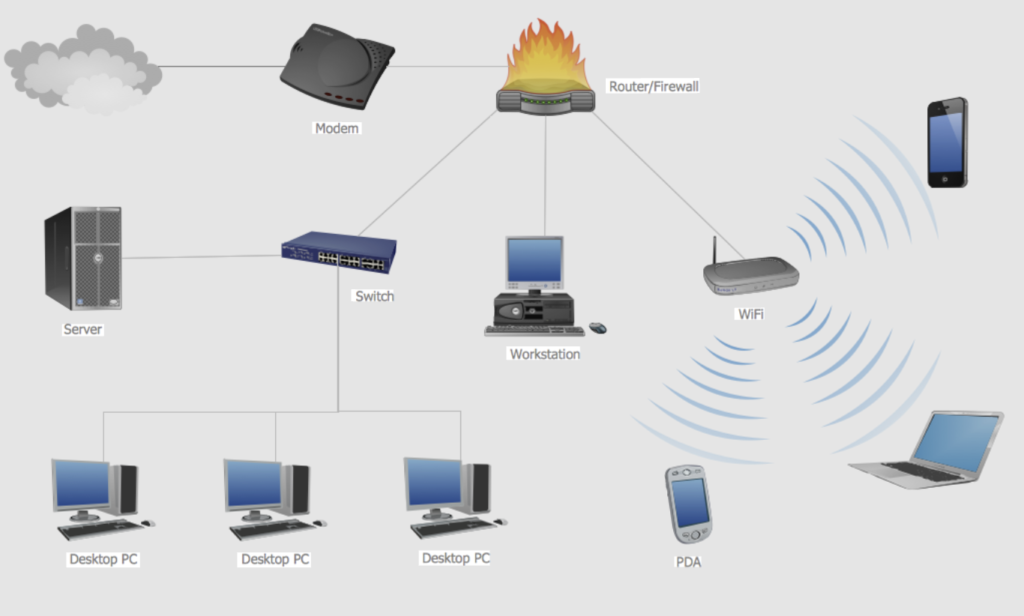
Data cannot simply travel randomly across the internet. Routers help determine where network traffic should go.
When we send or receive information, routers examine network information contained in packets and forward those packets toward their destinations.
Large internet networks use sophisticated routing systems to exchange information about available paths. If one route becomes unavailable, traffic may sometimes be redirected through another route.
This distributed architecture helps the internet continue operating even when individual connections or devices fail.
Internet Exchange Points Connect Networks
A crucial component of the internet’s backbone is the Internet Exchange Point, commonly known as an IXP.
An IXP refers to a physical site where various networks come together to directly exchange internet data with each other.
Instead of sending traffic through multiple intermediary networks, participating networks can often exchange data more directly. This can reduce unnecessary routing and improve efficiency.
IXPs are usually located in facilities containing high-performance networking equipment. They form important connection points within regional and national internet ecosystems.
Wi-Fi Represents the Final Step in the Data Transmission Process
Many people associate the internet with Wi-Fi, but Wi-Fi represents only one part of the overall system.
When you connect your smartphone or laptop to Wi-Fi, it wirelessly communicates with a router or access point nearby. The router then connects to the broader internet through another physical connection.
That connection may use fiber, cable, DSL, cellular infrastructure, or another technology.
Therefore, most of the internet journey can still involve physical cables even when our device itself is connected wirelessly.
Cellular Networks Connect Mobile Devices
Smartphones access the internet through cellular networks when Wi-Fi is unavailable.
These networks use cell towers, antennas, radio equipment, fiber connections, and core network infrastructure.
A phone communicates with a nearby cellular tower using radio waves. The tower then connects the traffic to the carrier’s wider network, which eventually provides access to other internet networks.
Modern cellular technologies allow large numbers of devices to communicate simultaneously while supporting increasingly high data speeds.
Satellites Can Provide Internet Connectivity
Satellites are another physical component of internet infrastructure, although they play a different role from terrestrial and submarine fiber networks.
Satellite internet can provide connectivity to areas where traditional wired infrastructure is difficult or expensive to deploy.
A user terminal communicates with a satellite, which connects the traffic to a ground station or another part of the satellite network.
Modern low-Earth-orbit satellite systems use large constellations of satellites to provide coverage across broad geographic areas.
What Happens When We Open a Website?
When we type a website address into a browser, several physical and digital processes occur.
First, our device needs to determine where the requested service is located. Networking systems then help establish a path toward the destination.
The request travels through our local network and internet service provider. It may pass through routers and multiple networks before reaching the appropriate server or nearby infrastructure.
The server or destination system then processes your request and sends the relevant data back to your device.
That response may contain HTML, images, JavaScript, fonts, videos, and other resources. These pieces travel across the network and are assembled by our browser into the webpage we see.
Remarkably, all of these steps occur in mere fractions of a second, making the process seamless.
Where Does the Internet Physically Exist?
The internet does not exist in one physical location.
It exists everywhere the interconnected infrastructure exists.
It occupies data centers, offices, homes, telecommunications facilities, underground conduits, roadsides, cellular towers, exchange points, and ocean floors.
Some components are highly visible, such as cell towers and server buildings. Others are hidden underground or beneath the sea.
This distributed physical structure is one reason the internet can span the entire planet without having a single central location.
The Internet Depends on Electricity
Every major part of the internet requires energy.
Servers need electricity to operate. Routers need power. Data centers require electricity for computing and cooling. Cellular towers need power. Cable landing stations and network exchanges also depend on electrical systems.
Large data centers often use backup generators, batteries, and multiple power sources to maintain operations during disruptions.
As internet usage increases, energy efficiency has become increasingly important for network operators and data center designers.
The Internet Is Physical and Digital at the Same Time
The internet is best understood as a combination of physical infrastructure and digital protocols.
The physical layer includes cables, servers, routers, antennas, satellites, storage devices, buildings, and power systems.
The digital layer includes protocols, software, addresses, encryption, applications, databases, and data.
Neither side can function independently. Software needs hardware to run, while hardware needs software and networking protocols to perform useful communication.
What appears to us as a simple tap on a screen can therefore involve a remarkably complex global system.
Conclusion
The internet is not an invisible place floating somewhere in cyberspace. It is a vast physical system built from fiber-optic cables, submarine networks, data centers, servers, routers, cellular infrastructure, satellites, storage devices, and electrical systems.
When we send a message or open a website, information physically travels through this infrastructure. Some of the journey may happen wirelessly, but much of the world’s internet traffic ultimately depends on physical cables and specialized facilities.
The next time we stream a video or load a webpage in seconds, it is worth remembering that behind the simple interface is a global network of machines, cables, buildings, and connections working together.