

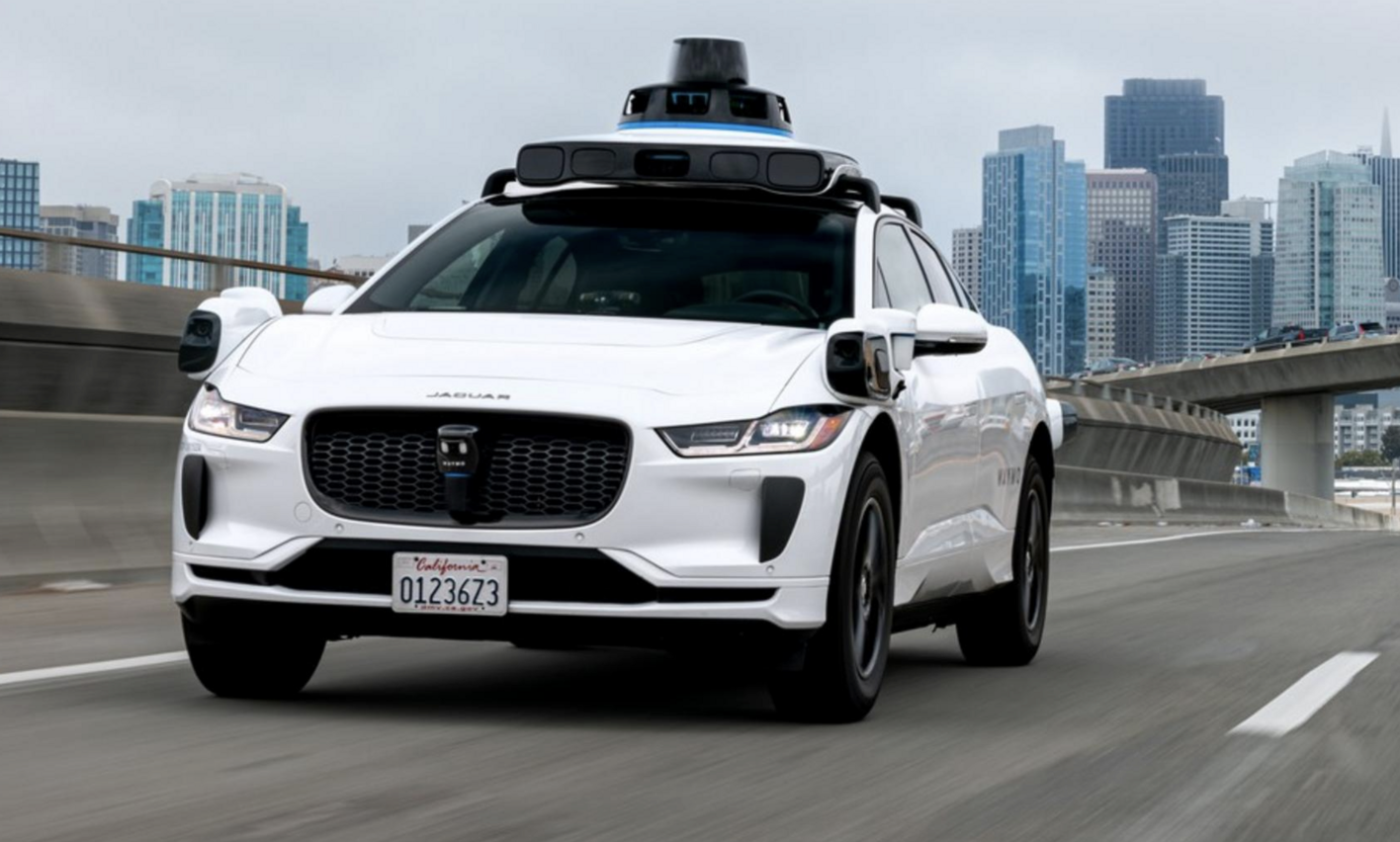
California regulators have told Waymo to keep its driverless cars off the state’s freeways, and the company has paused freeway rides in every city it serves. For anyone who rides robotaxis, or who shares the road with them, the decision changes which trips are possible and raises fair questions about how these vehicles handle messy real-world situations.
In this article, we will explore what the California Department of Motor Vehicles said, what triggered the order, what Waymo says it is doing, and how riders can plan around the pause.
The Order Announced on November 11
On November 11, 2026, the California Department of Motor Vehicles barred Waymo from operating or testing driverless cars on freeways in the state. According to Fortune, the department went further than a routine restriction and described the vehicles as an “imminent hazard” on the freeway. That phrase matters, because it signals that the agency saw an ongoing risk rather than a paperwork problem or a one-time glitch.
What the Restriction Covers
The order applies to driverless operation, meaning cars with no human driver on board who can take over. It covers both passenger service and testing, so Waymo cannot simply keep running empty test cars on highways while it sorts things out. The restriction is specific to freeways. Surface streets, the ordinary city roads with traffic lights and crosswalks, are not part of it, and Waymo has said its service there continues.
What Waymo Has to Show
According to Fortune, the restriction stays in place until Waymo can demonstrate that its vehicles can safely detect and respond to construction zones, emergency vehicles and other roadway hazards. Notice what is missing from that description: a deadline. The sources we reviewed do not give any date by which Waymo must make its case, and they do not say how long the department will take to review whatever Waymo submits. In plain terms, the clock is open-ended, and the length of the pause depends on how convincing the evidence turns out to be.
Who the Regulator Is
The California DMV is the state agency that issues permits for testing and deploying autonomous vehicles on public roads. As general knowledge, which may have changed since this was written, California splits oversight between the DMV, which governs the vehicles and their permits to operate on public roads, and the California Public Utilities Commission, which governs companies that charge passengers for rides. Fortune notes that the DMV’s statement does not mention the Public Utilities Commission, so readers should not assume that any action on the passenger-service side has been taken.
Incidents That Led to the Restriction
The department pointed to a pattern rather than a single event. Reporting describes several separate kinds of trouble, all involving freeway work zones or emergency responders, which are among the hardest situations for any automated driving system.
Construction Closures
According to the reporting, several Waymo vehicles entered an active construction closure. A construction closure is a stretch of road that workers have blocked off, often with cones, barrels, signs and sometimes a lane shifted into a different path. Humans read these cues using judgment and sometimes the hand signals of a flagger. A software system has to recognize that the usual lane markings can no longer be trusted. 24/7 Wall St. puts the number at three vehicles that drove into construction areas, though that figure comes from a single outlet and the dates of the incidents were not given.
Highway Patrol Traffic Breaks
Another reported episode involved a Waymo attempting to go around California Highway Patrol cars that were running a traffic break. A traffic break is a technique in which patrol cars slow or stop traffic across lanes, often to clear debris or protect a crash scene. Drivers are expected to stay behind the patrol cars until officers release them. A vehicle that tries to drive around the line is, in effect, ignoring a signal that every licensed driver is taught to obey.
Repeat Entries After May
The third strand may be the most important to regulators. The DMV said Waymo vehicles kept entering active construction zones even after the company took corrective actions following similar incidents in May. A first mistake can be treated as a learning event. A repeat after a fix suggests that the fix did not fully solve the problem, and that is the kind of detail that moves an agency from a request to an order.
Waymo’s Response and the Rides Still Running
Waymo has not disputed that it paused freeway service. According to the reporting, the company stopped driverless freeway rides in all of its markets, including Phoenix, Miami and Austin. Because freeway trips are only a slice of the service, the pause reaches well beyond California, even though the order itself applies only inside the state.
What Continues
Waymo says it is still running freeway testing with trained specialists sitting behind the wheel, which is different from the driverless operation the DMV barred. The company also says it is working with officials to return to freeways. And surface-street service goes on, which Waymo says provides more than 500,000 rides each week. That is the company’s own figure, and the sources we reviewed do not break it down by city.
What Riders May Notice
In practice, a rider may find that a trip that used to include a freeway leg now takes a slower route through city streets, or that an airport or intercity trip is no longer offered as it was. Whether a given trip is affected will depend on the city and the pickup and drop-off points. The company’s app is the only reliable place to see what is available at a given moment.
What the Company Has Not Said
The reporting does not include a target date for returning to freeways, and it does not describe what changes Waymo plans to make to its software. Saying that it is working with officials is a statement of intent, not a schedule. Riders should therefore treat any return date they see online as unconfirmed until Waymo or the DMV announces it directly.
Reading the Safety Numbers with Care
Waymo publishes a safety comparison, and the company will likely point to it as this dispute continues. Through June 2026, Waymo reports more than 270 million fully autonomous miles. Against statistically comparable human drivers, it reports 82 percent fewer injury-causing crashes, 95 percent fewer crashes causing serious injuries or worse, and 93 percent fewer injury-causing crashes involving pedestrians. These are Waymo’s own figures and we have not verified them independently.
Why Company Data Is Not the Whole Story
A company comparing itself with human drivers is making a real attempt at measurement, and a large number of miles gives the data weight. Still, a figure from the operator itself is different from a figure produced by an outside reviewer. The same data can look different depending on which road types are counted, how a crash is defined, and which human drivers are chosen as the baseline. As general knowledge, independent researchers and regulators often ask for the underlying data so that they can test those choices.
Why Averages Can Coexist with Specific Failures
The DMV’s concern is narrow. It is about how the cars behave in a particular set of conditions, not about whether Waymo’s overall crash rate is lower than a human average. A system can be safer than people in most driving and still fail repeatedly in one situation, such as a work zone. Both statements can be true at once, and a regulator can act on the second without disputing the first. The table below lays out how to weigh the two kinds of evidence.
The following table is a simple guide to what each type of evidence can and cannot tell you.
| Type of Evidence | What It Can Show | What It Cannot Show |
| Company crash comparison | Overall trends across many miles | How rare events are handled in edge cases |
| Regulator order | A specific hazard the agency has identified | The size of the risk or how common it is |
| Incident reports | Concrete examples of a failure | Whether the examples are typical |
| Independent review | Checks on definitions and baselines | Results for conditions the review skipped |
A Short Timeline of Freeway Service
The history helps explain why this order landed the way it did. Waymo began offering freeway trips to passengers in California in November 2025. According to Fortune, its freeway service was paused nationwide after the incidents in May, and it began to resume gradually starting in late July. Then came the DMV order on November 11, 2026, followed by a new pause in every market.
The next table puts those points in order, using the dates reported by Fortune and 24/7 Wall St.
| When | What Happened | Reported By |
| November 2025 | Waymo begins freeway trips for passengers in California | Fortune |
| May 2026 | Incidents lead to a nationwide freeway pause | Fortune |
| Late July 2026 | Freeway service begins to resume gradually | Fortune |
| November 11, 2026 | DMV bars driverless freeway operation and testing | Fortune |
| Mid-November 2026 | Waymo pauses driverless freeway rides in all markets | Fortune |
Seen this way, the freeway service has now been interrupted twice within a single year. The first pause ended with a gradual return. The second comes with a regulator’s formal restriction attached, which is a firmer kind of stop, since resuming now requires the agency to be satisfied and not only the company.
Why a Formal Order Differs from a Voluntary Pause
When a company pauses a service on its own, it keeps control of the timing. It decides when the fix is ready and when to switch the service back on. A regulator’s restriction changes that balance, because permission to resume has to come from the agency. The company can still make its case and the agency can still agree, but the process now has a second decision maker, and that usually means more documentation and more waiting than a quiet software update would require. This is general knowledge about how permit-based oversight tends to work, and the specifics in California may differ.
Work Zones and Emergency Scenes Test Automated Driving
This section is general knowledge about how driverless systems work, not reporting on Waymo’s internal design, and details vary by company and may have changed. It is meant to explain why the situations named by the DMV are hard.
How Driverless Cars Usually Decide Where to Go
Most robotaxis combine a detailed stored map with live sensors such as cameras, radar and lidar, which is a laser-based sensor that measures distance. The software compares what it sees with what it expects, then plans a path. On a normal freeway that comparison is easy, because lanes are painted clearly, signs are standard and traffic moves predictably. The system is confident about where the road is and where other vehicles will go.
Why Construction Zones Break the Pattern
A work zone is a place where the map is wrong on purpose. A lane may be closed, shifted sideways or merged into a barrier, and the old paint may still be visible next to the new cones. Signs may be handwritten, temporary or partly blocked, and a worker may wave traffic through against the usual rules. A human driver reads the scene as a whole and slows down. Software has to classify each cone and sign correctly, decide that the stored map no longer applies, and then choose a safe behavior, often within seconds at highway speed. Because every work zone looks a little different, there is no short list of cases to memorize.
Why Emergency Vehicles Add Another Layer
Emergency scenes are similar in that the rules change on the spot. Flashing lights, a line of patrol cars, an officer waving a hand and a blocked lane all mean something specific, and the correct response is often to stop and wait rather than to find a clever path around. A system that is tuned to keep moving and make progress needs a firm rule that a patrol line outranks the route plan. That is why the report of a Waymo trying to go around highway patrol cars concerned the regulator so much.
What Proving Readiness Might Look Like
The DMV’s condition is that Waymo show its vehicles can detect and respond to these hazards. The sources we reviewed do not say what evidence the agency will accept. As general knowledge, companies in this position usually offer some mix of software changes, simulation of many work-zone scenarios, supervised road testing with a safety driver and a summary of results for the regulator. Whether that approach applies here is not stated, so treat it as an illustration of the usual process and not a prediction.
Steps for Riders Planning a Trip
You do not need to change how you use Waymo or other robotaxis, but a few habits will save frustration while the freeway pause lasts. The steps below are general information, not safety or legal advice, and the company’s own app and the official notices are the final word.
Step 1. Open the app before you commit to a time-sensitive trip. Freeway rides may be unavailable, so check the route, the estimated arrival time and the price shown for your specific pickup and destination.
Step 2. Compare the surface-street route with your deadline. If a trip that once used a freeway now takes longer, add buffer time. For flights, appointments and other fixed commitments, consider a backup option such as a conventional taxi, a rideshare with a human driver, or transit.
Step 3. Treat the pause as a change in the menu rather than a warning about every ride. Surface-street service continues, and the order is aimed at one category of road and one set of hazards. If you are comfortable with city rides, nothing in the reporting we reviewed says you should stop taking them.
Step 4. Read safety claims with the questions from the table above in mind. When a company or a critic quotes a number, ask who produced it, what comparison group was used and whether anyone outside the company has checked it.
Step 5. Follow official updates, not rumors. The DMV, Waymo and established news outlets will be the places where a lifting of the restriction is announced. Until then, assume freeway rides are off the table.
If you want a quick way to decide what to do, the table below matches common situations to a sensible response. It is general information, not a rule from Waymo or the DMV.
| Your Situation | Reasonable Response |
| Casual city trip with no deadline | Book as usual and accept a surface-street route |
| Trip that used to rely on a freeway | Check the app route and add buffer time |
| Flight, medical appointment or other fixed deadline | Keep a human-driven or transit backup ready |
| Uneasy about robotaxis in general | Choose another mode; nothing here requires you to ride |
| Curious about the dispute | Follow official updates and compare company and independent data |
Remember that the app may show different options at different times of day, so a route that is unavailable now may return later, and the reverse is also possible.
For People Who Share the Road
Most readers will never ride a robotaxi, but many drive near them. The general advice in work zones and near emergency scenes is the same no matter who or what is driving: slow down early, follow the posted signs and the instructions of officers and flaggers, and leave extra room. If you see a driverless vehicle behaving oddly, such as stopping in a lane or heading toward a closed area, keep your distance and report it through the operator’s channels or to local authorities if there is danger.
Final Thoughts: What We Do Not Know Yet
The sources we reviewed leave several gaps, and it is worth stating them plainly so that nobody fills them with guesses.
First, there is no deadline. We do not know how long the restriction will last, what evidence Waymo will submit, or how the DMV will judge it. Second, the number of incidents is thin. 24/7 Wall St. says three vehicles drove into construction areas, but that is a single figure from a single outlet, and the dates of those incidents were not provided. Fortune uses the wider phrase of several vehicles, so the two reports are not in direct conflict but they are not precise either.
Third, the reporting does not say whether anyone was hurt, whether any fines were imposed, or whether any court action is under way. It also does not give the size of Waymo’s fleet, so we cannot say what share of vehicles or trips is affected. Fourth, the relationship between the DMV order and the Public Utilities Commission is unclear. Fortune says the DMV’s statement does not mention that commission, and 24/7 Wall St. does not address it, so we cannot report any action on that side.
Fifth, there is a separate federal matter. According to 24/7 Wall St., citing the Wall Street Journal, the National Highway Traffic Safety Administration is investigating whether Waymo vehicles adequately detect stopped school buses. The outcome was not stated, and it is a different question from the freeway order, so the two should not be merged in your mind. Finally, the safety statistics are the company’s own and have not been independently verified here.
What to Ignore
Be cautious about social posts that claim to know how long the pause will last, that attach exact incident counts to dates, or that say the order proves robotaxis are either safe or unsafe overall. None of those claims is supported by the reporting we reviewed. Equally, a bold claim that the pause is a mere formality is not supported either, given that the regulator used the words imminent hazard.
What the Order Means Beyond California
The order is a California action, and the sources we reviewed do not describe any matching action in Arizona, Florida or Texas. Waymo’s pause in those markets was the company’s own choice, according to the reporting. Rules for driverless vehicles differ from state to state and country to country, and in many places the oversight comes from state or local governments rather than a national agency, so readers outside the United States should not assume a similar restriction exists where they live.
At the federal level, the National Highway Traffic Safety Administration investigates vehicle defects and safety patterns, which is why the school bus inquiry mentioned above sits in a separate track from the state order.
Why This Matters for the Wider Robotaxi Industry
Other companies that build driverless cars face the same work-zone and emergency-scene challenges, so the order will likely be read closely across the industry. We have no reporting on how other operators are affected, and this article does not speculate about them. What the episode does show is that regulators can and will restrict a specific kind of road while leaving the rest of a service intact, which gives riders a more precise picture than a simple choice between safe and unsafe.
You may be curious about what Tesla’s Texas robotaxi registry showing 1,204 vehicles does and doesn’t tell us. Read more: https://techgili.com/teslas-texas-robotaxi-registry-hits-1204-vehicles-what-the-numbers-do-and-do-not-show/
Frequently Asked Questions
Can Waymo Cars Still Drive in California?
Yes, on surface streets. The DMV order bars driverless operation and testing on freeways, and Waymo says its city-street service continues with more than 500,000 rides each week. Rides that depend on a freeway may be unavailable or rerouted.
How Long Will the Waymo Freeway Ban Last?
No one has said. According to Fortune, the restriction remains until Waymo shows that its vehicles can safely detect and respond to construction zones, emergency vehicles and other roadway hazards, but no deadline was given. The timeline depends on that showing and on the DMV’s review.
Is Waymo Still Running Freeway Rides in Phoenix, Miami and Austin?
Reporting says Waymo paused driverless freeway rides in all of its markets, and those cities were named. The company says it is still testing on freeways with specialists behind the wheel and is working with officials to return. Check the app for your city, since availability can change from day to day while the situation develops.
Does the DMV Order Mean Waymo Is Unsafe?
Not by itself, and the order does not claim that. It targets a specific set of conditions, namely construction zones, emergency vehicles and other roadway hazards on freeways. Waymo reports strong overall safety figures, but those are its own comparisons, so they are best read alongside independent review and regulators’ findings.
What Should I Do if My Waymo Trip Normally Uses the Freeway?
Open the app and look at the route and arrival time before you book. If the surface-street route is too slow, build in extra time or choose another way to travel. For critical trips, keep a backup option ready, such as a taxi or a ride from a friend, so a rerouted robotaxi does not make you late.