

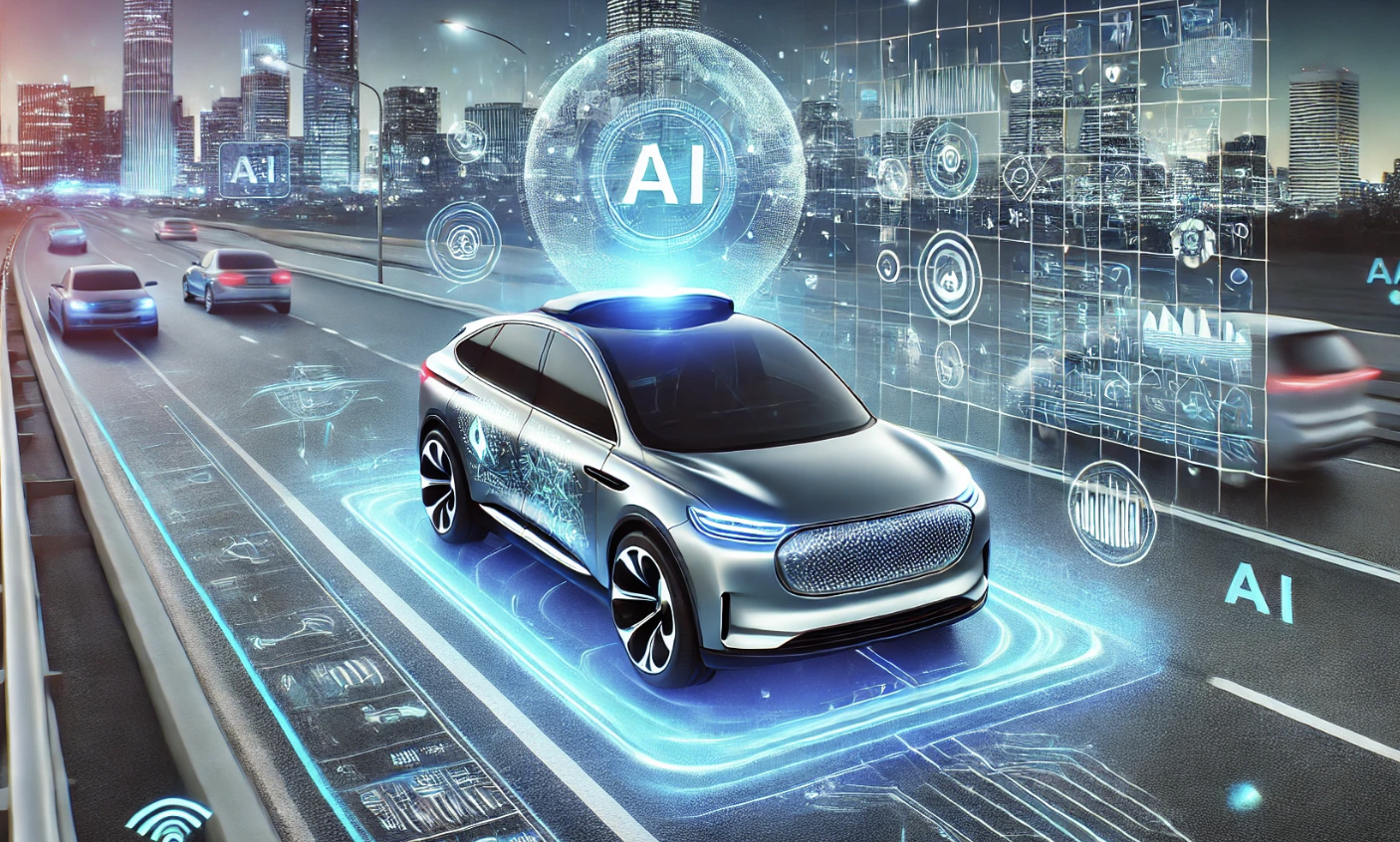
The world is rapidly moving toward a transportation revolution—one led by autonomous vehicles and AI-powered self-driving cars. These driverless vehicles use advanced sensors, cameras, and algorithms to navigate roads, detect objects, and make split-second decisions without human input.
Once a sci-fi dream, self-driving technology is now shaping the future of transportation, transforming how we travel, work, and interact with our cities. According to Allied Market Research, the global autonomous vehicle market is projected to reach $2.3 trillion by 2030, growing at an astounding rate.
In this guide, you’ll learn how autonomous cars work, their benefits for safety and sustainability, the challenges they face, and how AI is accelerating innovation across industries worldwide.
What Are Autonomous Vehicles?
An autonomous vehicle is a car that can sense its environment and operate without human involvement. While you may still see drivers ready to take control, true autonomy means the system can handle all driving tasks independently.
Automated vs. Autonomous
- Automated cars can assist drivers (like cruise control or parking assist).
- Autonomous cars, on the other hand, make decisions entirely on their own using AI.
The Society of Automotive Engineers (SAE) defines six levels of automation, from Level 0 (no automation) to Level 5 (fully driverless).
For instance:
- Level 2: Tesla’s Autopilot can steer and accelerate under driver supervision.
- Level 4: Waymo’s robotaxis in Phoenix operate without human drivers in limited areas.
Real-Life Examples
Companies like Waymo, Tesla, and Mercedes-Benz are testing fully autonomous systems in cities across the U.S. and Europe. The future is here—it’s just not evenly distributed yet.
How AI Powers Self-Driving Cars
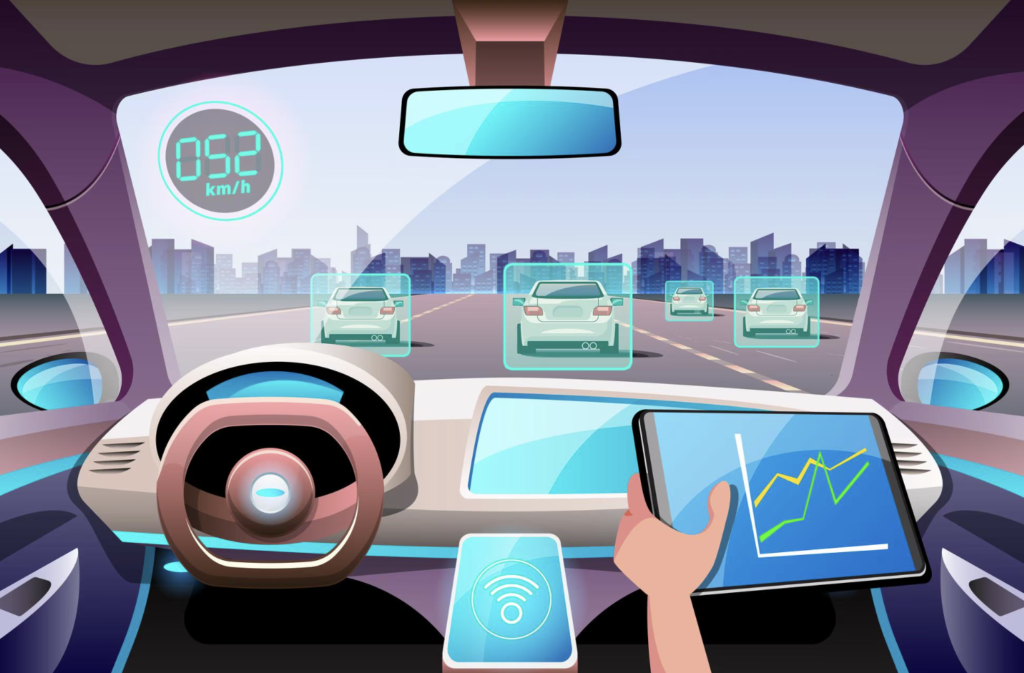
Artificial Intelligence sits at the heart of every driverless vehicle. It allows cars to see, think, and act much like a human—but often faster and more accurately.
AI Techniques Used
- Machine Learning and Deep Learning help the car improve its driving behavior over time.
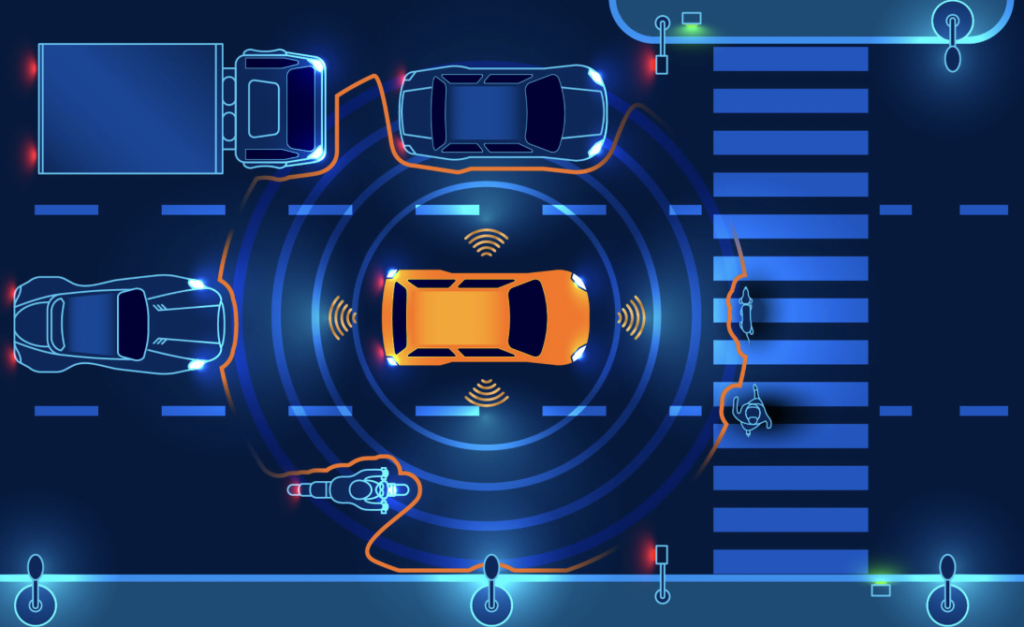
- LiDAR, radar, ultrasonic sensors, and cameras map real-world surroundings in 360°.
- GPS and cloud connectivity provide navigation precision.
- Edge AI enables real-time data analysis for on-the-go decision-making.
These systems work in sync to interpret traffic lights, pedestrians, road signs, and other vehicles. When milliseconds matter, AI reacts instantly, reducing the risk of human error.
Problem Solving Through AI
AI-driven perception systems detect obstacles, pedestrians, or sudden hazards long before a human driver might notice them. By combining millions of data points per second, cars can avoid collisions, reroute in traffic, and even predict risky driving behaviors nearby.
Major Benefits of Autonomous Vehicles
Self-driving cars promise groundbreaking benefits that go far beyond convenience.
Improved Road Safety
Nearly 1.35 million people die in road accidents annually (WHO, 2023). Autonomous vehicles, free from distractions, fatigue, or intoxication, could drastically cut that number.
Reduced Traffic and Congestion
AI-powered traffic coordination and vehicle-to-vehicle communication can streamline flow, minimizing bottlenecks in urban areas.
Energy Efficiency and Fuel Savings
Smart driving minimizes harsh braking or acceleration, improving fuel and battery efficiency by up to 20%, according to McKinsey reports.
Greater Mobility Access
For the elderly, the disabled, and the visually impaired, self-driving cars offer newfound independence and mobility—a powerful social transformation.
Environmental Impact of Autonomous Vehicles
Autonomous vehicles aren’t just about convenience—they play a vital role in green transportation.
- Lower Emissions: Efficient driving patterns reduce carbon output.
- Electric Integration: Most autonomous systems are built on electric platforms, contributing to a cleaner environment.
- Sustainable Smart Cities: Future cities will feature shared autonomous fleets, dramatically reducing the need for private car ownership.
According to the International Transport Forum, shared self-driving EV fleets could cut urban CO₂ emissions by up to 60%.
Biggest Challenges Facing Self-Driving Cars
While the promise is huge, the road ahead is complex and full of obstacles.
Technical and Financial Hurdles
Developing a reliable self-driving system costs billions. High-end sensors like LiDAR remain expensive for mass production.
Cybersecurity and Software Failures
Autonomous vehicles depend heavily on software updates and connected networks, exposing them to potential cyberattacks. Companies like NVIDIA and IBM are developing AI-driven security layers to counter these threats.
Infrastructure and Weather
Uneven roads, poor markings, and severe weather challenge sensor accuracy—factors that slow large-scale adoption.
Ethical Dilemmas
AI faces tough moral choices: in unavoidable accidents, whom should the car protect first? Such ethical questions are actively debated in research and policy circles.
Legal and Safety Issues
Governments worldwide are drafting regulations to manage liability, safety, and public trust.
- Regulations: The U.S., Japan, and Germany have legalized limited self-driving operations under strict conditions.
- Insurance and Liability: If a robotaxi hits another car, who pays—the owner, manufacturer, or software developer?
- Data Privacy: Connected vehicles collect massive amounts of driving data, creating new cybersecurity responsibilities.
Building public trust through transparency and safety certifications is key to broader acceptance.
The Role of AI in Future Transportation
AI is redefining transportation systems beyond cars.
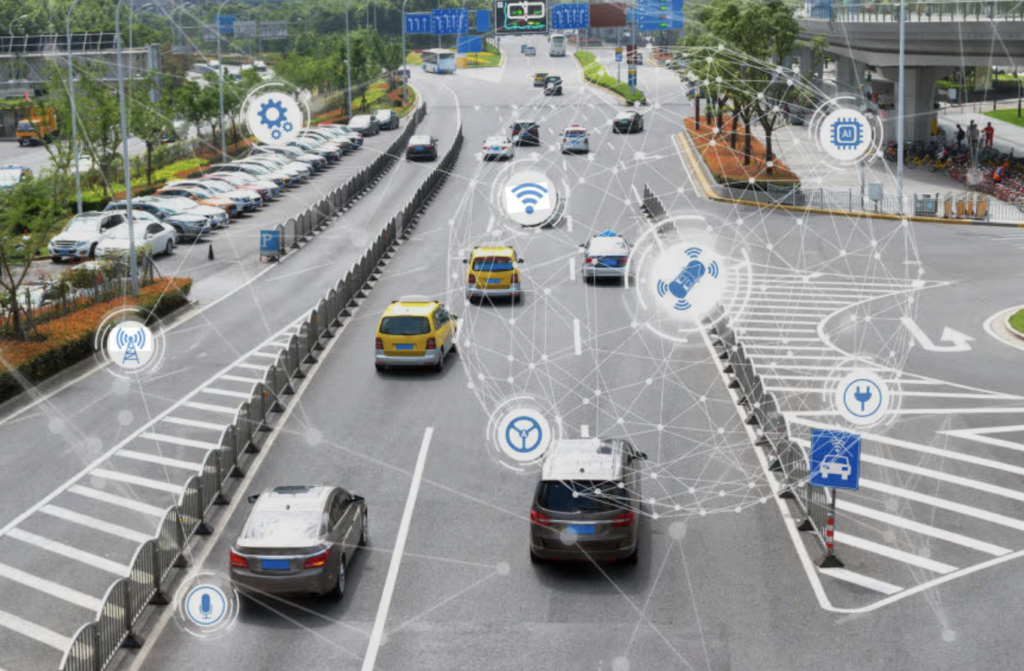
- Smart Traffic Management: Cities like Singapore and Seoul are using AI to coordinate traffic lights dynamically.
- Vehicle-to-Vehicle (V2V) Communication: Cars exchange data to prevent collisions and optimize flow.
- Autonomous Public Transit: AI-driven shuttles and buses are already being tested in Europe and China.
- Connected Smart Cities: AI will integrate mobility with energy grids, parking, and emergency systems.
Future Trends in Autonomous Vehicles
The next 10–20 years will see remarkable transformations.
- Fully Driverless Cars: Level 5 autonomy is moving from prototype to public trials.
- Robotaxis and Delivery Bots: Companies like Cruise and Zoox are already operating autonomous ridesharing fleets.
- Self-Driving Trucks: Autonomous freight could save logistics costs by up to 30%.
- Flying Taxis: Firms such as Volocopter and Joby Aviation are developing AI-powered air taxis, paving the way for futuristic urban mobility.
- Subscription-Based Transport: Instead of ownership, users may soon subscribe to shared autonomous fleets.
How Autonomous Vehicles Will Change Industries
The impact of autonomous technology extends across nearly every sector.
- Logistics: Driverless trucks improve delivery efficiency and reduce fuel use.
- Ride-Sharing: Uber and Lyft are investing in fleets that promise cheaper, safer rides.
- Public Transit: Smarter, on-demand buses can adapt routes in real time.
- Healthcare: Self-driving ambulances and mobile clinics could speed emergency response.
- Manufacturing: Robotics and AI integration make car production more precise and automated.
Cities, governments, and businesses will see both economic and efficiency gains from this transformation.
Impact on Jobs and Employment
Change always comes with challenges. Some jobs, like long-haul truck driving or taxi operations, may decline. Yet new opportunities will arise.
Emerging Career Paths
- AI developers and data scientists
- Robotics engineers
- Autonomous vehicle safety experts
- Infrastructure planners and policy makers
Upskilling programs in AI, machine learning, and robotics can prepare today’s workforce for tomorrow’s autonomous economy.
Top Companies Developing Self-Driving Cars
Several global giants are competing to perfect autonomous technology:
| Company | Key Technology | Notable Project |
| Tesla | Neural networks & camera-based vision | Autopilot / Full Self Driving (FSD) |
| Waymo | LiDAR + deep learning | Robotaxi fleet (Phoenix & San Francisco) |
| Mercedes-Benz | Level 3 highway autonomy | Drive Pilot system |
| Apple | Secret “Project Titan” | Concept stage |
| NVIDIA | AI chips & simulation systems | Drive platform |
| Uber | Robotaxis and logistics automation | Advanced Technologies Group |
| BMW | Autonomy + smart connectivity | iNEXT project |
These innovators are setting the benchmark for safety, AI training, and system reliability.
Technologies Behind Autonomous Vehicles
To understand how everything connects, let’s peek beneath the hood.
- AI Chips: Process massive data instantly (e.g., NVIDIA Drive Orin).
- 5G Connectivity: Enables ultra-fast, real-time data exchange.
- Cloud Computing: Stores and processes continuous sensor data.
- Edge Computing: Handles quick decisions inside the vehicle.
- Smart Sensors: Combine LiDAR, radar, and vision systems for 3D perception.
Together, they form an intelligent ecosystem that allows cars to sense, decide, and act seamlessly.
Will Self-Driving Cars Replace Human Drivers?
Not immediately. While AI-driven cars outperform humans in reaction speed, many drivers still trust their own instincts. Experts predict a hybrid coexistence—human control in rural or high-risk zones, and autonomous systems dominating urban areas by 2040.
Despite skepticism, surveys by Deloitte (2024) show public acceptance rising as technology proves its reliability. The shift will be gradual, but unstoppable.
Preparing for an Autonomous Future
Governments, industries, and individuals all have a role in shaping a safe transition.
- Encourage AI education and reskilling programs.
- Develop robust road infrastructure and 5G networks.
- Support ethical AI policies and transparent algorithms.
- Explore business opportunities in automation, energy systems, and software.
Building trust and readiness today ensures that tomorrow’s mobility revolution benefits everyone.
Conclusion
Autonomous vehicles and AI-powered self-driving cars represent one of the most transformative innovations of the 21st century. They promise safer roads, cleaner cities, and smarter travel. While challenges around regulation, ethics, and technology remain, their progress is undeniable.
The future of mobility is connected, intelligent, and autonomous—and it’s arriving faster than you think.
FAQs
Are self-driving cars safe?
Yes, when designed and tested properly. They significantly reduce human error, which causes 90% of accidents.
How do autonomous vehicles work?
They use AI, machine learning, cameras, radar, LiDAR, and GPS to navigate and make real-time driving decisions.
Will AI replace drivers completely?
Eventually, in specific scenarios, but human oversight and control will remain crucial for years.
What are the disadvantages of autonomous vehicles?
High costs, potential cybersecurity threats, and legal uncertainties are major concerns.
Which companies lead the self-driving car industry?
Tesla, Waymo, Mercedes-Benz, and NVIDIA are among the top innovators in this field.
Don’t miss:
Future Metaverse Opportunities That Can Build Million-Dollar Businesses