


The term “cloud” has become one of the most recognized words in modern technology. Millions of people use cloud storage, cloud computing, and cloud applications every day, yet many still wonder why it is called the cloud in the first place. The answer is surprisingly simple and dates back to the early days of computer networking.
In my view, the term “cloud” makes sense because it symbolizes the way data is stored and accessed remotely, like it’s floating above us. From my experience, understanding this origin helps me appreciate how cloud technology connects us all effortlessly, no matter where we are.
Today, businesses, students, and individuals rely on cloud services to store files, run applications, and communicate across the globe. Understanding the origin of the name helps explain how this revolutionary technology works and why it has become essential for the digital age.
The Origin of the Word “Cloud”
Long before cloud computing became popular, network engineers used diagrams to explain how computers connected through large networks. Instead of drawing every cable and connection, they represented the internet with a fluffy cloud-shaped symbol.
The cloud symbol meant that the complex infrastructure inside was hidden from the user. People only needed to know that information entered one side and reached its destination through the network.
As internet technology advanced, the symbol became associated with online services. Eventually, the phrase “cloud computing” emerged because computing resources were delivered through the internet cloud rather than from local machines.
Why the Name Makes Perfect Sense
The cloud represents something users cannot physically see but can easily access whenever they need it.
Just as people cannot touch a real cloud in the sky, they cannot physically interact with the massive data centers storing their information. Instead, they connect through the internet and retrieve their files instantly.
The name perfectly describes a system where the complicated technical processes remain invisible while users enjoy simple and convenient access.
What Is Cloud Computing?
Cloud computing refers to delivering computing services over the internet instead of relying entirely on local devices.
These services include:
- Data storage
- Software applications
- Databases
- Virtual servers
- Networking
- Artificial intelligence
- Security solutions
- Data backup
Instead of purchasing expensive hardware, businesses and individuals rent computing power from cloud providers whenever they need it.
This flexible model has transformed how organizations operate around the world.
How the Cloud Actually Works
When someone uploads a photo to cloud storage, the image does not float through the sky. It is stored inside secure data centers located around the world.
These facilities contain thousands of powerful servers operating around the clock.
When the user requests the photo again, the server sends the data back through the internet within seconds.
Behind the scenes, advanced networking systems ensure speed, reliability, and security without requiring users to understand the technical details.
The History of Cloud Computing
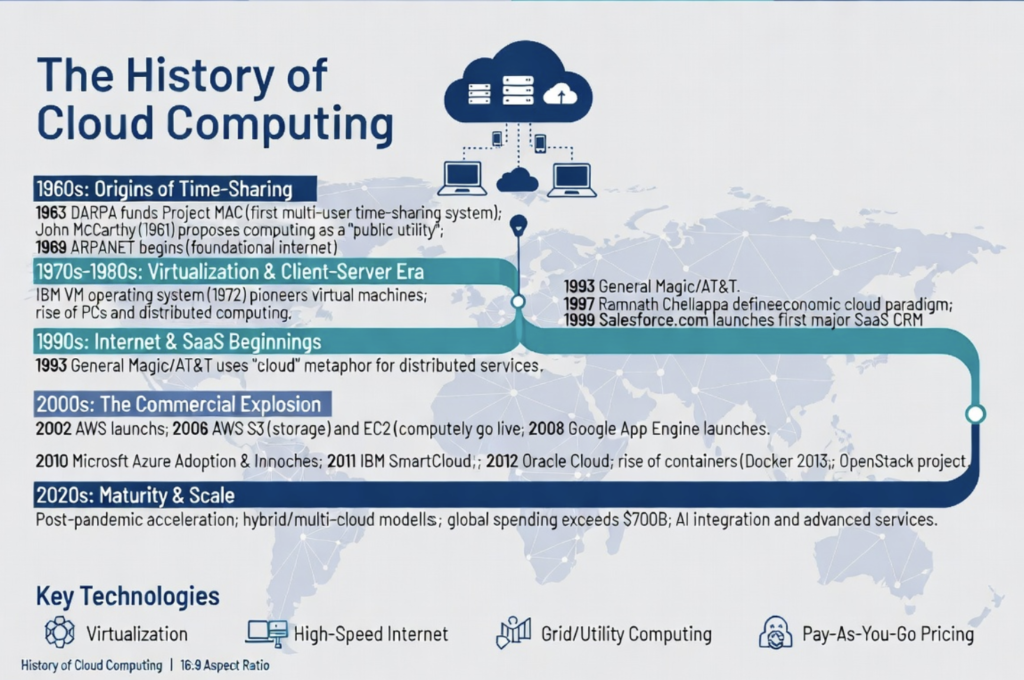
Cloud computing may have become widely popular in the 2000s, but its origins go back many years before that.
In the 1960s, computer scientists imagined a future where computing power could be shared remotely, similar to electricity supplied through a utility network.
During the 1990s, internet growth made remote computing more practical.
By the early 2000s, companies introduced scalable online infrastructure that allowed organizations to rent computing resources instead of building expensive server rooms.
Since then, cloud computing has evolved into one of the most significant technological innovations in history.
For readers interested in the official definition and evolution of cloud computing, the National Institute of Standards and Technology (NIST) provides comprehensive resources and industry standards. Learn more here: NIST Cloud Computing Program – NCCP
Different Types of Cloud Services
Cloud computing comes in several forms designed for different purposes.
Public Cloud
Public cloud services are available to anyone over the internet. Providers manage the infrastructure while customers pay only for what they use.
This model offers flexibility and affordability.
Private Cloud
Private clouds are dedicated to a single organization. They provide greater control, customization, and security for businesses handling sensitive information.
Hybrid Cloud
Hybrid cloud combines public and private environments, allowing organizations to move workloads between systems depending on performance, security, and cost requirements.
Many large enterprises use hybrid strategies for maximum efficiency.
Everyday Examples of Cloud Technology
Many people use cloud computing without realizing it.
Examples include:
- Online email services
- Video streaming platforms
- Social media websites
- Online document editors
- File synchronization apps
- Virtual meetings
- Online gaming
- Mobile device backups
Whenever information is stored or processed online instead of locally, cloud technology is usually involved.
Why Businesses Prefer Cloud Computing
Companies increasingly choose cloud solutions because they reduce costs while improving flexibility.
Benefits include:
Lower Infrastructure Costs
Businesses no longer need to purchase expensive servers or maintain large data centers.
Scalability
Resources can increase or decrease depending on demand, making it easy to handle business growth.
Global Accessibility
Employees can securely access company resources from almost anywhere with an internet connection.
Automatic Updates
Cloud providers regularly update software and security systems without requiring customer intervention.
Disaster Recovery
Cloud backups protect organizations from hardware failures, cyberattacks, and natural disasters.
Is the Cloud Really Safe?
Security remains one of the most common concerns about cloud computing.
Leading providers invest billions of dollars in cybersecurity technologies, encryption, monitoring systems, and backup solutions.
While no technology is completely risk-free, professional cloud infrastructure often provides stronger protection than personal computers or small business servers.
Users should still follow best practices by creating strong passwords, enabling multi-factor authentication, and keeping software updated.
Common Misconceptions About the Cloud
Many myths surround cloud computing.
The Cloud Is in the Sky
The cloud is not located in the atmosphere. It consists of physical data centers filled with servers connected through high-speed internet networks.
Files Exist in Only One Place
Cloud providers usually replicate data across multiple locations to improve reliability and availability.
Only Large Companies Use the Cloud
Individuals, freelancers, students, and small businesses all benefit from cloud technology every day.
The Cloud Replaced Computers
Cloud computing complements computers rather than replacing them. We still rely on devices like smartphones and computers to connect to online services.
The Future of Cloud Computing
Cloud technology continues evolving alongside artificial intelligence, edge computing, automation, and advanced analytics.
Future developments will likely deliver even faster processing, stronger security, lower costs, and greater integration with smart devices.
As internet infrastructure improves globally, cloud services will become even more essential to education, healthcare, finance, manufacturing, and entertainment.
The cloud is expected to remain the foundation of digital innovation for decades to come.
Conclusion
The reason it is called the cloud is rooted in the early diagrams used by network engineers to represent the internet as a simple cloud-shaped symbol. Over time, that symbol evolved into the modern concept of cloud computing, where users access computing resources without worrying about the underlying infrastructure.
Today, the cloud powers everything from file storage and online collaboration to artificial intelligence and enterprise applications. Its name reflects simplicity, accessibility, and the invisible technology that connects billions of people worldwide. Understanding the simple truth behind the name makes it easier to appreciate one of the most important innovations of the modern digital era.
Frequently Asked Questions
Why is cloud computing called the cloud?
It is called the cloud because early network diagrams represented the internet with a cloud symbol, hiding the complexity of the underlying infrastructure.
Is the cloud a physical place?
Yes. The cloud consists of physical data centers containing servers located around the world, connected through the internet.
Who invented the term cloud computing?
The concept evolved gradually from networking terminology used by engineers. The term became widely popular in the early 2000s as internet-based computing services expanded.
Can I access cloud files from any device?
Yes. Most cloud services allow users to access files from smartphones, tablets, laptops, and desktop computers with an internet connection.
Is cloud storage better than external hard drives?
Cloud storage provides remote access, automatic backups, and synchronization across devices, while external drives offer offline storage and direct physical control. Many users benefit from using both together.
Does the cloud have unlimited storage?
Storage depends on the provider and subscription plan. Many services offer scalable options that allow users to purchase additional capacity as needed.