

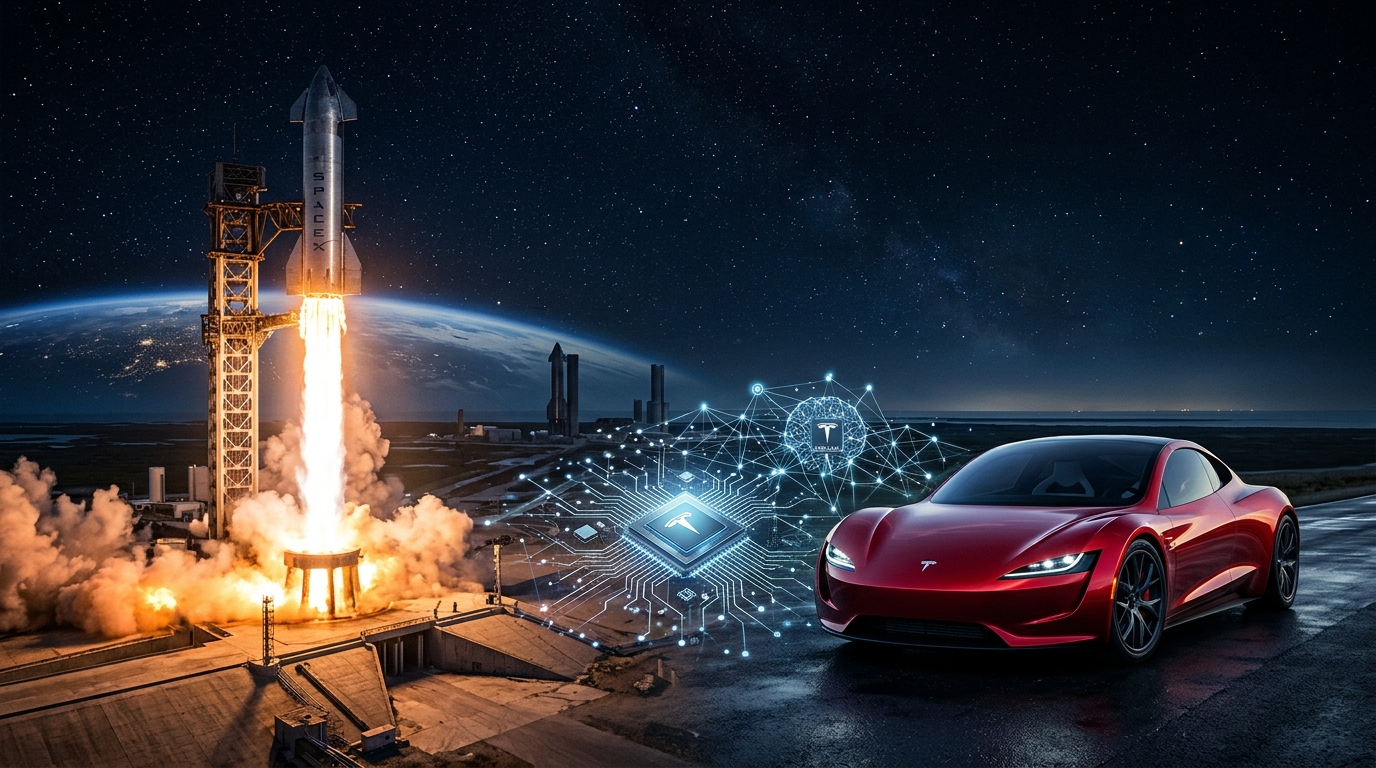
The idea of a SpaceX and Tesla merger is attracting attention across technology, automotive, and financial markets. Both companies are associated with Elon Musk, but they operate in different industries. Consequently, speculation about combining their businesses raises important questions about their future.
Although the idea sounds ambitious, merger rumors should not be confused with a confirmed corporate decision. Instead, the discussion highlights how Musk’s business interests could influence the future of artificial intelligence, transportation, energy, and space exploration.
What Is the SpaceX Tesla Merger Speculation?
SpaceX Tesla merger chatter refers to discussions about a possible combination of two companies led by Elon Musk. Tesla’s core businesses include electric cars, battery storage, and other connected technologies. Meanwhile, SpaceX develops rockets, spacecraft, and satellite internet services.
In theory, combining the companies could place their operations within a single corporate group. However, such a move would involve substantial financial, operational, and regulatory challenges.
For now, investors should distinguish speculation from verified announcements. Without an official transaction proposal, the idea remains a potential business scenario rather than an established corporate plan.
Why Is the SpaceX Tesla Merger Conversation Gaining Attention?
Elon Musk’s Connected Business Interests
Musk’s companies operate across several interconnected technology sectors. Tesla develops electric vehicles, batteries, and artificial intelligence systems. SpaceX builds launch vehicles, operates Starlink, and supports space-based communications.
These activities create opportunities for technological cooperation. Shared progress in areas such as battery technology, computing, and self-driving systems might support more than one part of the combined business.
Therefore, observers may see a larger corporate structure as a possible way to coordinate investments. Nevertheless, shared leadership does not automatically make a merger practical or financially attractive.
Artificial Intelligence Could Connect Both Companies
Artificial intelligence is becoming increasingly important to both Tesla and SpaceX’s broader ambitions. Tesla uses AI for driver-assistance systems, robotics, and autonomous driving development. SpaceX also operates within a technology-intensive environment involving spacecraft, communications, and complex engineering.
AI development also depends on substantial computing capacity, reliable energy, and large amounts of capital. Combining selected capabilities could create opportunities for research and development.
However, collaboration does not require common ownership. Separate companies can share technology, enter commercial agreements, or develop partnerships without completing a merger.
How Might a Tesla, SpaceX Merger Affect Investors?
A potential merger would raise questions about valuation, ownership, and future financial performance. Investors would need to understand how each company’s assets, liabilities, and growth opportunities would be assessed.
Potential Benefits for Shareholders
A combined business might coordinate research, engineering resources, and long-term investments. Furthermore, it could create new opportunities across electric mobility, energy storage, satellite connectivity, and space technology.
Supporters might also expect stronger cooperation between different technology teams. If executed effectively, shared capabilities could improve selected projects and reduce duplicated expenses.
However, these benefits would depend on the transaction’s structure and actual business results. Investors shouldn’t assume that these possibilities would automatically translate into profits.
Financial and Regulatory Challenges
Merging two major technology companies would require careful financial planning. Their different business models could make valuation and integration particularly complicated.
Tesla operates in competitive automotive and energy markets. SpaceX operates in the aerospace industry and provides satellite connectivity through Starlink. Each business faces different customers, regulations, costs, and investment requirements.
Moreover, a merger could attract scrutiny from regulators, investors, and other stakeholders. The companies would need to address governance, shareholder interests, and any applicable legal restrictions.
Consequently, a merger might introduce significant costs alongside its potential advantages.
Could SpaceX and Tesla Benefit From Working Together Without Merging?
A full merger is not the only way to pursue shared opportunities. In fact, partnerships and targeted commercial agreements could provide a more flexible approach.
For example, Tesla’s battery technology could be relevant to energy-storage applications across different industries. SpaceX’s satellite network could also support connectivity in locations where traditional infrastructure remains limited.
At the same time, work in AI and advanced manufacturing could open the door to cooperation between the companies. Any specific arrangement, however, would depend on technical requirements, commercial terms, and applicable regulations.
Keeping the companies separate could also preserve their individual strategies. Tesla could focus on vehicles and energy, while SpaceX could concentrate on launch services and satellite communications.
How Could a Merger Affect Tesla and SpaceX Valuations?
A merger would likely intensify discussion about how investors value both businesses. Tesla’s valuation reflects expectations surrounding electric vehicles, energy products, robotics, and AI. SpaceX’s valuation reflects its launch business, Starlink operations, and long-term space ambitions.
Combining these assets would not automatically increase their total value. Instead, investors would examine the transaction price, financial structure, expected synergies, and execution risks.
Additionally, the companies’ ownership structures and financial disclosures would influence how investors assess the proposal. Any reliable valuation analysis would require verified financial information and confirmed transaction details.
Therefore, investors should avoid making decisions based solely on online speculation.
What Should Investors Watch Next?
Investors should prioritize official information over social media discussions and unverified reports. Several developments could help clarify whether the merger conversation has substance.
- Official company announcements: Look for statements from Tesla or SpaceX regarding a proposed transaction.
- Regulatory disclosures: Review relevant filings and notices if a formal proposal emerges.
- Financial details: Examine any disclosed valuation, ownership arrangements, and financing plans.
- Business strategy: Watch for specific announcements showing whether the companies intend to work together more closely.
- Independent reporting: Compare credible financial news coverage before accepting major claims.
These steps can help readers separate genuine corporate developments from market speculation.
Is a SpaceX Tesla Merger Actually Confirmed?
The central question is whether the companies have announced a formal merger. Speculation, shared leadership, and overlapping technological interests are not sufficient evidence of a confirmed transaction.
Unless an official announcement or reliable filing establishes otherwise, readers should treat the proposed combination as an unconfirmed possibility.
Even if the companies explore closer cooperation, a full merger would require substantial planning and appropriate approvals. Its feasibility would depend on financial considerations, strategic priorities, and regulatory requirements.
Final Thoughts on SpaceX Tesla Merger Chatter
SpaceX Tesla merger chatter reflects growing interest in the relationship between Musk’s technology businesses. Their work across AI, energy, transportation, and space creates intriguing possibilities for future collaboration.
Even so, bringing the businesses together would likely involve major financial, regulatory, and operational challenges. Shared ownership could offer advantages, but it could also create new risks.
For now, the most useful approach is to follow verified announcements and credible reporting. Until the companies confirm a formal proposal, the merger discussion remains speculation rather than a settled business development.