

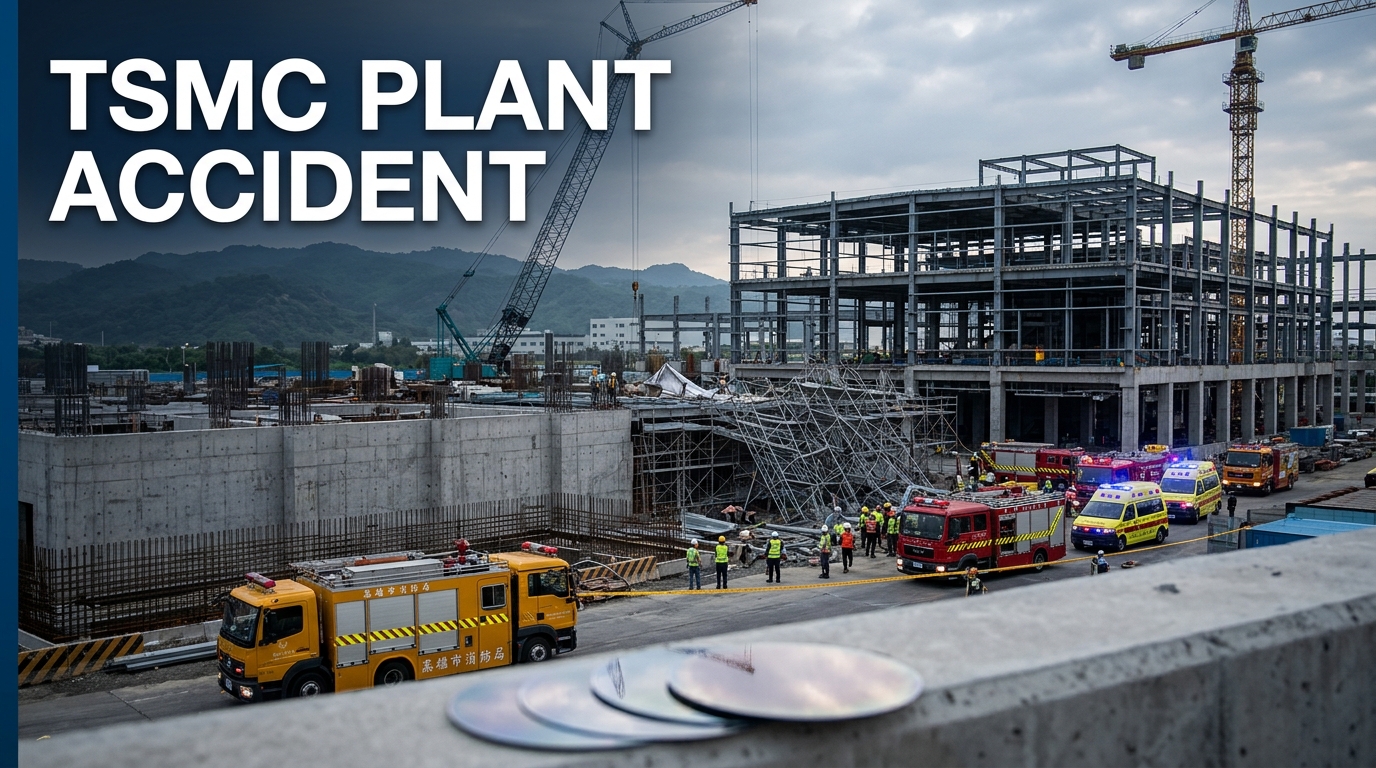
The TSMC Kaohsiung plant accident has raised questions about semiconductor production and global chip supply. Taiwan Semiconductor Manufacturing Company (TSMC) plays a critical role in the global technology industry. Therefore, any incident affecting its facilities can attract significant attention.
However, the actual impact depends on the accident’s nature, the equipment involved, and production disruptions. Understanding these factors helps explain whether the incident could affect chip availability, prices, and technology companies.
What Is the TSMC Kaohsiung Plant Accident?
The reported TSMC Kaohsiung plant accident refers to an incident associated with the company’s semiconductor manufacturing operations in Kaohsiung, Taiwan. However, the precise circumstances require confirmation through reliable company statements or official reports.
TSMC runs sophisticated factories that produce semiconductors for some of the world’s biggest tech firms. Consequently, safety incidents, equipment failures, or utility disruptions can raise concerns about production continuity.
Nevertheless, an accident does not automatically mean that an entire facility has stopped operating. Its consequences depend on the affected area and the company’s response.
For example, a localized equipment issue might require maintenance without affecting other production lines. By contrast, damage to essential infrastructure could cause wider delays.
Why Is TSMC’s Kaohsiung Facility Important?
Kaohsiung has become an important location in Taiwan’s semiconductor manufacturing expansion. TSMC has invested in facilities there to strengthen its production capabilities and support future demand.
The company manufactures advanced chips used in smartphones, computers, artificial intelligence systems, and other electronic products. As a result, its manufacturing performance matters to businesses worldwide.
Advanced Chip Production and AI Demand
The growth of AI has driven up demand for high-performance chips and the components needed to make them work. Companies developing AI servers and data centers need increasingly advanced chips.
Therefore, production delays at major semiconductor manufacturers can create concerns among customers. However, the impact depends on which products are affected and whether alternative production capacity exists.
Why Taiwan Matters to Global Technology
Taiwan plays a pivotal role in the worldwide network that supplies semiconductors. Many leading chip designers rely on Taiwanese manufacturing facilities to produce their processors.
Consequently, disruptions at major facilities can attract attention from technology companies, investors, and governments. Still, the effect of an individual incident depends on its scale and duration.
How Could the Accident Affect Global Chip Supply?
The potential impact depends on whether the incident interrupts manufacturing or delays equipment installation. Several factors determine how quickly production can recover.
1. Temporary Manufacturing Delays
If an incident affects active production lines, TSMC may need to inspect equipment and verify safety conditions. These procedures can temporarily slow manufacturing.
However, a short disruption may have limited consequences if production resumes quickly. Longer interruptions could delay deliveries to customers.
2. Pressure on Semiconductor Prices
Chip prices depend on demand, supply, manufacturing costs, and customer contracts. A major interruption at a production site could make certain types of chips harder to obtain.
Nevertheless, one accident does not automatically cause global chip prices to rise. Market conditions and the availability of alternative manufacturing capacity also matter.
3. Delays for Technology Companies
Companies that depend on TSMC need reliable chip deliveries to maintain their product schedules. A prolonged disruption could affect manufacturing plans for smartphones, computers, and AI hardware.
However, customers may have inventory or access to chips manufactured elsewhere. These options can reduce the immediate effects of a temporary incident.
4. Investor Concerns
Investors closely monitor TSMC because of its strategic position in the semiconductor industry. News about operational problems can influence market sentiment.
Still, a short-lived incident does not automatically mean production will be affected over the long term. Investors should wait for reliable details about its business and financial impact.
What Could TSMC Do to Minimize Disruption?
TSMC can limit operational risks through established safety procedures, equipment inspections, and contingency planning. What happens next will depend on what caused the event and how serious it proves to be.
First, the company would need to secure the affected area and protect employees. Safety inspections would help determine whether equipment or facilities require repairs.
Next, engineers could assess production systems and identify any damage. The company could then prioritize necessary repairs and validate manufacturing conditions before restarting affected operations.
Meanwhile, communication with customers would help businesses evaluate potential delivery changes. Clear updates would also reduce uncertainty across the supply chain.
Additionally, diversified manufacturing capacity and customer inventory can help absorb temporary disruptions. However, advanced semiconductor production cannot always move quickly between facilities because different chips require specialized processes and equipment.
Could the Incident Affect AI Chip Production?
AI chip production has become an important part of the semiconductor industry’s growth. Major technology companies depend on sophisticated processors for training and running AI models.
Therefore, any confirmed disruption affecting relevant production capacity could raise questions about future deliveries. Yet the impact would depend on the specific manufacturing processes involved.
Not every TSMC facility produces every type of chip. Similarly, not every operational incident affects advanced-node manufacturing.
For that reason, readers should avoid assuming that the Kaohsiung incident directly threatens AI chip supplies without verified evidence. The affected facility, production technology, and recovery timeline are essential details.
What Should Businesses and Consumers Watch Next?
For dependable updates, look to TSMC’s official statements and coverage from trustworthy news organizations. Several developments can help establish the incident’s real significance.
- Official confirmation: Look for statements explaining what happened and where.
- Production updates: Check whether manufacturing operations experienced interruptions.
- Recovery timelines: Watch for confirmed information about inspections, repairs, and restarts.
- Customer deliveries: Look for evidence of shipment delays or revised production schedules.
- Market developments: Monitor semiconductor industry reports for documented supply changes.
Together, these indicators can help distinguish a localized incident from a significant supply-chain disruption.
Conclusion: What Does the TSMC Kaohsiung Plant Accident Mean?
The TSMC Kaohsiung plant accident highlights the importance of reliable semiconductor manufacturing. However, its significance depends on verified details about the incident and its effect on production.
A limited operational issue may have little lasting impact. Conversely, a prolonged disruption affecting critical manufacturing capacity could create delivery challenges for customers.
For now, readers should separate confirmed information from speculation. Official updates about facility operations, production recovery, and customer deliveries will provide the clearest picture of any potential impact on global chip supply.