

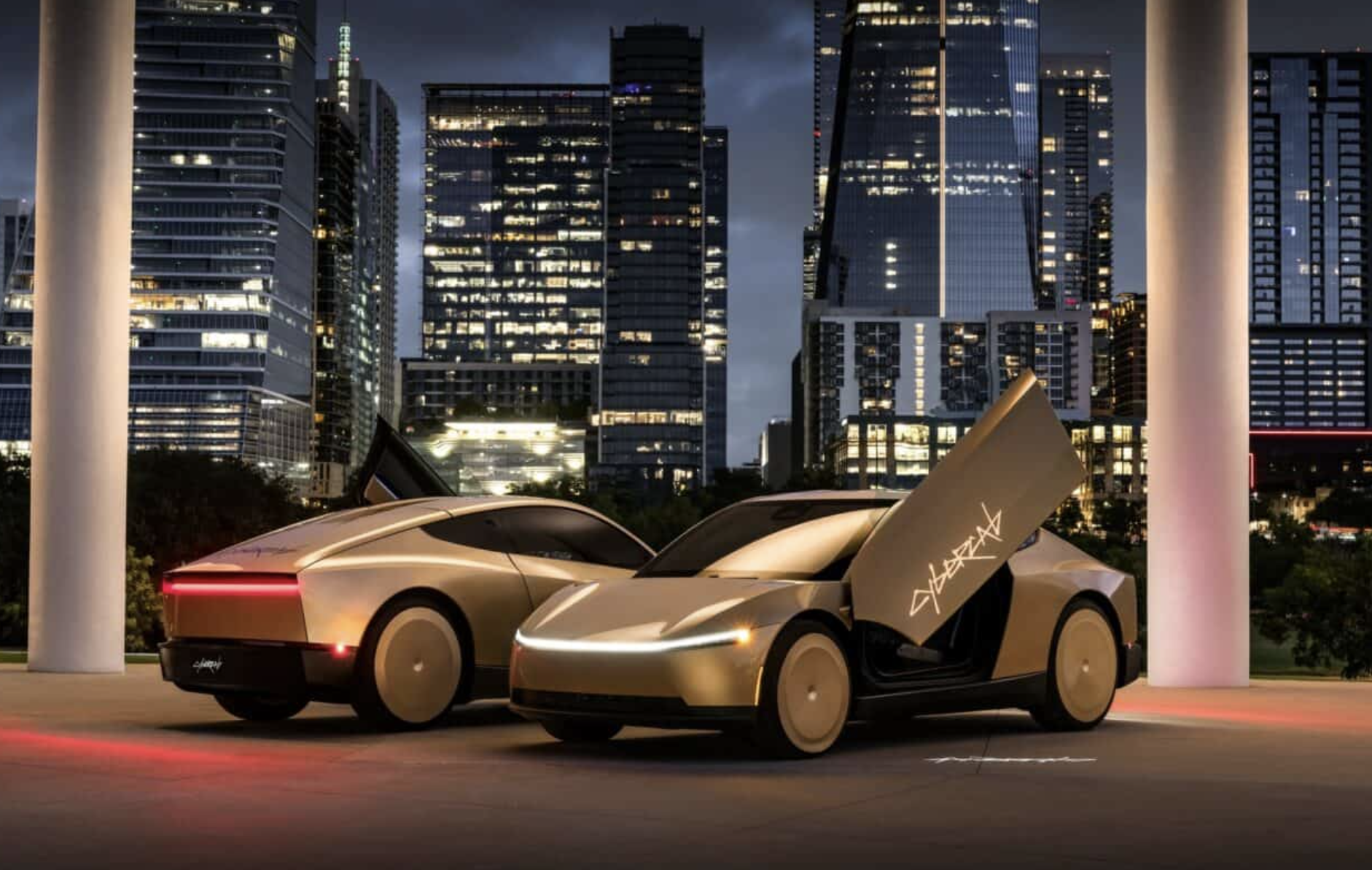
A public tally of autonomous vehicles registered in Texas has put a new number on the Tesla robotaxi Texas story: 1,204 Tesla vehicles at the end of October, up from 1,051 four days earlier. Headlines about fleet size travel fast, yet a registry count and a count of cars carrying paying riders are different things.
In this article, we will explore where the figures come from, how Tesla compares with Waymo, Avride and Zoox, and how to read any robotaxi tally without being misled.
The Headline Numbers in Brief
Two snapshots frame the news. According to EV.com, which reported on October 28 using data from October 27, Texas had 1,051 registered Tesla autonomous vehicles that day: 544 Cybercabs and 507 Model Y vehicles. That was the first time Cybercabs outnumbered Model Y in the count. Teslanorth then reported an October 31 snapshot showing 1,204 Tesla vehicles, made up of 631 Model Y and 573 Cybercabs.
The difference between the two is a net gain of 153 vehicles in four days, which is simple subtraction from the two totals. Of that gain, 124 were Model Y and 29 were Cybercabs, according to the same figures. So the Cybercab lead lasted only until the next snapshot, because Model Y additions in those four days outpaced the Cybercab additions by a wide margin.
The first thing to say about all of this is what the numbers measure. They come from the Texas Autonomous Vehicle Tracker, which counts vehicles registered with the Texas Department of Motor Vehicles. A registration is a paperwork milestone. It tells you a vehicle has been entered in the state’s system as an autonomous vehicle, and it does not tell you the car is on the road this afternoon, picking up passengers, or operating without a safety monitor.
That distinction is the reason this article exists. The count is real and interesting, and it moves quickly. But any claim built on it, such as “Tesla now runs a fleet of 1,204 robotaxis in Texas”, goes beyond what the data supports. The sections below take the figures apart piece by piece.
Where the Registry Counts Come From
The tracker is a third-party compilation of Texas DMV registration data, which is why it is worth knowing how the underlying data works. Registration records are administrative: a company lists vehicles it intends to operate under the state’s rules for autonomous vehicles, and the state keeps a register. The tracker turns that register into a running total by operator and by model.
One Count, Two Labels
Teslanorth points out that the source uses the words “registered” and “authorized” for the same count. That matters for headline writers, because “authorized” sounds like permission to operate commercially, while “registered” sounds like a filing. According to the report they refer to the same number, so neither word should be read as a statement about how many cars are carrying riders. If you see the figure described as an “authorized fleet”, read it as “registered”.
How Current Tesla Robotaxi Texas Figures Are
The two Tesla snapshots in this article are dated October 27 and October 31. Registry-style numbers go stale quickly when additions are arriving at this pace. A figure quoted a week after its snapshot may already be short by a hundred or more vehicles, and it may also include vehicles that have since been retired or reassigned. When you quote the count, give the snapshot date as well as the number, which is the habit we follow here.
What the Registry Cannot Tell You
A registry cannot tell you how many of the registered vehicles are carrying passengers, how many are being used for testing, how many are waiting for delivery to an operating city, or how many require a person on board. It also cannot tell you how many rides are being given or how the cars perform. The state’s database was designed to record vehicles, and it was not designed to measure service. Treat it as an upper-bound indicator of intent and growth, not a measure of operations.
Why the Registry Draws Attention
Texas has become a busy testing ground for driverless ride services, and a public register is one of the few places where outsiders can watch the growth. Most companies do not publish detailed fleet numbers, and when they do, the definitions are their own. A state-level record gives journalists and curious readers a common reference, which is why trackers built on it get quoted so often.
Another reason is competition. Tesla, Waymo, Avride and Zoox all appear in the same list, so for the first time readers can compare the companies on one measure. That comparison is limited, as the rest of this article explains, but it is more than the usual exchange of press statements. A reader who knows the difference between a registration and a ride can use it well.
The numbers are also moving. A gain of 153 vehicles in four days is, by simple arithmetic, a bit more than 38 a day on average. That is a description of the recent past and not a forecast, since registrations can arrive in batches and pause for weeks. If you are tracking this story, the sensible approach is to record each snapshot with its date and watch the pattern over time instead of reacting to single readings.
Cybercab Overtakes Model Y, Then Slips Back
The most quotable detail in the October 27 data is that Cybercabs outnumbered Model Y for the first time, 544 to 507. Cybercab is Tesla’s purpose-built robotaxi, while the Model Y is the company’s mass-market SUV adapted for the same job. A crossover in the registry suggests that Tesla is registering the purpose-built vehicle in volume.
By October 31 the order had reversed, with 631 Model Y against 573 Cybercabs. That is a swing driven by the four-day additions: 124 Model Y versus 29 Cybercabs. One way to read it is that Model Y registrations are lumpy and arrive in batches, and the lead belongs to whichever model had the most recent batch. We should be careful not to over-read a four-day window. Two data points do not make a trend, and any reading of direction from them is speculation.
The Ev.com Addition Figures
EV.com adds its own tally of Cybercab additions: 81 new Cybercab additions in its latest update, 248 over the past week and 418 over 30 days. The material we reviewed does not state the exact period behind the 81, so the figure should be read with that caveat. Simple subtraction of the week and the month figures would imply 170 additions in the earlier part of the 30 days, which hints at a faster recent pace. That is an inference from reported numbers, and it is not something Ev.com states.
A Figure That Does Not Line Up
There is an apparent mismatch worth flagging. Between the October 27 and October 31 snapshots, the net Cybercab gain was 29, but Ev.com reports 81 new Cybercab additions and 248 over a week. These can all be true if they cover different windows, if the tracker removes entries as well as adding them, or if the sources define additions differently. We have no explanation from the sources, so the difference remains unexplained. It is a good reason to keep snapshot totals and “additions” figures apart in your own notes.
Tesla, Waymo, Avride and Zoox Side by Side
The same October 31 snapshot includes other operators, which gives context that a Tesla-only number cannot. Waymo is listed at 1,259 registered vehicles, which is 55 more than Tesla’s 1,204. Avride shows 344 and Zoox 63.
| Operator | Registered vehicles, October 31 snapshot | Note |
| Waymo | 1,259 | 55 more than Tesla |
| Tesla | 1,204 | 631 Model Y and 573 Cybercab |
| Avride | 344 | Third in the count |
| Zoox | 63 | Smallest of the four |
| Four operators combined (simple arithmetic) | 2,870 | Sum of the four rows above |
The first thing the table shows is that Tesla is not alone and is not yet first in this registry. Waymo is ahead by 55, a margin that the four-day pace of Tesla additions could close or not, depending on how Waymo’s own count moves. We are not forecasting that, and the sources do not either. The second thing is the size of the field: four operators together account for 2,870 registered vehicles by our arithmetic, so the Texas market is no longer a one-company story.
Why Registry Parity Is Not Service Parity
Two companies with similar registry counts can run very different services. One may use its registered cars on a dense urban grid with remote supervision, while another may hold registrations for vehicles that are still in testing. Operating hours, service areas, wait times, pricing and safety records all vary, and none of them appears in a registry. When you compare the operators, the table is a starting point for questions and not an answer to which service is better.
Tesla Robotaxi Texas Figures Against Other Operators
A smaller registry count, such as Zoox’s 63 or Avride’s 344, does not imply weaker technology, and a larger one does not imply a safer service. Companies enter the market at different times and in different ways, and a registry can only show the size of the list, not the quality of what is on it.
Registered Is Not the Same as in Service
This is the central caution in the EV.com coverage. Ev.com cites an unverified third-party site that puts the number of Tesla robotaxis in operation at about 530: 415 in Austin, 76 in Dallas and 39 in Houston. The three add up to 530. EV.com also says that commercial Cybercab rides are limited to Austin.
Set that beside the October 27 registry count of 1,051 and the gap is 521 vehicles by simple subtraction. If the 530 figure is accurate, roughly half of the registered vehicles were not in operation on the roads in those three cities. But we should state the limits plainly: the 530 figure comes from a site Ev.com itself calls unverified, it is not dated in our material, and the registry figures and operating figures were collected by different methods. So the comparison is illustrative and not a measurement.
Why Registered Vehicles May Not Be Running
There are ordinary reasons a registered vehicle might not be carrying riders, and they are general rather than specific to Tesla. Cars may be in testing or validation, parked awaiting a new geofence, undergoing maintenance, staged for a launch in another city, or limited to employees. Fleets also need spare capacity for charging and cleaning, so a service does not run every car at once. None of this suggests anything improper, and the sources do not suggest it either.
Why the Distinction Matters to Different Readers
Riders care about how many cars are available near them and when. Journalists and analysts care that the numbers they publish measure what the headline says. Regulators and city officials care about the vehicles that are on the road. For the first group, the registry is nearly irrelevant, and for the other two it is a supply-side indicator that needs to be paired with operating data. If a source does not tell you which one it is describing, treat the figure with caution.
Service Areas Are Geofences, Not Fleet Size
The coverage also lists the sizes of the service areas, which are the geofenced zones inside which a robotaxi service is allowed to pick up and drop off. The figures reported: Austin 272 square miles, Houston 254, Dallas 81, Miami 31, Orlando 26 and Tampa 24. In Houston, 229 of the 254 square miles were added on October 26. By simple subtraction, that means Houston’s area had been about 25 square miles before that expansion.
What a Geofence Measures
A geofence measures where the service may operate, not how many cars serve it. A large zone with few vehicles can mean long waits, and a small zone with many vehicles can mean short ones. Area also says nothing about road complexity, since a square mile of suburban streets is a very different driving task from a square mile of downtown. So the area numbers are best read as a map of ambition and permission.
The Cities Outside Texas
Miami, Orlando and Tampa appear in the area list, but they are outside Texas and outside the registry we are discussing. The coverage we reviewed treats other launches as plans or expectations, not established facts, and we do the same. The area figures for those cities should not be read as evidence of operating services there.
Austin as the Reference Point
Because the Houston expansion is so recent, it is also the area figure most likely to change again, and the same goes for every geofence in the list. Operators adjust these boundaries in steps, sometimes adding a district, sometimes trimming one, and the published sizes follow with a delay. Quote the date alongside any area figure, the same way you would for a vehicle count.
Austin is the largest zone at 272 square miles and, per Ev.com, the only place with commercial Cybercab rides. It is also the city with the most vehicles in the unverified operating estimate, at 415. Dallas and Houston have smaller reported fleets in that estimate, at 76 and 39. That pattern fits the view that Austin is the mature market and the others are earlier in their rollouts, although we are reading that from sparse numbers and would not lean on it too hard.
Impact on Riders, Residents and Texas Drivers
For someone deciding whether to try a robotaxi, the registry changes very little. What matters is whether service reaches your address, how long the wait is, what the ride costs and how the company handles problems. Those answers live in the operator’s own app and help pages, which are also the places where service areas and hours are updated first. Availability differs sharply between cities, and between the center of a geofence and its edge.
For residents and other drivers, the interesting question is how autonomous vehicles share the road. More registered vehicles points to more of them eventually appearing in traffic, and the sources do not say how quickly. If you live in one of the listed cities, local news and city transportation offices are better guides to where vehicles are operating. Nothing in the numbers here is a safety finding of any kind, favorable or unfavorable, and we draw none.
Outside Texas the picture differs. Other states have their own approval systems, some with permits for testing only and others for paid rides, and the same vehicle can be treated differently across borders. Other countries have their own regimes entirely, and many do not publish a comparable public register. A Texas count should therefore not be generalized to the rest of the United States, let alone to other countries.
One practical tip for riders: if a service area expands, as Houston’s did on October 26, the first sign is usually in the operator’s app, where the map of pickup and drop-off locations changes. Checking that map before you plan a trip is more reliable than relying on a headline. Waiting times can also vary by hour, so a ride that is easy at midday may be harder at a busy evening, and a registry number cannot predict either.
Questions to Ask of Any Robotaxi Count
Robotaxi numbers will keep appearing, from every operator, and a few habits make them far more useful. The goal is not to doubt every figure but to know what each one can support.
Ask What Is Being Counted
Is it registrations, permits, vehicles in service, vehicles available at a given hour, or rides completed? Each of these is a different quantity, and they can differ by hundreds. A good report names the measure, gives a date and identifies the source. If it does not, assume that it is the loosest of the possible meanings.
Ask About the Date and the Source Chain
Many of the figures in circulation passed through several hands: a state record, a tracker, a news site, a social post. Each hop is a chance for a label to change. In this story the Texas DMV record became a tracker count, which then appeared under the words “registered” and “authorized” and was reported by more than one outlet. Where possible, go back toward the original record, and check the date.
Ask What Is Missing
The registry lacks rides, safety data, remote-assistance ratios, wait times and pricing. If you are a rider choosing a service, those are the things that matter, and they are worth looking up before you rely on a ride for something time-sensitive such as an airport trip. If you are an investor or analyst, remember that this article is not investment guidance and that registry counts alone cannot tell you about a company’s finances. If you are a resident, local city and state agencies are the better source for how autonomous vehicles are regulated where you live, and rules differ by state and may have changed.
Keep Fact and Expectation Separate
A registry total is a fact about a database at a moment. A claim about what the total will be next month is a forecast, and forecasts about this sector have a mixed record. We have avoided predictions here, and when you read them elsewhere, check whether they are labeled as expectations. The same applies to announcements of cities where service is planned. A plan is a statement of intent, and it may arrive on time, late or not at all. Until a service is running and verifiable, it belongs in the expectation column, and a careful reader keeps a separate note of each so that nothing is counted twice.
| Question | Why it matters | Where to look |
| What is being counted? | Registered, operating and available are different | The report’s wording and the tracker notes |
| What is the snapshot date? | Totals changed by 153 in four days | The date on the figure |
| Who collected it? | Third-party sites may be unverified | The original state or company record |
| Is it a plan or a fact? | Launch announcements are not service | Official operator statements |
Conclusion
The Texas registry shows a busy, fast-moving market: Tesla at 1,204 vehicles on October 31, Waymo at 1,259, and two other operators in the hundreds or fewer. It also shows how easily a registration count can be mistaken for a service count. The one unverified estimate of about 530 operating Tesla robotaxis is a reminder that the two numbers can differ by a lot. Quote the date, name the measure, and keep forecasts separate from facts.
Frequently Asked Questions
How Many Tesla Robotaxis Are Registered in Texas?
A tracker snapshot from October 31 showed 1,204 Tesla vehicles registered, with 631 Model Y and 573 Cybercabs. That count comes from registrations with the Texas Department of Motor Vehicles, not from vehicles in service.
Does the Registry Show How Many Tesla Robotaxis Are in Operation?
No. EV.com cites an unverified third-party site that puts about 530 robotaxis operating, in Austin, Dallas and Houston. Treat that as a rough, unconfirmed estimate.
Is Waymo Bigger Than Tesla in Texas?
In the October 31 registry snapshot, yes, Waymo listed 1,259 vehicles against Tesla’s 1,204, a gap of 55. That compares registrations only and says nothing about rides given.
When Did Cybercabs Outnumber Model Y in the Texas Count?
EV.com reported that it happened in the October 27 data, with 544 Cybercabs against 507 Model Y. By October 31, the Model Y count was higher again, at 631 against 573.
Where Can You Ride a Tesla Cybercab Commercially?
According to EV.com, commercial Cybercab rides are limited to Austin. Service details change, so check the operator’s own app or announcements for current availability.
How Big Are the Robotaxi Service Areas in Texas?
The reported geofences are Austin at 272 square miles, Houston at 254 and Dallas at 81. These measure where service is allowed, not how many cars operate there.