

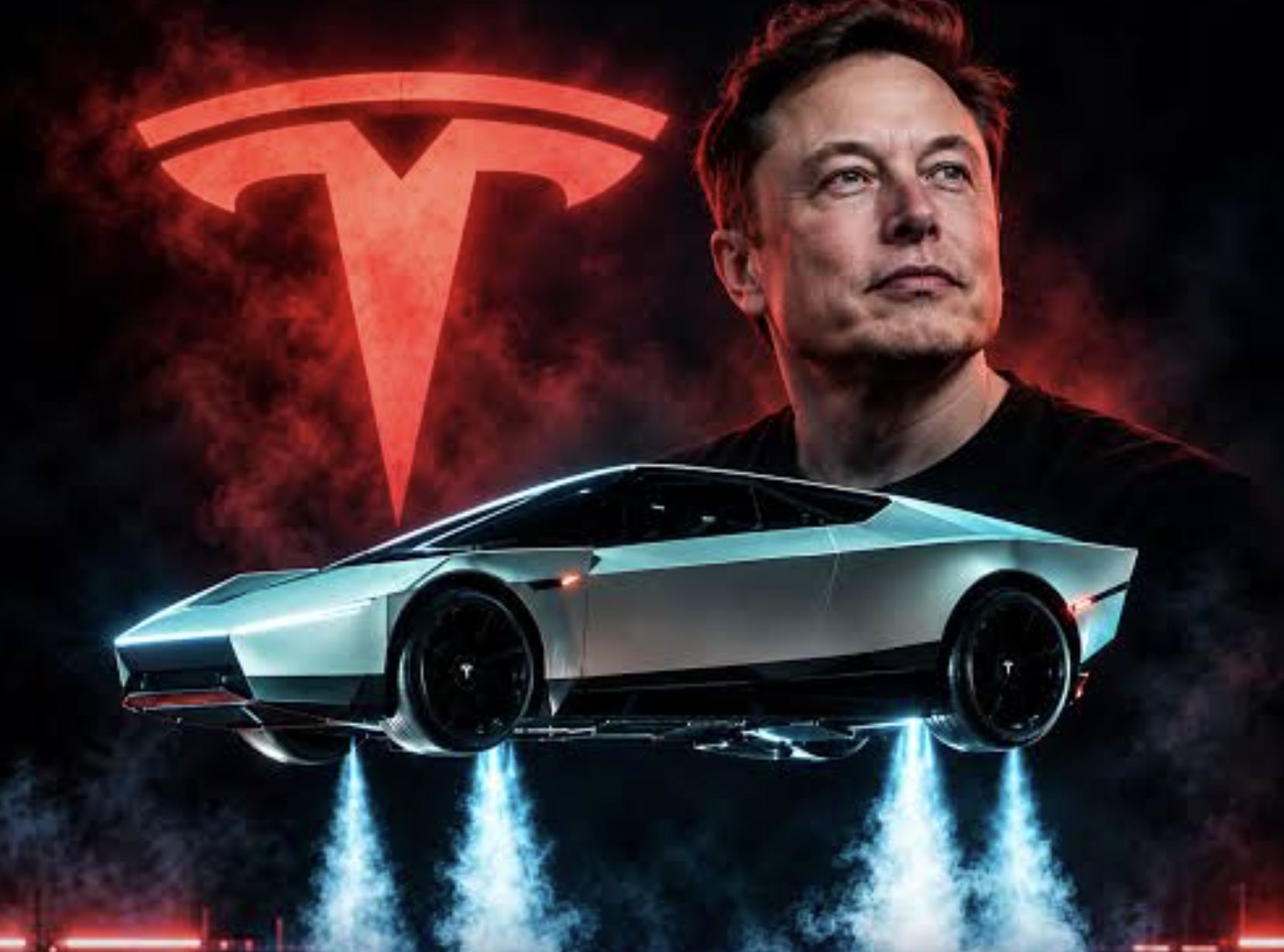
A car that seems to hover for a moment makes a memorable stage show, and it is also a good reason to slow down before believing every number attached to it. Tesla’s redesigned Roadster, unveiled this month, pairs a live demonstration with performance promises that so far rest on statements from the company and Elon Musk.
In this article we will explore what the Reuters report confirms, which figures are only claims, how the reservation tiers work, and what a careful reader or prospective buyer should do next.
The Reveal in Waco and a Very Long Wait
On Thursday, 15 October 2026, Tesla unveiled a redesigned two-seat Roadster at an event in Waco, Texas, according to Reuters reporting carried by CGTN. The headline feature is a set of thrusters developed with SpaceX, and Tesla said production would start in 2028. Those details are the firmest facts to come out of the evening: the date, the place, the two-seat layout, the thruster partnership and the stated production year. Even the last item is a plan rather than something that has happened.
The history matters here. A Roadster prototype was first shown in 2017, with deliveries promised for 2020, and the report describes the car as long delayed, noting that nearly nine years have passed since a next-generation version was first shown. That does not prove the 2028 target will slip. It does mean that a reader who has watched one target pass can fairly treat the new one as a goal until a production-intent car, a delivery schedule and real customer deliveries say otherwise.
It is also worth saying why the long timeline matters beyond the calendar. A car announced years before it can be bought gives a company time to refine the design, but it also gives competitors time to respond and gives buyers time to change their minds, so the date is only one part of the risk. A promise made in 2017 and a promise made in 2026 are different promises only if the company shows the work in between.
The rest of this article sorts the news into three piles. The first pile is what was demonstrated in front of an audience. The second is what was claimed in words, usually by one person, without independent measurement. The third is what nobody has said yet, and that pile is larger than the excitement around the event might suggest.
What the Demonstration Showed
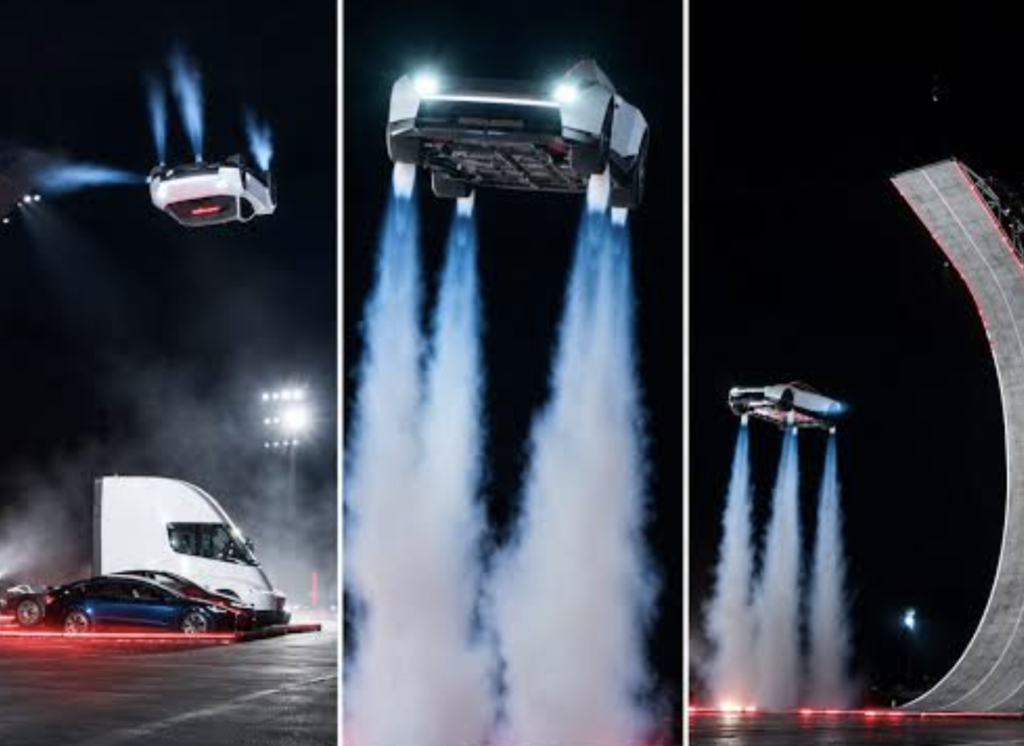
The demonstration is the part of the evening that people will remember, so it deserves a precise description of what was and was not reported. Three things stand out: the upside-down driving, the turn and landing in the air, and the unanswered question of whether any of it belongs on a public road.
Driving Upside Down on a Ramp
According to Reuters, the car was shown driving upside down on a ramp using a suction system. The general idea is not new in engineering terms. Racing designers have long used low-pressure zones under a car to pull it toward the ground and raise grip without adding much weight, and a strong enough version of that effect could in principle hold a car against a surface even when the surface is overhead.
What the coverage we reviewed does not provide is any technical detail. There is no stated limit on speed, no information about how much power the suction system draws, and nothing about how long the effect can be sustained. A ramp demonstration is also a controlled setting with a known surface, so it shows that the trick can be done under those conditions, not that an owner could repeat it anywhere.
Turning in the Air and Landing
The car was also shown turning in the air and landing, using thrusters built into the vehicle. Thrusters work by pushing mass in one direction to get a push in the other, which means the car must carry whatever it expels, or the energy to expel it, and that has consequences for weight, space and safety. The reporting does not say what the thrusters use, how many firings the car can manage, or how much of the cabin and trunk they take up.
Those omissions are normal at a first unveiling, and they are also exactly what a skeptical reader should want answered before treating the feature as a product. Engineers call this the gap between a demonstrator and a product, and it is often measured in years. A stunt that works once, on a prepared site, with the company’s own engineers nearby, is a proof of concept. A feature that a customer can use repeatedly, with a service plan and a warranty, is a different thing.
The Road-Legality Question
Reuters reported that it was not immediately clear whether such features could be used on public roads, or whether they would be legal there. That caution is sensible. In the United States, cars sold for road use generally have to meet federal motor vehicle safety standards, and states add their own rules on registration, equipment and operation. A system that lifts or rotates a car in the air would raise questions that existing road rules were not written to answer, and it could also draw interest from aviation authorities.
None of this means the features are doomed. Manufacturers sometimes ship hardware that is restricted to closed courses or disabled by software until rules allow it. It does mean that the most eye-catching feature may be the one least available to a typical owner, and a buyer should ask in writing what will be enabled on a street-registered car.
Numbers That Remain Claims, Not Measurements
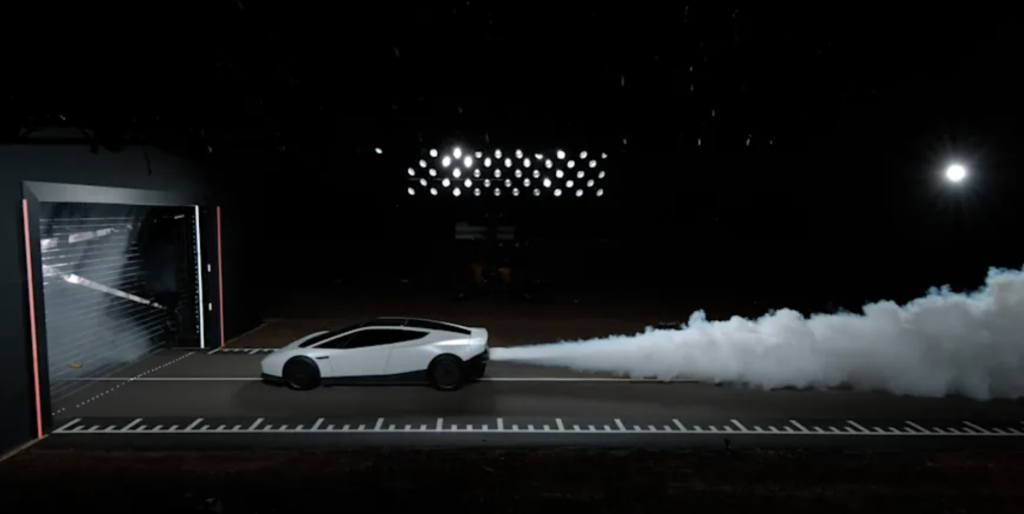
Performance figures are easy to quote and hard to verify. The three the coverage supplies, or fails to supply, are acceleration, top speed and range, and each belongs in a different box.
The Acceleration Claim
The company-side claim is a 0 to 60 mph time of under one second. As a rough illustration with rounded numbers, 60 mph is about 27 meters per second, so covering that in one second means an average acceleration of roughly 27 meters per second squared, or a little under three times the pull of gravity. Ordinary tires on dry pavement typically top out somewhere around one to one and a half times gravity, so a figure like this would need help from something other than tire grip.
That is a reasoning exercise, not a finding. It also shows why the number draws attention: it sits far outside what ordinary road cars are known to do, which is a reason for curiosity and a reason for caution at the same time.
To be clear, the report does not say whether the claim refers to a standing start on a prepared surface, a rolling start or a run with thrusters firing. Those variations can change a result a lot, and a claim without its conditions is hard to compare with anything. What a reader can fairly say is that a claim at this level, if it holds, would depend on unusual methods, and that it needs independent timing under stated conditions before it can be called a result.
Top Speed
Top speed is described as over 230 mph, according to Musk, speaking at a SpaceX test site in McGregor, Texas. That is a statement by an individual, made at a company-affiliated location, and it is worth reading as exactly that. A top speed becomes a verified number when it is recorded by independent timing equipment, on a named surface, with stated weight, tires, battery charge and number of occupants, and with a clear statement of whether any thrusters were fired during the run.
Range and Everything Else
No range was given for the new car, and for most buyers that is the figure that decides whether a car fits daily life, so its absence is a real gap rather than a minor detail. The only range figure in the record is old: in 2017, Musk said a four-seat Roadster would travel 620 miles on a charge. The new car is a two-seat design, so that number should not be carried over, and a missing range figure also leaves open questions about battery size, weight and how much energy the thrusters might use.
Engineering Trade-Offs Behind Suction and Thrust
None of the following comes from the Tesla coverage; it is general background on why features like these are hard to turn into a product, and it explains why the unanswered questions above matter.
Every extra system in a car costs weight, space and energy. A suction system needs a fan or a sealed underbody and a power source strong enough to hold the car against a surface, and a thruster system needs a store of propellant or a way to make thrust from electricity. Heavier cars need bigger brakes, stronger tires and more battery, which add more weight, and engineers call this a spiral because each fix creates the next problem. A two-seat sports car has little spare room to hide that hardware.
Safety adds a second layer. A device that expels gas or fluid at speed can burn, deafen or injure bystanders, so a street car would need a protected zone around the nozzles and a way to prevent firing near people. Crash testing becomes more complicated when the car carries pressurized containers, and emergency responders need to know how to deal with them after a collision. Insurers, who price risk from loss data, would have no history to draw on for a car that can leave the ground.
Durability is a third layer. Racing components are often rebuilt after every event, while road cars are expected to run for years with routine servicing. If the thrusters need refills, inspections or replacement parts after each use, owners will want to know the cost and where the work can be done. Software also matters, because a feature that can be disabled or limited by an update is easier to certify than one that cannot.
These points do not argue that the Roadster cannot be built. They explain why a company would announce a 2028 production date and then spend the intervening time on testing and paperwork, and why readers should expect the final car to differ from the stage version in ways that are not yet known.
Reservation Tiers and the Money Involved
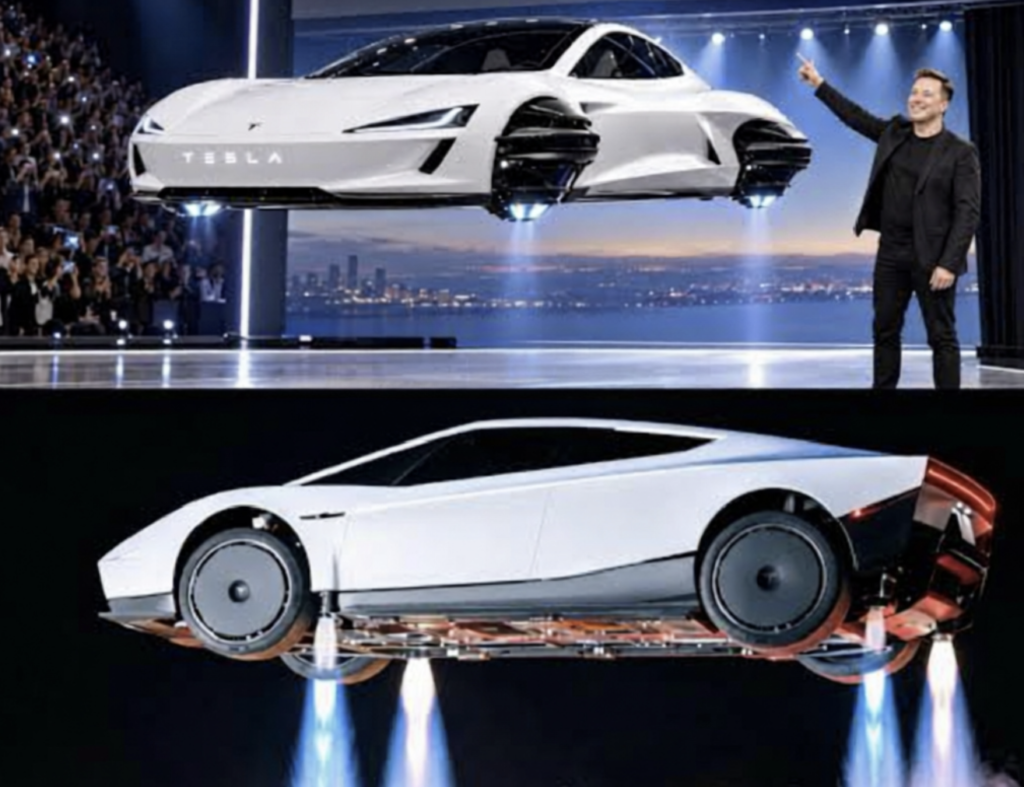
Tesla did not announce target prices at the event. A $200,000 base price was quoted nearly a decade ago, and that is the only price anchor in the coverage. What does exist now is a reservation page showing different versions of the car, each with a different deposit.
The Three Tiers
| Tier | How it is described | Deposit | What is missing |
| Performance | Listed as a version on the reservation page | $50,000 | Final price, specifications |
| Thrust | Version with acceleration thrusters | $250,000 | Final price, specifications |
| Rocket | Labeled invite only; described as a single-seat model with a full flight system | None listed | Price, deposit, any delivery plan |
The table is a snapshot of how the reservation options were described in the coverage, and it can change. The Rocket tier is the least defined: with no price, no deposit and an invitation requirement, it reads more like a statement of ambition than an offer.
What the Deposits Do and Do Not Tell You
A reservation deposit is a form of early commitment. For a company it signals demand and provides cash before production, and for a buyer it holds a place in a queue whose length is unknown. The queue is the part buyers tend to underestimate, since a place in line is worth little if the line does not move for years.
Deposits are not prices, but they carry some information. A $50,000 deposit is a quarter of the old $200,000 base price, which is a large share to hand over years before production. The $250,000 deposit for the Thrust tier is higher than the entire base price quoted nearly ten years ago, which suggests the old figure is a poor guide to what the car will cost.
One practical point is that the Rocket tier lists no deposit at all. That means the figure most people would use to judge how serious an offer is does not exist for the most dramatic version of the car. The coverage also does not say whether any deposit is refundable, what happens if production slips past 2028, or whether the price can change after money is paid. Those are the questions that decide how risky a deposit is, and they should be answered by the written terms on the reservation page, not by headlines.
A Halo Car Inside a Company That Sells Millions
The Roadster is a small part of Tesla’s business, and the company’s own earlier words say so. In 2023, Musk called the car a “small potato situation” that would not move the needle financially. That framing helps explain why the car exists at all: it is less about revenue than about attention.
Analysts use the term halo car for a showpiece model that lifts the image of the whole brand even if few people buy it. Morningstar analyst Seth Goldstein has said Tesla lacks a halo car, and he expects about 2,000 Roadsters a year. Tesla sold 1.6 million vehicles last year, so 2,000 cars would be about 0.125 percent of that volume. This is an analyst expectation, not a company forecast, and it should be read as a rough sense of scale.
Seen this way, the Roadster is closer to a billboard than a product line. A company can use a dramatic car to signal engineering confidence, draw attention to its partnership with a rocket maker and keep its name in the news between ordinary model launches. Whether that attention turns into more sales of everyday cars is a marketing question that no source here answers.
The scale matters for two reasons. First, a car that is a tiny share of sales can still be expensive to develop, especially one with novel hardware, so the real question is whether the attention justifies the cost, and nobody outside the company can answer that. Second, a low-volume car gives a company more freedom to be dramatic and less pressure to be practical, which is why the unveiling leaned so heavily on spectacle. Spectacle is not a flaw, but it is not evidence of readiness either. A reader who keeps that distinction in mind will find the next few years of Roadster news easier to sort: announcements about hardware, deposits and events are one kind of news, and test results, certifications and deliveries are another.
Verified Facts, Claims and Open Questions Side by Side
The cleanest way to keep the story straight is to label each item by how well it is supported. The table below does that using only what the Reuters report, as carried by CGTN, supplies.
| Item | Status | Basis |
| Unveiling on 15 October 2026 in Waco, Texas | Reported fact | Reuters via CGTN |
| Redesigned two-seat car with thrusters developed with SpaceX | Reported fact | Reuters via CGTN |
| Production starting in 2028 | Company plan | Tesla statement, per Reuters |
| Driving upside down on a ramp with suction | Shown at the event | Reuters via CGTN |
| Turning in the air and landing with thrusters | Shown at the event | Reuters via CGTN |
| 0 to 60 mph in under one second | Unverified claim | Company side, no independent test reported |
| Top speed above 230 mph | Unverified claim | Musk, at a SpaceX test site in McGregor |
| Range | Unknown | Not given |
| Target price | Unknown | Not announced |
| Legal use on public roads | Unknown | Reuters said it was not clear |
| Rocket tier price and deposit | Unknown | None listed |
A short note on method: the Status column is a judgment about the quality of support, not about whether something is true. A claim can turn out to be accurate, and an unknown can turn out to be good news. The labels simply record that, today, the first has no independent confirmation and the second has no answer.
Reading down the table, the pattern is clear. The facts about the event itself are solid, as far as one news report can establish them, and the facts about the car as a product are thin. Everything that would let an owner or a regulator judge the car, including range, price, certification and the conditions of the performance numbers, sits in the unknown column.
Two things would move items from the claim and unknown columns into the fact column. One is independent testing, with published conditions, by people who do not work for the company. The other is paperwork: regulatory filings, a published specification sheet and a delivery schedule that customers can hold the company to. Until those arrive, the careful position is to treat the Roadster as an announced project with an impressive demonstration, not as a car with known capabilities.
Final Thoughts: Before You Put Money Down- A Sensible Order of Questions
How you should respond depends on who you are. The reservations are large, the car is years away, and the useful moves are mostly about asking the right questions in the right order.
If You Are Considering a Reservation
Read the written deposit terms first, and ask whether the money is refundable, whether it is held in a separate account, what happens if the 2028 date moves, and whether the final price can rise. Decide in advance how long you would be comfortable having that sum tied up with no car to show for it. Treat any figure from the stage as marketing until it appears in a specification document with conditions attached. This is general information, and a financial adviser can help with how a large deposit fits your own situation.
If You Follow the Industry
Treat each future announcement as a test of the earlier ones. If a later update gives a range, a price or a regulatory plan, compare it with what was said at the unveiling and note any change in wording, because small shifts, such as from promises to targets or from all versions to some versions, usually reveal how much is settled. Reporters and analysts who publish their sources and conditions are worth more than those who repeat figures.
Watch for the boring signals: a manufacturing timeline, regulatory filings, independent test drives and a published spec sheet. Keep a note of which performance figures come from the company and which come from outside measurement, and do not let the first kind harden into the second through repetition. If the thruster features are restricted to private land or disabled on roads, that will tell you a lot about how the car is meant to be used.
If You Are Thinking About Cost and Ownership
Ask how a road-registered Roadster would be insured, serviced and repaired, since a car with unusual hardware may need specialist technicians and parts. It is reasonable to wait for at least one independent review of a production-intent car before committing to anything that cannot be reversed, and to compare the whole cost of owning the car, not just the deposit or sticker price.
If You Are Simply Curious
Enjoy the demonstration for what it is, an engineering show that suggests what a small team can do under controlled conditions. Remember that this car was first shown in 2017, that the new date is 2028, and that the gap between a prototype and a product is where most of the real work happens. A good rule is to revisit the story when a delivery date, a price and independent test results exist, because those are the three pieces of news that matter.
Whatever your starting point, the most useful habit is to keep two lists as the story develops: one of things the company has promised, and one of things independent parties have confirmed. Over time the gap between the lists is the best measure of how far the car has come from the stage.
Frequently Asked Questions
When Will the New Tesla Roadster Be Delivered?
Tesla said production would start in 2028, according to Reuters. No delivery dates were reported, and production start is not the same as customer delivery. The car was originally promised for 2020 after a 2017 prototype, so the date is best treated as a target.
How Much Will the Redesigned Roadster Cost?
No target prices were announced at the event. A $200,000 base price was quoted nearly a decade ago, but the reservation page now lists deposits of $50,000 for Performance and $250,000 for Thrust, so the old figure is not a reliable guide.
Is the Tesla Roadster With Thrusters Street Legal?
That is not known. Reuters reported it was not immediately clear whether the demonstrated features could be used, or are legal, on public roads. Any road version would need to meet federal and state vehicle rules, and the company has not published details on that.
Is It True the Roadster Can Accelerate From 0 to 60 Mph in Under a Second?
It is a claim, not a measured result. The figure was stated by the company side, and the coverage reports no independent test. A top speed above 230 mph was likewise stated by Musk at a SpaceX test site in McGregor, Texas.
Which Roadster Version Is the Rocket?
It appears on the reservation page as an invite-only tier, described as a single-seat model with a full flight system. No price or deposit is listed, and nothing else has been reported about it.
How Long Is the Range of the New Roadster?
No range was given for the new car. In 2017 Musk said a four-seat Roadster would travel 620 miles on a charge, but that was a different design and should not be assumed to apply.