

A laptop rarely stays as fast as the day you bought it. After months or years of daily use, performance usually starts dropping. Apps take longer to open, browsers freeze randomly, and even simple tasks like opening folders feel sluggish. It can feel like your laptop suddenly became lazy overnight, but the slowdown usually happens gradually. Most people only notice the problem when it becomes frustrating enough to interrupt work, gaming, or streaming.
One major reason laptops slow down is the accumulation of unnecessary files and background processes. Temporary files, old updates, browser cache, and startup programs quietly pile up over time. Many modern applications also run silently in the background, consuming RAM and CPU power even when you are not actively using them. According to recent Windows 11 optimization reports, background apps and memory-heavy software remain one of the biggest causes of lag on laptops in 2026.
Another issue comes from outdated drivers and software conflicts. When drivers become old, hardware components like graphics cards, Wi-Fi adapters, and storage devices stop working efficiently. Microsoft recently confirmed that Windows 11 performance improvements are heavily focused on reducing RAM usage, improving responsiveness, and making File Explorer faster because users continue reporting slowdowns under heavy load.
Heat also plays a major role. A laptop filled with dust can overheat quickly, forcing the processor to slow itself down to avoid damage. Think of it like a car engine struggling in extreme heat. Even powerful laptops lose speed when cooling systems are blocked. This is why regular cleaning and airflow matter more than many users realize.
The good news is that you usually do not need expensive repairs to fix performance issues. Small changes can create surprisingly big improvements. In many cases, you can speed up your laptop within minutes by adjusting settings, removing junk files, and disabling unnecessary apps.
Quick Fixes That Instantly Improve Laptop Speed
When your laptop starts crawling like a turtle, you do not always need advanced technical skills to fix it. Some of the fastest solutions are incredibly simple, yet many users ignore them completely. These quick fixes can improve performance almost immediately, especially on Windows 10 and Windows 11 laptops.
The first step is restarting your laptop properly. Many people keep their laptops in sleep mode for weeks without restarting them. Over time, memory leaks, stuck background services, and temporary system errors build up. A restart clears active memory and refreshes system processes. It is like giving your laptop a quick power nap after a long day of work. You would be surprised how often a simple reboot solves freezing and lagging issues.
Next, close unnecessary background applications. Open Task Manager by pressing Ctrl + Shift + Esc and check which apps are consuming high CPU or RAM usage. Browsers with too many tabs, editing software, cloud sync tools, and gaming launchers often eat system resources quietly. Recent Windows optimization guides highlight startup and background apps as one of the top causes of performance issues in 2026.
You should also free up RAM whenever possible. RAM works like your laptop’s short-term memory. When it becomes overloaded, your system slows down dramatically. Closing unused tabs, uninstalling unused apps, and reducing multitasking can instantly improve responsiveness. If your laptop only has 4GB or 8GB RAM, keeping too many apps open can create noticeable lag during daily tasks.
Another fast fix is checking available storage space. A nearly full hard drive can seriously reduce speed. Windows needs free space to manage updates, temporary files, and virtual memory. Try keeping at least 15% to 20% of your storage free for smoother performance.
If your laptop feels slow online, browser cleanup helps too. Disable unnecessary extensions, clear browsing cache, and update your browser regularly. Browsers today are heavier than ever, and poorly optimized extensions can drain memory rapidly.
These small fixes may sound basic, but together they can create a dramatic speed improvement in only a few minutes.
Disable Startup Programs for Faster Boot Time
Have you ever turned on your laptop and waited forever just to reach the desktop? Startup programs are often the hidden reason behind painfully slow boot times. Many applications automatically launch when Windows starts, even if you rarely use them. The more startup apps running, the harder your laptop works before you even begin using it.
Imagine inviting fifty people into your house at the same time every morning. Chaos would happen instantly. That is exactly what happens inside your laptop when too many apps launch together during startup. Programs like Discord, Microsoft Teams, Adobe services, Spotify, Steam, and cloud storage apps often start automatically without permission.
Recent performance optimization reports show that disabling startup apps can reduce startup times by 30% to 60% on some systems. This makes startup management one of the easiest and most effective ways to speed up your laptop quickly.
Here is a simple table showing common startup apps you can safely disable for most users:
| Startup Program | Safe to Disable? | Performance Impact |
| Spotify | Yes | Medium |
| Discord | Yes | High |
| Adobe Creative Cloud | Yes | High |
| Microsoft Teams | Yes | Medium |
| Steam/Epic Games Launcher | Yes | High |
| OneDrive | Depends on usage | Medium |
To disable startup apps:
- Press Ctrl + Shift + Esc
- Open Task Manager
- Click the Startup Apps tab
- Disable apps marked as High Impact
Be careful not to disable important security software or hardware drivers. Focus mainly on entertainment apps, sync services, and optional software.
You may notice improvements instantly after restarting your laptop. Boot times become shorter, desktop loading becomes smoother, and overall responsiveness improves significantly. For older laptops, this single tweak can feel like removing a heavy backpack from your system.
Clean Junk Files and Temporary Data
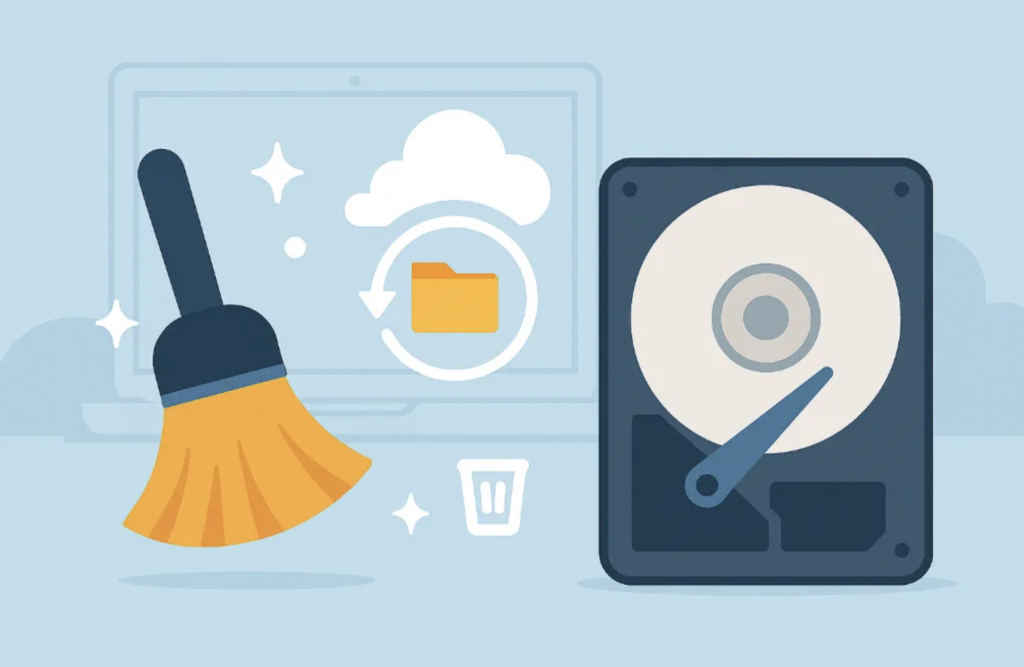
Every laptop slowly becomes cluttered with digital junk. Temporary files, update leftovers, browser cache, and unused downloads quietly pile up over time. These files may seem harmless individually, but together they consume valuable storage space and slow your laptop down significantly.
Think of junk files like garbage inside a small apartment. At first, a little clutter is manageable. After months of neglect, moving around becomes frustrating. Your laptop experiences the same problem. When storage becomes overcrowded, the operating system has to work harder to manage and organize data.
Windows 11 includes a helpful feature called Storage Sense, which automatically removes unnecessary files. Microsoft and tech experts continue to recommend regular cleanup, as excessive storage usage can directly reduce system responsiveness and slow File Explorer performance.
To clean junk files quickly:
- Open Settings
- Go to System
- Select Storage
- Turn on Storage Sense
You can also manually delete temporary files:
- Press Windows + R
- Type temp
- Delete unnecessary files
- Repeat using %temp%
Don’t worry if certain files won’t delete. Windows protects files currently in use.
Browser cache cleanup also matters more than many people realize. Chrome, Edge, and Firefox store huge amounts of temporary browsing data. Clearing the cache can improve browser speed and reduce crashes. Extensions should also be reviewed regularly because some consume large amounts of memory silently.
Another smart move is uninstalling programs you no longer use. Many laptops contain old software installed years ago that still occupies space and runs hidden background processes. Uninstalling unused programs helps free up storage and improves overall system efficiency.
If your laptop uses a traditional HDD instead of an SSD, disk cleanup becomes even more important because mechanical drives slow down heavily when overloaded with fragmented files.
Regular cleanup may not seem exciting, but it’s one of the quickest ways to boost laptop performance without any cost.
Update Windows and Drivers
Many users ignore updates because they seem annoying or time-consuming. Ironically, outdated software is often one of the biggest reasons laptops become slow and unstable. Windows updates and driver updates are designed to improve security, compatibility, battery efficiency, and overall system performance.
Microsoft recently announced major efforts to improve Windows 11 responsiveness, reduce RAM usage, and make File Explorer faster throughout 2026. These updates directly target many performance complaints users experience daily.
Drivers are especially important because they allow hardware components to communicate properly with Windows. If your graphics driver, chipset driver, or storage driver becomes outdated, your laptop may experience lag, freezing, overheating, or crashes.
To check for Windows updates:
- Open Settings
- Click Windows Update
- Select Check for Updates
You should also install optional driver updates whenever available. Microsoft support experts continue recommending optional driver updates to fix performance problems and lagging systems.
Graphics drivers matter heavily for gamers and video editors. Updated GPU drivers improve FPS, reduce stuttering, and optimize power usage. Companies like NVIDIA, Intel, and AMD release regular updates specifically for performance improvements.
Firmware updates can also improve battery life and system stability. Some laptop manufacturers release BIOS updates that fix overheating problems or improve CPU performance management.
The key is staying balanced. Install official updates from trusted sources only. Avoid random “driver booster” programs that promise magical speed improvements because many are unreliable or unsafe.
A properly updated laptop usually feels smoother, boots faster, and experiences fewer crashes. Updates may seem small individually, but together they create a more stable and responsive experience over time.
Adjust Power Settings for Maximum Speed
Your laptop’s power settings have a huge impact on performance, yet many people never touch them. Most laptops automatically prioritize battery saving over speed, especially when unplugged. This means your processor may intentionally slow down to preserve battery life, even when you need full performance.
It is similar to driving a sports car in eco mode all day. The power exists, but the system intentionally limits it.
Windows provides various power modes that influence CPU performance, cooling behavior, and overall system responsiveness. Recent community discussions and optimization guides highlight power mode adjustments as one of the easiest ways to unlock hidden laptop performance.
To change power settings:
- Open Settings
- Go to System
- Select Power & Battery
- Choose the Best Performance
If you are gaming or editing videos, this setting can make a noticeable difference immediately. Applications open faster, multitasking becomes smoother, and CPU-intensive tasks finish quicker.
Some advanced users also enable the hidden Ultimate Performance mode in Windows for maximum speed. This setting reduces aggressive power-saving behavior and keeps the processor operating at higher performance levels consistently.
Here is a comparison of common power modes:
| Power Mode | Battery Life | Speed |
| Best Power Efficiency | Excellent | Lower |
| Balanced | Good | Moderate |
| Best Performance | Lower | Highest |
Keep in mind that higher performance settings may increase heat and reduce battery life. That is normal, as the laptop may consume more power to maintain performance.
If your laptop constantly overheats after switching modes, cleaning the cooling vents and using a cooling pad can help maintain stable performance.
Reduce Visual Effects and Animations
Modern versions of Windows look beautiful, but visual beauty sometimes comes at the cost of speed. Animations, transparency effects, shadows, and fancy transitions all consume processing power. On powerful gaming laptops, this may not matter much. On older or budget laptops, these effects can make the system feel slow and heavy.
Many users describe Windows 11 as feeling less responsive compared to older versions because of modern UI effects and background visual layers. Reducing these effects can make your laptop feel noticeably snappier.
To disable unnecessary visual effects:
- Search for Advanced System Settings
- Open Performance Settings
- Select Adjust for Best Performance
This disables animations and visual extras that slow down older systems.
You can also manually keep certain effects enabled while disabling the heaviest ones. For example, turning off transparency and animation effects alone often improves responsiveness without making Windows look outdated.
The improvement is especially noticeable when:
- Opening folders
- Switching between apps
- Using File Explorer
- Running multiple programs
Think of visual effects like decorative accessories in a car. They may look nice, but removing unnecessary weight improves speed and efficiency.
Scan for Malware and Viruses
Malware is one of the most dangerous causes of slow laptop performance. A hidden virus can quietly consume CPU resources, overload memory, steal internet bandwidth, and even damage important files. Some malware runs silently in the background for months before users realize something is wrong.
If your laptop suddenly becomes extremely slow, overheats constantly, or displays strange pop-ups, malware could be the problem.
Microsoft support experts continue recommending full virus scans as a critical troubleshooting step for lagging Windows systems.
To scan your laptop:
- Open Windows Security
- Go to Virus & Threat Protection
- Run a Full Scan
Avoid downloading random “PC cleaner” software from unknown websites. Many fake optimization tools end up installing malware rather than improving system performance.
Safe browsing habits also matter:
- Avoid suspicious downloads
- Do not open unknown email attachments
- Keep browsers updated
- Use trusted antivirus protection
A clean system runs faster, safer, and more reliably.
Upgrade Hardware for a Bigger Speed Boost
Sometimes software optimization alone is not enough. If your laptop is several years old, hardware upgrades can create dramatic improvements. The two most effective upgrades are installing an SSD and upgrading RAM.
An SSD is among the best upgrades for improving laptop speed. Traditional HDDs use spinning disks that are much slower than modern SSD technology. Upgrading from an HDD to an SSD can cut boot times from minutes down to just seconds.
Here is the difference:
| Feature | HDD | SSD |
| Speed | Slower | Much Faster |
| Noise | Audible | Silent |
| Durability | Lower | Higher |
| Boot Time | Long | Quick |
RAM upgrades also help significantly, especially for multitasking. If your laptop only has 4GB RAM, upgrading to 8GB or 16GB can make daily tasks feel dramatically smoother.
Recent Windows performance reports indicate that modern applications are using increasing amounts of RAM compared to before. This makes memory upgrades increasingly valuable in 2026.
Hardware upgrades cost money, but they often extend a laptop’s lifespan by several years.
Conclusion
A slow laptop can feel incredibly frustrating, especially when simple tasks start taking forever. The good news is that most performance problems have practical solutions that do not require advanced technical skills. Small adjustments like disabling startup apps, cleaning junk files, updating drivers, and changing power settings can create noticeable improvements within minutes.
Modern operating systems continue to become heavier each year, which is why regular optimization matters more than ever. Microsoft itself has acknowledged ongoing efforts to improve Windows 11 speed, responsiveness, and RAM usage throughout 2026.
If software fixes are not enough, upgrading to an SSD or adding more RAM can completely transform your laptop experience. Even older laptops often feel brand new after the right upgrades.
The secret is consistency. A laptop performs best when it is regularly maintained rather than left until performance becomes severely degraded. Think of optimization like maintaining a car. Small maintenance today prevents major problems tomorrow.
FAQs
1. Why is my laptop suddenly very slow?
Sudden slowdowns are often caused by background apps, malware, overheating, low storage space, or recent software conflicts. Running a virus scan and checking Task Manager usually helps identify the issue.
2. Does restarting a laptop really improve speed?
Yes. Restarting clears temporary memory usage, refreshes system processes, and fixes many minor software issues that build up over time.
3. How much RAM do I need for smooth performance in 2026?
For basic use, 8GB RAM is recommended. For gaming, editing, or heavy multitasking, 16GB provides much better performance.
4. Is Windows 11 slower than Windows 10?
Some users report that Windows 11 feels heavier due to its animations and modern UI layers. Microsoft is actively improving responsiveness and performance through updates.
5. What is the quickest way to improve the performance of an old laptop?
Installing an SSD is usually the biggest speed upgrade. Disabling startup apps and cleaning junk files also creates immediate improvements.