

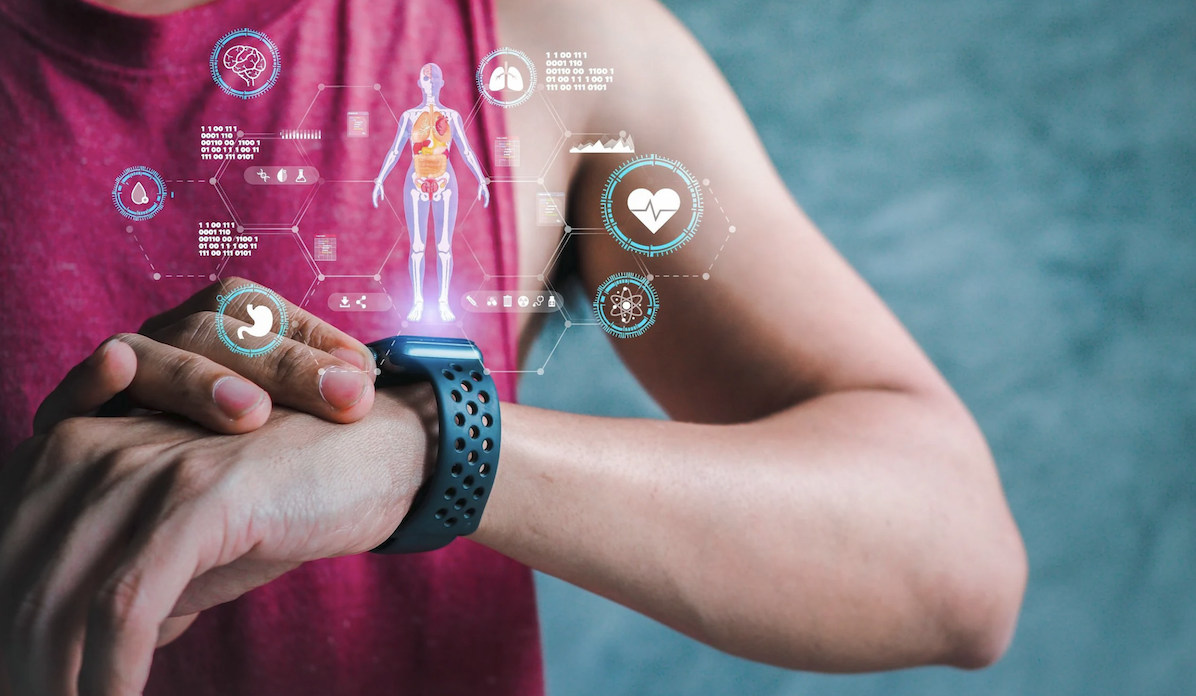
A 45-year-old runner’s Apple Watch flagged an irregular heart rhythm during a routine morning jog, a notification that led to a cardiologist visit and the discovery of atrial fibrillation weeks before it might have caused a stroke. Stories like this have become common enough that cardiologists now routinely ask patients whether their wearable has flagged anything unusual.
Devices like the Apple Watch, Oura Ring, and Whoop have moved well past step-counting novelty status, evolving into truly capable health monitoring tools that are quietly reshaping how preventive care gets practiced, both by patients monitoring themselves and by physicians incorporating that data into clinical decisions.
Sensors Inside Modern Wearable Devices
Modern wearables pack a surprising range of sensors into a small form factor, each measuring a different physiological signal. Photoplethysmography (PPG) sensors, using light to measure blood volume changes under the skin, form the basis for heart rate and blood oxygen monitoring across nearly every major wearable brand. Accelerometers and gyroscopes track movement and orientation, enabling step counts, fall detection, and sleep stage estimation.
More advanced devices add specialized sensors that expand what’s measurable. The Apple Watch includes an electrical heart sensor capable of generating a single-lead ECG, sufficient to detect signs of atrial fibrillation, a specific and clinically meaningful capability that required FDA clearance to offer. Oura Ring focuses heavily on temperature sensing and heart rate variability (HRV), using these signals to estimate recovery and readiness rather than emphasizing real-time activity tracking.
The sensor landscape across popular devices breaks down roughly as follows:
- Heart rate and HRV: Nearly universal across Apple Watch, Whoop, Oura Ring, and Garmin devices, used to estimate stress, recovery, and cardiovascular fitness.
- Blood oxygen (SpO2): Found in Apple Watch and many Garmin models, useful for detecting potential respiratory issues or altitude-related effects.
- Skin temperature: Central to Oura Ring’s readiness scoring, also used by Apple Watch for cycle tracking and illness detection.
- ECG capability: Available on Apple Watch and select Withings devices, providing clinically relevant rhythm data beyond simple heart rate.
- Sleep staging: Combines accelerometer, heart rate, and sometimes temperature data to estimate light, deep, and REM sleep phases across most premium wearables.
Raw sensor data alone isn’t especially useful without processing, which is where each company’s proprietary algorithms come in, turning millions of raw data points into digestible scores like Whoop’s “recovery” metric or Oura’s “readiness” score, translating complex physiology into something a non-clinician can act on daily.
Preventive Care Benefits of Wearables
The core value proposition of wearable health technology for preventive care is continuous, passive monitoring that catches patterns a once-a-year physical simply cannot. A traditional annual checkup captures a single snapshot of a person’s health, while a wearable collects thousands of data points daily, revealing trends and anomalies that would otherwise go completely unnoticed until they become symptomatic.
This continuous monitoring model has demonstrated real clinical value in several specific areas, most notably atrial fibrillation detection, where multiple studies involving Apple Watch and Fitbit devices have shown wearables can identify irregular heart rhythms in users who had no prior symptoms, leading to earlier medical evaluation.
Several categories of preventive benefit have emerged clearly from wearable adoption:
- Early arrhythmia detection: ECG and irregular rhythm notifications have led to earlier diagnosis of atrial fibrillation in thousands of documented cases.
- Sleep pattern awareness: Consistent sleep tracking has helped users identify sleep apnea symptoms and poor sleep hygiene contributing to broader health issues.
- Activity and behavior nudges: Daily movement reminders and activity goals have measurably increased physical activity levels among sedentary users.
- Recovery and overtraining prevention: Athletes using Whoop and Oura to monitor recovery scores report better management of training load, reducing injury and burnout risk.
- Early illness signals: Elevated resting heart rate or skin temperature changes have flagged oncoming illness, including some documented cases involving COVID-19 detection before symptom onset.
Insurance companies have taken notice too, with several major health insurers now offering premium discounts or wellness program credits for policyholders who share activity data from wearables, reflecting a broader industry bet that continuous monitoring translates into measurably better long-term health outcomes and lower claims costs.
Data Accuracy Concerns and Limitations
Despite real clinical value in specific use cases, wearable health data comes with real accuracy limitations that both users and clinicians need to factor into how they interpret it. Consumer wearables are not medical-grade devices in the same sense as hospital equipment, and their sensors can be thrown off by factors like skin tone, tattoos, motion artifacts, and loose device fit, all of which affect PPG sensor accuracy in documented, published research.
Sleep staging accuracy is an especially persistent challenge across the industry. While wearables are reasonably reliable at distinguishing sleep from wake, breaking sleep into precise light, deep, and REM stages remains substantially less accurate compared to clinical polysomnography, the gold-standard sleep study conducted in a lab.
Several specific accuracy limitations deserve attention from anyone relying heavily on wearable data:
- Skin tone and blood flow variability: PPG sensors can produce less reliable readings for users with darker skin tones or reduced peripheral blood flow.
- Motion artifact interference: Vigorous exercise, especially activities involving wrist rotation like weightlifting, can distort heart rate readings.
- Battery and device placement inconsistency: Loose-fitting devices or worn-out bands reduce sensor contact quality, degrading data reliability over time.
- Algorithm opacity: Proprietary scoring systems like readiness or recovery scores aren’t independently validated the way clinical tools must be, making it hard to know exactly what’s being measured.
- False positive and false negative risk: Irregular rhythm notifications can flag benign variations as concerning, or occasionally miss clinically relevant events, requiring professional confirmation either way.
None of this means wearable data is useless, but it means treating a wearable notification as a prompt to seek professional evaluation, rather than as a diagnosis in itself, remains the appropriate way to use these tools within a broader preventive care approach.
Popular Wearable Devices Compared
The wearable health market has matured into distinct categories, each optimized for a different priority, and knowing those differences helps buyers pick the right device rather than defaulting to whichever brand is most heavily marketed. Apple Watch remains the most feature-complete option for users already embedded in the Apple ecosystem, combining fitness tracking, ECG capability, fall detection, and deep integration with the Health app and third-party medical research studies.
Oura Ring has carved out a distinct niche by prioritizing sleep and recovery insights over real-time activity metrics, packaged in a ring form factor that many users find substantially more comfortable for continuous overnight wear than a wrist-worn device.
A practical comparison across the leading options looks like this:
- Apple Watch: Best overall feature set including ECG and fall detection, strong app ecosystem, requires daily charging and works best with an iPhone.
- Oura Ring: Best for sleep and recovery focus, discreet and comfortable for continuous wear, lacks real-time activity coaching features.
- Whoop: Best for athletes tracking training load and recovery, subscription-based model with no display, strong strain and recovery analytics.
- Garmin: Best for serious endurance athletes needing detailed performance metrics, longer battery life than Apple Watch, less polished software experience.
- Fitbit: Best for budget-conscious users wanting solid basic tracking, owned by Google with growing integration into Google’s health ecosystem.
Battery life varies substantially across these categories too, with Oura Ring lasting up to a week per charge compared to roughly one to two days for the Apple Watch, a trade-off tied directly to each device’s screen size, sensor set, and processing demands. Choosing between them ultimately comes down to whether a buyer prioritizes comprehensive features, sleep-specific insight, athletic performance data, or simple affordability.
Mistakes People Make Interpreting Wearable Data
Even accurate data can lead to poor decisions when users misinterpret what a wearable is telling them, and a handful of common mistakes show up repeatedly among new wearable owners. Fixating on a single daily score, like a Whoop recovery percentage or an Oura readiness number, without looking at longer-term trends often leads to unnecessary anxiety over normal day-to-day physiological variation.
Treating wearable alerts as definitive medical diagnoses rather than screening prompts is another common and potentially risky error. An irregular rhythm notification means “get this checked by a doctor,” not “you have a heart condition,” and conflating the two can cause either unnecessary panic or, in worse cases, false reassurance when a device fails to flag something a doctor would have caught.
Additional interpretation mistakes worth avoiding include:
- Comparing scores across different devices: A recovery score from Whoop and a readiness score from Oura use different algorithms and aren’t directly comparable, despite superficially similar names.
- Ignoring context in favor of raw numbers: A poor sleep score following a late flight or unusual schedule reflects a specific circumstance, not a persistent health problem.
- Over-relying on activity goals: Chasing an arbitrary step or calorie target can encourage overtraining or unhealthy behavior patterns rather than supporting real fitness.
- Dismissing all alerts as false alarms: After one false positive, some users stop taking any notification seriously, which risks missing a truly important signal later.
- Skipping professional follow-up: Noticing a concerning trend but never scheduling a doctor’s visit defeats the entire preventive value of the device.
The most effective wearable users tend to treat the data as one input among several, useful for spotting trends and prompting timely medical conversations, rather than as a substitute for professional clinical judgment or a source of daily obsessive monitoring.
Patient Outcomes: The Real-World Impact
Beyond individual anecdotes, wearable health technology has started generating research-backed evidence of real clinical impact, especially around cardiac monitoring. The Apple Heart Study, a large-scale research collaboration with Stanford Medicine involving hundreds of thousands of participants, demonstrated that Apple Watch’s irregular rhythm notifications could identify atrial fibrillation in a meaningful subset of users, many of whom had no prior awareness of a heart condition.
Healthcare systems have started integrating wearable data into clinical workflows too, not just leaving it as a consumer curiosity. Some cardiology practices now ask patients to share Apple Watch or Kardia ECG readings directly with their care team, using that continuous data to supplement infrequent in-office visits with a much richer picture of cardiac activity over time.
Concrete examples of documented impact span several areas of care:
- Cardiac arrhythmia detection: Multiple peer-reviewed studies have confirmed wearables can identify atrial fibrillation in previously undiagnosed users, prompting earlier treatment.
- Post-surgical recovery monitoring: Hospitals have piloted wearable-based remote monitoring for patients recovering at home, catching complications like abnormal heart rate patterns earlier.
- Chronic disease management: Diabetes management programs increasingly pair continuous glucose monitors with activity wearables to give patients and doctors a fuller metabolic picture.
- Mental health and stress research: HRV data from wearables is being studied as a potential early indicator of stress-related health decline, though this application remains less clinically established than cardiac monitoring.
- Corporate and insurance wellness programs: Employers and insurers using wearable data for wellness incentives report improved engagement with preventive health behaviors among participants.
While wearables haven’t replaced clinical diagnostics, and shouldn’t be expected to, the accumulating evidence base makes clear they’ve become a real, measurable contributor to earlier detection and more informed preventive care conversations, especially for cardiovascular health.
Choosing the Right Wearable
Selecting a wearable device should start with a clear sense of what health goal matters most, since no single device excels across every category. Someone primarily concerned about cardiac risk factors should prioritize ECG capability and irregular rhythm detection, features currently strongest on Apple Watch and select Withings devices, while someone focused on sleep and recovery might get more value from Oura Ring’s more targeted approach.
Comfort and wearability also deserve serious consideration, since a device that’s inconvenient enough to leave in a drawer provides zero preventive value regardless of its sensor quality. A person who dislikes wearing anything on their wrist overnight, for instance, may find a ring format works substantially better for continuous sleep tracking than a bulkier smartwatch.
A practical selection framework starts with identifying the primary health priority, since cardiac monitoring, sleep quality, athletic performance, or general activity tracking each point toward different device strengths. Daily wearability matters just as much: a device that’s comfortable enough to wear continuously, including overnight, delivers more consistent and useful data than one that gets removed frequently. Ecosystem compatibility is worth checking too, since Apple Watch works best with iPhone, while Garmin and Fitbit offer broader cross-platform support.
Subscription costs vary as well, with Whoop requiring an ongoing subscription for core features, while Apple Watch and Garmin are typically one-time purchases with optional add-ons. Finally, anyone with existing cardiac risk factors should discuss clinically relevant features with a doctor to identify which specific monitoring capabilities would add the most real value.
Ultimately, the best wearable is the one a person will wear consistently and whose data truly informs better health decisions, rather than the model with the longest feature list on paper. Matching device strengths to a clear personal health priority produces far more preventive value than chasing the newest release.
Final Thoughts
Wearable health technology has evolved from a step-counting novelty into a real contributor to preventive care, with documented cases of early arrhythmia detection and growing integration into clinical workflows proving the category’s staying power. Devices like Apple Watch, Oura Ring, and Whoop each serve distinct priorities, and choosing the right one depends on matching device strengths to personal health goals rather than chasing the most hyped release.
Accuracy limitations are real and worth respecting, especially around sleep staging and edge-case sensor conditions, but used thoughtfully alongside professional medical care, these devices give people an unprecedented window into their own physiology between doctor visits.
Read more about Techgili
Frequently Asked Questions
1. Are wearable health devices approved by medical regulators?
Some specific features are. Apple Watch’s ECG and irregular rhythm notification received FDA clearance as a medical device feature, but most wearable metrics, like sleep stages or readiness scores, are considered wellness tools rather than regulated diagnostic devices, and are held to a different standard of accuracy validation.
2. Can a wearable replace regular doctor visits?
No. Wearables are designed to supplement, not replace, professional medical care. They’re valuable for continuous monitoring and catching early warning signs between visits, but diagnosis and treatment decisions still require a qualified healthcare provider evaluating the full clinical picture.
3. Why do different wearables give different readings for the same activity?
Each device uses proprietary sensors, algorithms, and calibration methods, so results can vary even when measuring the same physiological signal. This is why comparing scores directly across brands, like an Oura readiness score against a Whoop recovery score, doesn’t produce a meaningful comparison.
4. Is my wearable health data private and secure?
Data privacy practices vary by company and are governed by each device maker’s privacy policy, which users should review carefully, especially before sharing data with insurers or employers for wellness programs. Health data regulations like HIPAA generally don’t cover consumer wearable companies unless they’re working directly with a healthcare provider.
5. Do cheaper wearables provide distinctly worse data than premium ones?
Generally, yes, though the gap has narrowed. Premium devices from Apple, Oura, and Garmin typically use more advanced sensors and more refined algorithms, producing more reliable readings than budget alternatives, especially for specialized metrics like ECG or detailed sleep staging.
6. Should athletes and non-athletes choose different wearables?
Often, yes. Athletes typically benefit from devices like Whoop or Garmin that emphasize training load, recovery, and performance metrics, while general health-focused users may find more value in Apple Watch’s broader feature set or Oura Ring’s sleep and recovery focus without athletic-specific complexity.