

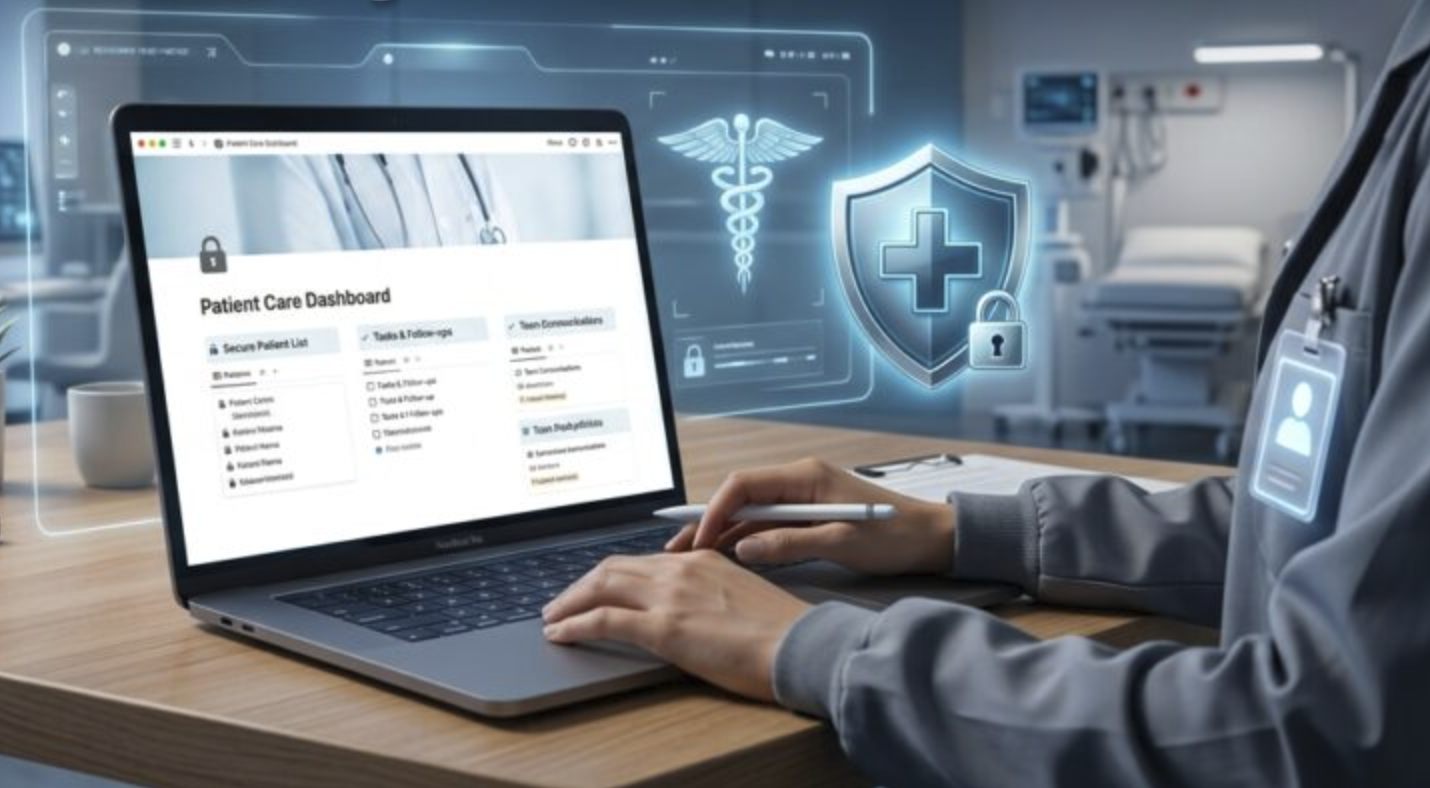
Healthcare professionals handle some of the most sensitive information in the world. From patient names and appointment details to treatment notes and internal workflows, protecting information is not just a good practice—it is essential.
As healthcare teams increasingly use digital tools to organize their work, platforms such as Notion have become popular for managing projects, documents, tasks, and knowledge. However, healthcare organizations must think carefully about privacy and compliance before putting sensitive information into any workspace.
This is where a HIPAA-conscious Notion template can be useful.
A well-designed template can help healthcare teams organize their workflows while encouraging better privacy habits and reducing the risk of accidentally placing protected health information (PHI) where it should not be stored.
In this article, we will explain what a HIPAA-conscious Notion template is, why healthcare organizations need one, and how to use one responsibly.
What Is a HIPAA-Conscious Notion Template?
A HIPAA-conscious Notion template is a workspace template designed with healthcare privacy and data-minimization principles in mind.
It is important to understand one key point: a template by itself does not make a healthcare organization HIPAA compliant.
Instead, a HIPAA-conscious template is designed to help teams create safer workflows. It encourages users to avoid unnecessary sensitive information, organize operational tasks clearly, and separate general business information from protected health information.
For example, a healthcare team might use a template to manage:
- Staff tasks and responsibilities
- Internal policies and procedures
- Training materials
- Content calendars
- Project timelines
- Non-patient-specific workflows
- Meeting agendas
- Operational checklists
The goal is to build an organized system without automatically placing patient-identifiable information into every tool.
Why Healthcare Teams Need Better Digital Organization
Healthcare organizations are busy environments. Doctors, nurses, administrators, billing teams, and managers often work with multiple systems every day.
Without a clear system, information can become scattered across emails, spreadsheets, messaging apps, and documents. Such practices can lead to misunderstandings and raise the likelihood of errors occurring.
A structured workspace helps teams answer simple but important questions:
- What needs to be done?
- Who is responsible?
- What is the current status?
- Where can employees find the latest policy?
- Which processes need improvement?
A HIPAA-conscious Notion template provides a simple framework for answering these questions while keeping privacy at the center of the workflow.
Understanding HIPAA and Protected Health Information
HIPAA, or the Health Insurance Portability and Accountability Act, includes rules designed to protect sensitive health information in the United States.
Protected Health Information, commonly called PHI, can include information that identifies an individual and relates to their health, healthcare, or payment for healthcare.
Because healthcare data is highly sensitive, organizations must carefully consider where information is stored and who can access it.
This is why a privacy-conscious approach matters when using productivity tools. Teams should avoid assuming that every popular software platform is appropriate for every type of healthcare data.
A good template encourages employees to pause and ask:
Do I really need to put this patient information here?
That simple question can prevent unnecessary exposure of sensitive data.
How a HIPAA-Conscious Notion Template Helps Healthcare Teams
A thoughtfully designed template can make healthcare operations easier without encouraging risky data practices.
Here are some of the biggest benefits.
1. It Encourages Data Minimization
One of the smartest approaches to privacy is collecting and storing only the information you actually need.
A HIPAA-conscious Notion template can use general labels, reference numbers, or non-identifying workflow details where appropriate instead of automatically requesting patient names and medical information.
For example, an operations tracker may focus on a task status rather than a patient’s full medical history.
Less unnecessary sensitive data can mean fewer opportunities for accidental exposure.
2. It Creates Clearer Workflows
Healthcare teams often repeat the same processes every week. These may include employee onboarding, compliance reviews, equipment checks, training, and administrative tasks.
Templates make these workflows easier to repeat.
Instead of starting from scratch, employees can follow a consistent process. This saves time and helps reduce confusion.
A clear workflow might include:
- Task name
- Assigned team member
- Due date
- Priority level
- Status
- Internal notes that do not contain unnecessary PHI
This simple structure can make daily operations more efficient.
3. It Improves Team Accountability
When tasks are scattered across different messages and documents, it can be difficult to know who is responsible for what.
A central workspace can improve visibility.
Team members can see assigned responsibilities, deadlines, and project progress. Managers can identify delays before they become larger problems.
However, access should always be managed carefully. Not every employee needs access to every piece of information.
A privacy-conscious workspace should follow the principle of giving people access only to the information they need for their role.
Important Features of a HIPAA-Conscious Template
Not every productivity template is suitable for healthcare-related workflows. A useful HIPAA-conscious template should be designed with privacy and clarity in mind.
Clear Data Boundaries
The template should clearly explain what type of information belongs in the workspace and what information should not be entered.
For example, the homepage could include a reminder such as:
“It is crucial to avoid inputting any information that could identify a patient unless your organization has verified that the system and procedures are authorized for handling such data.”
Clear reminders can help prevent accidental mistakes.
Privacy-Friendly Fields
Templates should avoid unnecessary fields that encourage users to enter sensitive information.
Instead of automatically including fields for patient names, dates of birth, or medical details, use general operational fields whenever possible.
Role-Based Workspaces
Different teams have different responsibilities.
A good healthcare workspace can separate areas for administration, training, marketing, operations, and internal documentation. This helps keep information organized and reduces unnecessary access.
Policy and Training Hub
Healthcare teams need easy access to current policies and training materials.
A dedicated knowledge hub can help employees find important documents without searching through long email threads.
This can be especially useful for onboarding new team members.
What Should Not Be Assumed About a Template?
This point is among the most critical aspects of the entire conversation.
Downloading or creating a “HIPAA template” does not automatically make an organization compliant with HIPAA.
Compliance depends on many factors, including the organization’s policies, security practices, access controls, contracts, risk management, and the specific tools being used.
Healthcare organizations should review their technology and workflows with qualified compliance, legal, and security professionals when necessary.
In other words:
A template can support better habits, but it cannot guarantee compliance on its own.
This distinction is essential for healthcare organizations that want to use modern productivity tools responsibly.
How to Use a Notion Template More Safely in Healthcare
If your healthcare team wants to use Notion or another productivity platform, start with a careful plan.
Identify the Purpose of the Workspace
Decide exactly what the workspace will be used for.
Will it manage internal projects? Staff training? Marketing? Operations?
The clearer the purpose, the easier it is to determine what information should and should not be stored there.
Create a “No PHI” Rule When Appropriate
For many general workflows, a simple rule can reduce risk: do not enter PHI into the workspace unless the organization has specifically approved that use.
Make this rule visible inside the template.
Train Your Team
Even the best template cannot prevent every mistake if employees do not understand how to use it.
Provide clear guidance about privacy, sensitive information, and approved communication channels.
Training should be practical and easy to understand.
Review Your Workflow Regularly
Technology and business processes change over time.
Review your workspace periodically to identify unnecessary information, outdated pages, or processes that need improvement.
Regular reviews can help your team maintain a cleaner and more organized system.
Why Simple Templates Can Be Better
Healthcare workflows do not always need complicated dashboards with hundreds of fields.
In fact, a simpler template can sometimes be safer and easier to use.
When employees see too many fields, they may enter information that is not necessary. A clean design encourages users to focus only on what is required.
A simple healthcare operations template might include:
- Dashboard
- Team tasks
- Standard operating procedures
- Training resources
- Compliance reminders
- Meeting notes
- Project tracker
Keeping the structure simple can improve adoption and reduce mistakes.
The Future of Healthcare Productivity
Healthcare organizations are under increasing pressure to work faster while maintaining strong privacy standards.
Digital productivity tools can help teams organize work, automate repetitive tasks, and improve collaboration. However, convenience should never replace responsible data management.
The future of healthcare productivity will likely involve a balance between smart technology and careful privacy practices.
A HIPAA-conscious Notion template represents this approach. It is not a magic compliance solution, but it can provide a useful structure for building better habits.
Final Thoughts
A HIPAA-conscious Notion template is designed to help healthcare teams stay organized while keeping privacy and responsible data handling in mind.
The biggest benefit is not simply having a beautiful dashboard. It is creating a workflow that encourages employees to think carefully about what information they collect, store, and share.
For healthcare organizations, the best approach is to use digital tools intentionally. Keep sensitive information only where it is approved and necessary, train your team, and regularly review your processes.
With the right strategy, healthcare teams can enjoy the benefits of modern productivity tools while making privacy a core part of everyday work.
A well-designed HIPAA-conscious template can be a valuable starting point for a more organized, efficient, and privacy-aware healthcare workplace.