

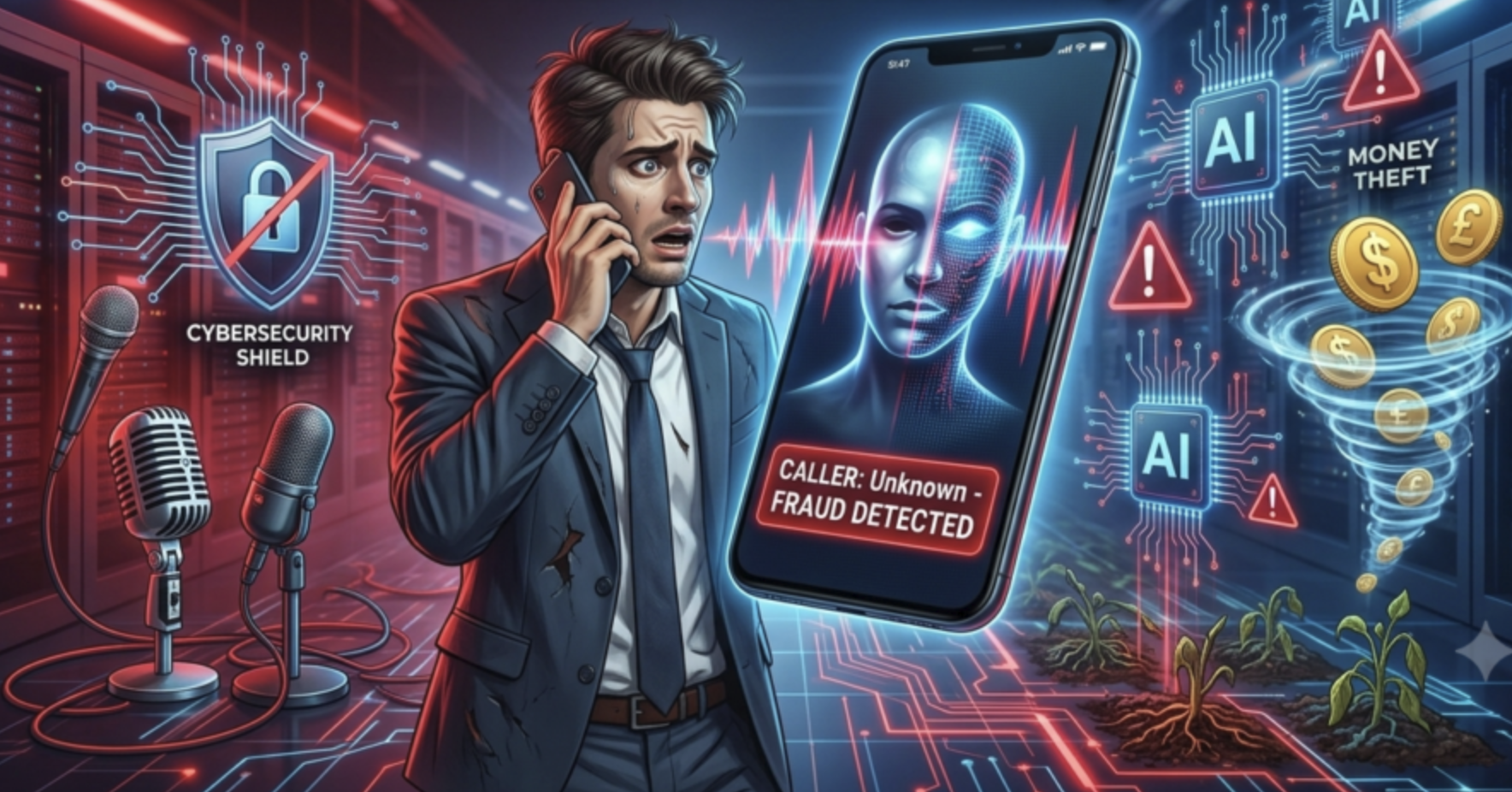
Artificial intelligence has transformed many industries, from healthcare and education to entertainment and customer service. However, cybercriminals are also using AI in dangerous ways. Among the rapidly increasing risks today is the danger of voice cloning scams and frauds.
Voice cloning technology can create realistic copies of a person’s voice in just a few minutes. Scammers use these fake voices to impersonate family members, company executives, and even government officials to steal money and sensitive information.
But what exactly is voice cloning fraud, and how do criminals use it? In this article, you’ll learn how voice cloning works, the tactics scammers use, and the steps you can take to protect yourself.
What Is Voice Cloning Fraud?
Voice cloning fraud is a type of scam in which criminals use artificial intelligence to create a fake version of someone’s voice. The cloned voice can sound almost identical to the real person, making it difficult for victims to detect the fraud.
Scammers typically collect voice samples from:
- Social media videos
- Podcasts
- YouTube channels
- Voice messages
- Interviews
- Video calls
Using AI software, criminals can generate realistic speech that imitates the target’s tone, accent, and speaking style.
How Does Voice Cloning Technology Work?
Voice cloning relies on machine-learning algorithms that analyze voice recordings and identify patterns such as:
- Pronunciation
- Pitch
- Tone
- Speed
- Accent
- Speech rhythm
After analyzing the data, the AI system creates a digital voice model that can generate new sentences, even if the original speaker never said them.
Modern voice-cloning tools need only a few seconds of audio to create convincing results.
How Scammers Use Voice Cloning to Steal Money
Criminals use voice cloning in several ways to trick victims into sending money or sharing personal information.
Fake Emergency Calls
One common scam involves a fake emergency phone call.
For example, a scammer may clone the voice of a family member and claim they have been kidnapped, injured, or arrested. The victim is then pressured to send money immediately.
Business Payment Fraud
Scammers often impersonate company executives and contact employees with urgent payment requests.
An employee may receive a call that sounds exactly like their CEO asking them to transfer money to a specific account.
Bank Account Scams
Criminals may pretend to be bank representatives and ask customers to reveal:
- Passwords
- PIN codes
- One-time verification codes
- Account information
Customer Support Impersonation
Scammers can also clone the voices of customer-service agents and convince victims to share sensitive information.
Why Voice Cloning Fraud Is Growing in 2026
Voice-cloning scams are increasing rapidly because of several factors.
Easy Access to AI Tools
Voice-generation software is becoming cheaper and easier to use.
More Online Content
People regularly upload videos, voice notes, and podcasts, providing scammers with plenty of voice samples.
Improved AI Technology
Modern AI tools produce voices that sound more realistic than ever before.
Emotional Manipulation
Scammers create panic and urgency, causing victims to act without verifying the situation.
Warning Signs of Voice Cloning Fraud
Although voice-cloning technology is advanced, there are still signs that may indicate a scam.
Be cautious if:
- The caller demands immediate payment.
- The person refuses to answer personal questions.
- The request seems unusual or urgent.
- The caller asks for gift cards or cryptocurrency.
- The conversation creates panic or fear.
Always verify unexpected requests before taking action.
Real-Life Example of a Voice-Cloning Scam
Imagine receiving a phone call from someone who sounds exactly like your son or daughter. They claim to be in trouble and urgently need money for bail or medical expenses.
Because the voice sounds familiar, many people react emotionally and send money immediately.
Only later do they discover that the call was generated by artificial intelligence and that their loved one was completely safe.
How Businesses Can Protect Themselves
Companies are increasingly becoming targets of voice-cloning fraud.
Businesses can reduce the risk by:
- Training employees about AI scams
- Using multi-factor authentication
- Verifying payment requests through email
- Creating approval procedures for large transactions
- Limiting access to sensitive information
Employee awareness is one of the strongest defenses against fraud.
How Individuals Can Stay Safe
Individuals can also take steps to protect themselves.
Verify Before Sending Money
Always confirm urgent requests using another communication method.
Create Family Security Questions
Choose a private question or code word that only family members know.
Limit Public Voice Content
Avoid sharing unnecessary voice recordings online.
Stay Calm
Scammers rely on fear and panic. Taking a few minutes to verify the situation can prevent financial loss.
The Role of Artificial Intelligence in Fraud Prevention
Interestingly, artificial intelligence is also being used to fight voice-cloning fraud.
Security companies are developing AI tools that can:
- Detect synthetic voices
- Analyze speech patterns
- Identify suspicious calls
- Prevent fraud attempts
As AI technology advances, fraud-detection systems will become even more effective.
Legal and Ethical Challenges
Governments around the world are working to regulate AI-generated content, but laws are still evolving.
Some of the biggest challenges include:
- Protecting privacy
- Preventing identity theft
- Detecting fake content
- Punishing cybercriminals
- Balancing innovation and security
New regulations may help reduce the misuse of voice-cloning technology in the future.
The Future of Voice Cloning Fraud
Voice cloning will continue to improve in the coming years, making scams even more convincing.
Both individuals and businesses must stay informed and adopt stronger security measures to protect themselves.
Education, awareness, and verification will be essential in the fight against AI-powered fraud.
Conclusion
So, what is voice cloning fraud, and how do scammers use it to steal money? It is a cybercrime in which criminals use artificial intelligence to copy voices and impersonate trusted individuals.
From fake emergency calls to business-payment scams, voice cloning poses a serious threat in 2026. By staying alert, verifying suspicious requests, and using strong security practices, you can significantly reduce the risk of becoming a victim.
As technology evolves, awareness will remain the most powerful defense against voice-cloning fraud.
FAQ’s
1. What is voice cloning fraud?
Voice cloning fraud is a scam that uses artificial intelligence to create fake voices and trick people into sending money or sharing sensitive information.
2. How do scammers get voice samples?
Scammers often collect voice recordings from social media, podcasts, interviews, videos, and voice messages.
3. Can voice-cloning scams affect businesses?
Yes. Criminals can impersonate executives or employees to steal money or access confidential data.
4. How can I protect myself from voice-cloning fraud?
You can protect yourself by verifying requests, using family security codes, limiting public voice recordings, and staying cautious of urgent demands.