

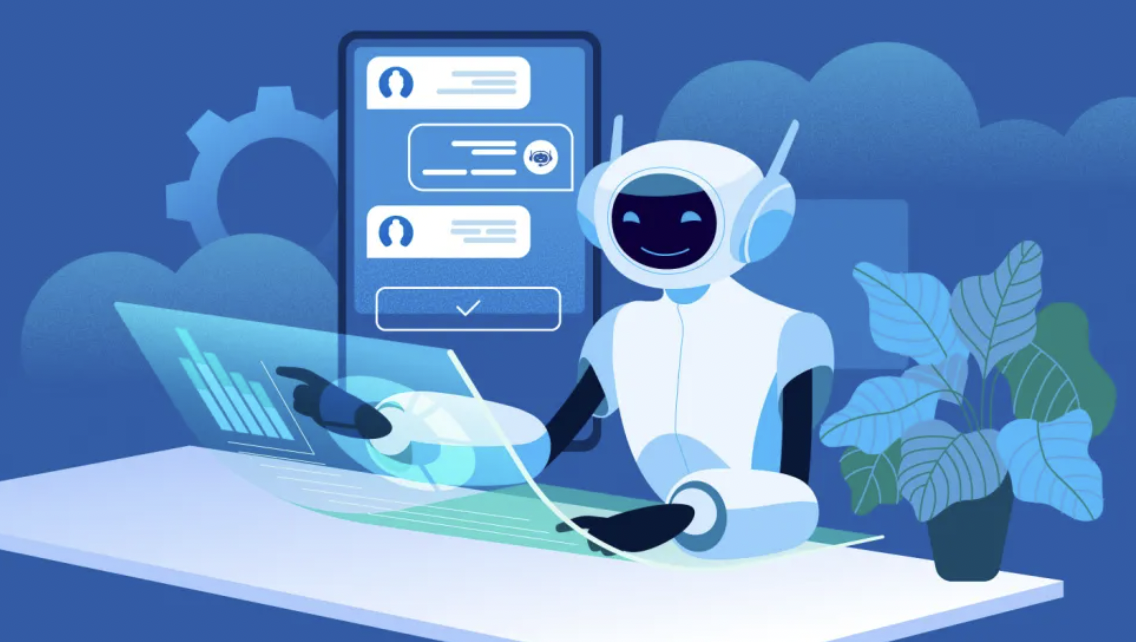
The integration of AI agents into business software has emerged as one of the most significant technology trends in today’s digital economy. Companies of all sizes are adopting intelligent software assistants to automate repetitive tasks, improve customer experiences, and make smarter business decisions.
Unlike traditional automation tools, AI agents can analyze data, understand natural language, and adapt their responses based on previous interactions. This enables companies to work more effectively while cutting down on expenses.
As artificial intelligence continues to evolve, organizations are integrating AI agents into customer service platforms, CRM systems, marketing software, finance tools, and human resource management solutions. The result is faster workflows, better productivity, and improved customer satisfaction.
What Are AI Agents?
AI agents are intelligent software programs designed to perform tasks autonomously with minimal human intervention. They collect information, process data, make decisions, and execute actions based on predefined goals.
For a deeper understanding of how AI systems learn, reason, and automate business processes, readers can explore the artificial intelligence resources available from IBM’s AI Learning Center.
Unlike simple chatbots, AI agents can learn from interactions and continuously improve their performance through machine learning.
Common characteristics include:
- Natural language understanding
- Automated decision-making
- Workflow automation
- Predictive analytics
- Continuous learning capabilities
These features make AI agents valuable assets for modern businesses seeking digital transformation.
Why Businesses Are Adopting AI Agents
The growing popularity of AI agents is driven by increasing demands for efficiency and customer satisfaction.
Major advantages include:
- Reduced operational costs
- Faster response times
- Improved employee productivity
- Better customer engagement
- Higher data accuracy
- 24/7 availability
Businesses no longer need employees to spend hours on repetitive administrative tasks. AI agents can handle routine operations while staff focus on strategic activities.
Organizations looking to further enhance workplace productivity can also explore our guide on 9 AI Tools That Will Make You Feel Like a Genius at Work in 2026, featuring practical AI solutions that help professionals work smarter, automate routine tasks, and improve efficiency.
Customer Support Automation
Customer service has experienced one of the biggest transformations through AI integration.
Modern AI agents answer frequently asked questions, process refunds, schedule appointments, and resolve common issues instantly. Customers get instant help without having to wait for a human representative.
Benefits include:
- Round-the-clock support
- Lower support costs
- Consistent service quality
- Reduced ticket backlog
- Faster issue resolution
When complex cases arise, AI agents seamlessly transfer conversations to human agents with complete customer history.
Sales and CRM Enhancement
Sales teams are using AI agents to qualify leads, prioritize prospects, and automate follow-up communications.
Instead of manually reviewing hundreds of contacts, AI analyzes customer behavior and identifies high-converting opportunities.
AI agents can:
- Score leads automatically
- Recommend next actions
- Schedule meetings
- Send personalized emails
- Predict customer buying behavior
This allows sales professionals to spend more time closing deals instead of performing administrative work.
Marketing Optimization
Marketing platforms now use AI agents to create personalized experiences for customers.
By analyzing browsing behavior, purchase history, and engagement patterns, AI delivers targeted recommendations and customized campaigns.
Popular marketing applications include:
- Email personalization
- Audience segmentation
- Content recommendations
- Campaign optimization
- Social media scheduling
- Performance prediction
These capabilities improve conversion rates while maximizing marketing budgets.
Human Resources Applications
Human resource departments increasingly rely on AI agents to simplify hiring and employee management.
Recruiters can automatically screen resumes, rank candidates, schedule interviews, and answer applicant questions.
AI also assists employees by providing instant access to company policies, leave balances, and internal documentation.
Benefits include:
- Faster recruitment
- Reduced hiring bias
- Better employee experience
- Automated onboarding
- Efficient HR support
This helps HR professionals focus on talent development rather than paperwork.
Financial Operations
Finance teams benefit significantly from intelligent automation.
AI agents monitor transactions, detect unusual spending patterns, generate financial reports, and assist with invoice processing.
Key financial uses include:
| Function | AI Benefit |
| Invoice Processing | Faster approvals |
| Expense Management | Automatic categorization |
| Fraud Detection | Real-time alerts |
| Budget Forecasting | Predictive analysis |
| Financial Reporting | Improved accuracy |
These improvements reduce errors and strengthen financial compliance.
Supply Chain and Inventory Management
AI agents optimize inventory control by forecasting demand and identifying supply chain risks before they become major problems.
Companies can proactively reorder inventory, track supplier performance, and optimize delivery timelines.
Advantages include:
- Lower inventory costs
- Better demand forecasting
- Reduced stock shortages
- Improved logistics planning
- Enhanced supplier management
This contributes to creating a more resilient and efficiently operating supply chain.
Challenges of Using AI Agents
Despite their benefits, AI agents also present challenges.
Organizations must address:
- Data privacy concerns
- Cybersecurity risks
- Integration complexity
- Employee training requirements
- Ethical considerations
- Initial implementation costs
Successful AI adoption requires careful planning, strong governance, and continuous monitoring.
The Future of AI Agents in Business Software
The future looks promising as AI agents become more intelligent and autonomous.
Businesses will increasingly use AI to coordinate entire workflows across departments, enabling seamless collaboration between software systems.
Future developments may include:
- Autonomous business operations
- Advanced predictive decision-making
- Hyper-personalized customer experiences
- Multi-agent collaboration
- Voice-controlled enterprise software
Companies that embrace these innovations early are likely to gain significant competitive advantages.
Many businesses start their AI adoption journey with affordable solutions before investing in enterprise platforms. If you’re exploring cost-effective options, check out our guide on AI Tools That Are Actually Free and Not Just Free Trials to discover practical AI solutions without subscription commitments.
Conclusion
How AI agents are being used inside business software now demonstrates the rapid evolution of digital transformation across industries. From automating customer support to enhancing financial management and improving supply chains, AI agents are becoming essential business tools.
Organizations that strategically adopt AI technologies can improve efficiency, reduce costs, and deliver better customer experiences. While challenges remain, the long-term benefits make AI agents a valuable investment for businesses seeking sustainable growth and innovation in an increasingly competitive marketplace.
Frequently Asked Questions
1. What is an AI agent within business software?
An AI agent is an intelligent program that automates tasks, analyzes information, and makes decisions to improve business operations.
2. How are AI agents currently being integrated and utilized in business software?
They are utilized for customer support, marketing automation, sales management, HR activities, financial analysis, and supply chain improvement.
3. Are AI agents replacing employees?
No. AI agents automate repetitive work while employees focus on creative thinking, strategy, and relationship building.
4. Which sectors gain the greatest advantages from AI agents?
Healthcare, finance, retail, manufacturing, education, logistics, and customer service all benefit significantly.
5. Are AI agents expensive to implement?
Costs vary, but many cloud-based AI solutions are affordable for small and medium-sized businesses.
6. What is the future of AI agents?
AI agents will become more collaborative, intelligent, and capable of managing complex business workflows with minimal human intervention.