

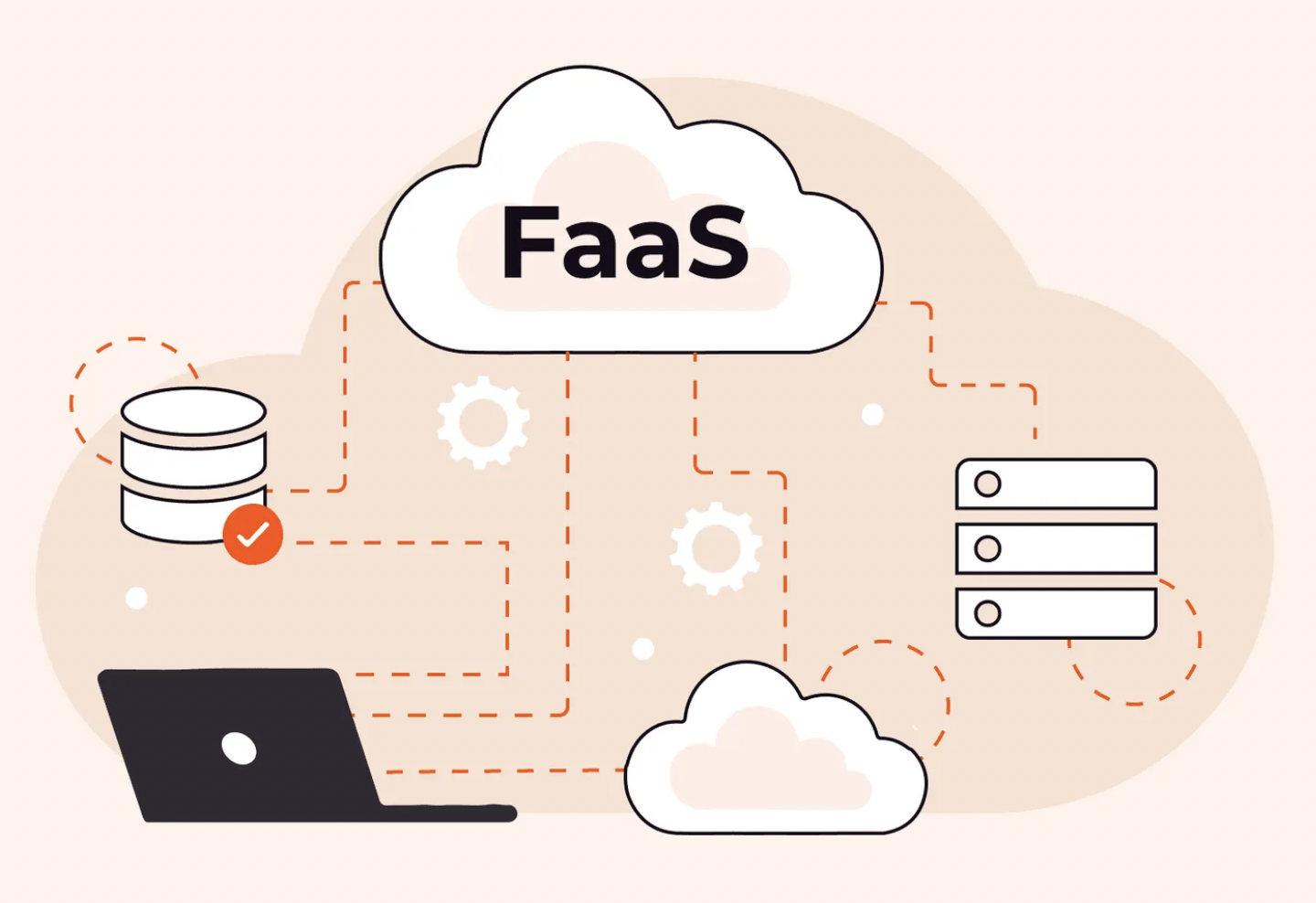
Cloud computing has evolved rapidly over the past decade, making software development faster, more scalable, and more cost-effective. One of the biggest innovations driving this transformation is Function as a Service (FaaS), a cloud computing model that allows developers to run code without managing servers. As organizations continue moving toward cloud-native applications, FaaS has become a core part of modern software architecture.
If you’ve ever wondered what FaaS is or why serverless computing has become such an important trend, this guide explains everything you need to know. From how FaaS works and its benefits to real-world use cases and potential challenges, you’ll discover why businesses of all sizes are embracing serverless technologies.
What Is FaaS?
Function as a Service (FaaS) is a cloud service model where developers write small pieces of code, known as functions, that execute only when triggered by an event. Instead of maintaining servers or virtual machines, developers upload their code to a cloud provider, which automatically handles infrastructure management, scaling, updates, and availability.
Unlike traditional applications that run continuously, FaaS functions execute only when needed. Once a task is complete, the resources are released automatically. This event-driven approach allows businesses to reduce costs while improving efficiency.
Popular FaaS platforms include:
- AWS Lambda
- Microsoft Azure Functions
- Google Cloud Functions
- Cloudflare Workers
These services enable developers to focus on writing code rather than managing infrastructure.
For a deeper understanding of how serverless functions work in practice, the official AWS Lambda documentation explains function execution, event triggers, pricing, and deployment best practices.
What Is Serverless Computing?
Serverless computing is a cloud service model in which the cloud provider handles all server management and maintenance tasks. Although physical servers still exist, users never need to configure, maintain, or scale them manually.
FaaS is one part of serverless computing. While Backend as a Service (BaaS) handles services like authentication and databases, FaaS focuses specifically on executing application logic.
With serverless computing, developers simply deploy their applications while the provider automatically manages:
- Server provisioning
- Operating system updates
- Scaling
- Security patches
- High availability
- Load balancing
This dramatically reduces operational complexity.
If you’re exploring different cloud service models, understanding What Is PaaS and Why Developers Love It So Much can help you see how Platform as a Service compares with serverless computing and where each solution fits in modern application development.
How FaaS Works
FaaS operates using an event-driven architecture. A function remains inactive until an event triggers it.
Common triggers include:
- HTTP requests
- File uploads
- Database updates
- Scheduled timers
- API calls
- IoT device events
- Message queues
For example, imagine a customer uploads a profile picture to a website.
Instead of keeping a server running constantly, a cloud storage event automatically triggers a function that:
- Resizes the image
- Compresses it
- Stores multiple versions
- Updates the user profile
Once these tasks finish, the function stops running automatically.
Key Benefits of FaaS
Lower Infrastructure Costs
One of the biggest advantages of FaaS is its pay-per-use pricing model. Businesses pay only for the actual execution time of their functions rather than maintaining servers that may remain idle for long periods.
This makes FaaS especially cost-effective for applications with unpredictable or seasonal traffic.
Although Function as a Service (FaaS) is mainly intended for developers creating cloud-based apps, most everyday users experience cloud technology via Software as a Service (SaaS). You can learn more in What Is SaaS and Why You Are Already Using It Without Knowing, which explains how SaaS powers many of the apps people use every day.
Automatic Scaling
Traditional servers require manual planning to handle traffic spikes.
FaaS platforms automatically scale based on incoming requests.
No matter if your app gets just a few requests or millions, the cloud service adjusts resources on its own, without needing manual help from an administrator.
Faster Development
Developers spend less time configuring servers and more time building application features.
Because infrastructure management is handled by the provider, development teams can release updates much faster.
During one serverless project I worked on for a small business client, deploying new API features became significantly faster because we no longer had to configure or maintain virtual servers. The team could focus entirely on writing and testing code instead of managing infrastructure.
Reduced Maintenance
With traditional hosting, teams must manage:
- Server updates
- Security patches
- Operating system maintenance
- Hardware failures
FaaS eliminates most of these operational responsibilities.
This setup helps IT teams concentrate on developing new features and innovations instead of managing regular maintenance tasks.
Real-World Examples of FaaS
Image Processing
Many websites automatically resize uploaded images.
When a user uploads a photo, a serverless function instantly creates thumbnails, compresses images, and stores optimized versions without human intervention.
E-commerce Applications
Online stores use FaaS to:
- Process orders
- Send confirmation emails
- Update inventory
- Generate invoices
- Trigger shipping notifications
Each task runs independently, improving performance and reliability.
Financial Services
Financial institutions and fintech firms utilize serverless functions to detect fraud, handle payments, and keep an eye on transactions.
Functions analyze transactions in real time and trigger alerts when suspicious activity is detected.
IoT Applications
Internet of Things (IoT) devices continuously send data to cloud platforms.
Serverless functions process incoming sensor data, generate alerts, and update dashboards without requiring dedicated servers.
Challenges of FaaS
Although FaaS offers many benefits, it is not the perfect solution for every workload.
Cold Starts
If a function has not been used recently, the platform may need to initialize a new execution environment before running it.
This small delay, known as a cold start, can affect applications requiring extremely low latency.
Vendor Lock-In
Each cloud provider offers different services and APIs.
Moving applications between AWS, Azure, and Google Cloud may require code modifications.
Organizations should design applications carefully if portability is important.
Execution Time Limits
Most FaaS platforms limit how long a function can run.
Long-running processes may require virtual machines or containers instead.
Monitoring Complexity
Applications built from hundreds of serverless functions can become more difficult to debug than traditional monolithic applications.
Monitoring tools and centralized logging become increasingly important.
Best Use Cases for FaaS
FaaS works particularly well for:
- REST APIs
- Image processing
- Chatbots
- Data transformation
- Scheduled jobs
- Webhooks
- File conversions
- Notification systems
- Payment processing
- Background automation
These workloads benefit from event-driven execution and automatic scaling.
When FaaS May Not Be the Best Choice
Serverless computing is not ideal for every application.
Traditional infrastructure may be better suited for:
- High-performance gaming
- Long-running scientific computations
- Legacy enterprise applications
- Software requiring constant processing
- Applications with strict latency requirements
Evaluating workload characteristics before choosing FaaS helps avoid unnecessary limitations.
How to Get Started with FaaS
If you’re new to serverless development, follow these steps:
- Choose a cloud platform such as AWS Lambda or Azure Functions.
- Learn one supported programming language like Python, JavaScript, or Go.
- Build a simple HTTP-triggered function.
- Connect it to an API or storage service.
- Test performance and monitor execution logs.
- Expand into larger event-driven workflows as your experience grows.
Starting with small projects helps developers understand serverless architecture before moving to production applications.
The Future of Serverless Computing
Serverless computing continues to evolve rapidly. As artificial intelligence, edge computing, and cloud automation become more advanced, FaaS is expected to play an even larger role in software development.
Businesses increasingly prefer architectures that reduce operational overhead while allowing applications to scale automatically.
Modern cloud providers continue adding features such as lower latency, improved security, better observability, and deeper integration with AI services.
For startups, enterprises, and independent developers alike, FaaS offers a flexible foundation for building scalable cloud-native applications.
Conclusion
Function as a Service (FaaS) has fundamentally changed how developers build and deploy modern applications. By eliminating the need to manage servers, FaaS enables faster development, automatic scaling, lower infrastructure costs, and greater operational efficiency. Whether processing files, powering APIs, or automating business workflows, serverless functions allow organizations to focus on delivering value instead of maintaining infrastructure.
If you’re deciding which cloud model best suits your business, it’s worth reading IaaS vs PaaS vs SaaS: Choosing the Right Cloud Model for Your Business. It explains the key differences between cloud service models and helps you understand where FaaS and serverless computing fit into a modern cloud strategy.
While FaaS does have limitations, such as cold starts and execution time limits, its advantages make it an excellent choice for many cloud-native applications. As cloud technology continues to advance, serverless computing is likely to become an even more important part of modern software development, helping businesses innovate faster and respond more effectively to changing demands.
Frequently Asked Questions
1. What is FaaS in cloud computing?
Function as a Service (FaaS) is a serverless cloud computing model that allows developers to run individual functions without managing servers. The cloud provider automatically handles infrastructure, scaling, and maintenance, while users pay only for the time their code executes.
2. What is the difference between FaaS and serverless computing?
Serverless computing is a broader cloud model where infrastructure management is handled by the provider. FaaS is a component of serverless computing that focuses specifically on executing event-driven functions. In simple terms, FaaS is one of the technologies that makes serverless computing possible.
3. What are the main benefits of using FaaS?
FaaS offers several advantages, including automatic scaling, lower infrastructure costs, faster application development, reduced server maintenance, and pay-as-you-go pricing. It is especially useful for applications with variable workloads and event-driven processes.
4. What are the limitations of FaaS?
While FaaS provides many benefits, it also has limitations such as cold start latency, execution time limits, vendor lock-in, and increased complexity when debugging large serverless applications. It’s important to think about these points before deciding to go with a serverless setup.
5. What types of industries are using Function as a Service (FaaS)?
Many industries use FaaS, including e-commerce, finance, healthcare, media, manufacturing, and IoT. Businesses commonly use it for APIs, image processing, payment processing, real-time notifications, data analysis, and workflow automation.
6. Is FaaS suitable for every application?
No. FaaS works best for event-driven, short-running tasks and applications with unpredictable traffic. Applications that require constant processing, extremely low latency, or long-running computations may be better suited to virtual machines, containers, or traditional cloud infrastructure.