

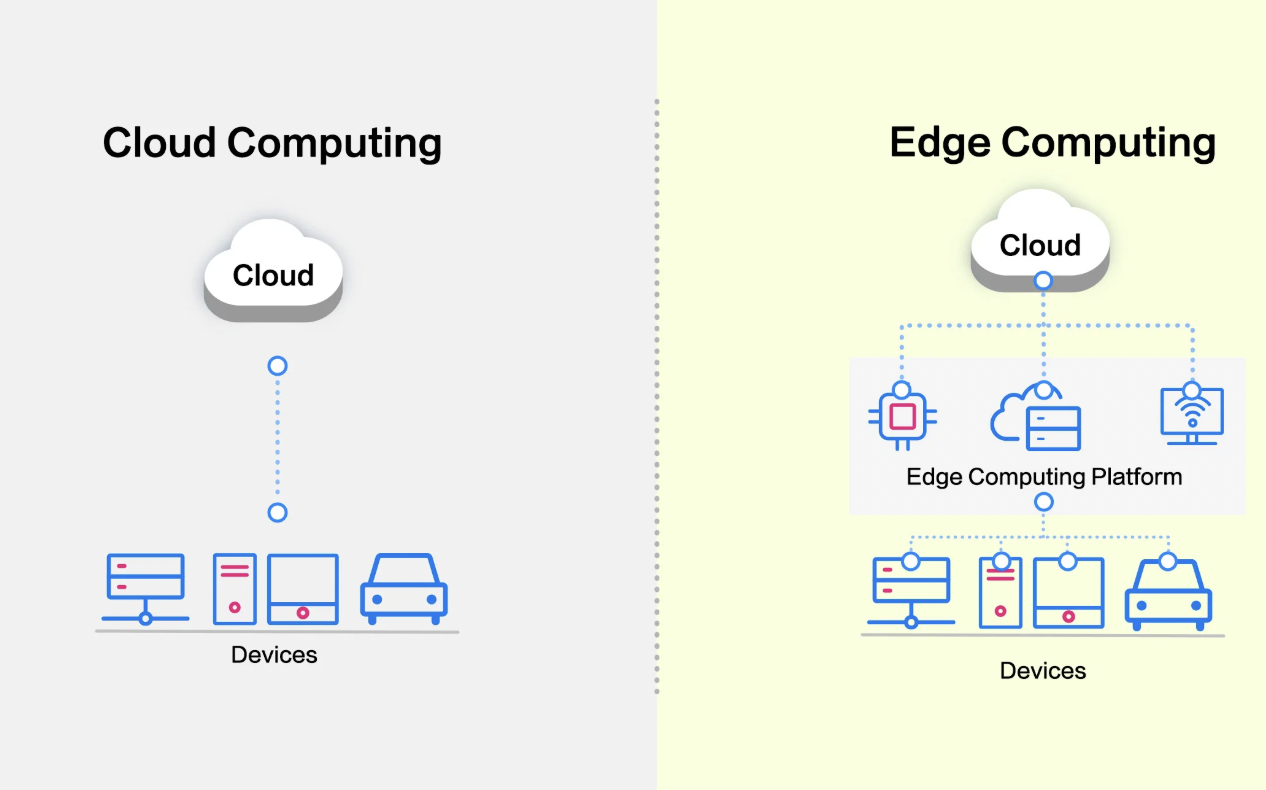
The way organizations process and store data is changing rapidly. As connected devices become more common and real-time applications grow in importance, businesses across the United States are rethinking how their IT infrastructure is designed. Edge computing has emerged as a powerful complement to traditional cloud computing, allowing companies to process data closer to where it’s created instead of relying entirely on distant data centers.
Rather than replacing the cloud, edge computing works alongside it. The most successful organizations combine both technologies to improve performance, reduce latency, strengthen reliability, and optimize costs. Understanding how edge computing differs from cloud computing can help businesses make smarter technology decisions in 2026 and beyond.
What Is Edge Computing?
Edge computing is a decentralized approach that handles data right where it’s created, reducing the need to send everything to a central server. Instead of sending every piece of information to a centralized cloud server, edge devices analyze and process data locally before transmitting only the most relevant information.
The “edge” refers to devices or local servers positioned near users, sensors, machines, or connected equipment. These may include industrial gateways, smart cameras, IoT devices, retail point-of-sale systems, autonomous vehicles, or on-site servers.
This approach significantly reduces the time required for data to travel across networks, making edge computing ideal for applications where even a small delay can affect performance or safety.
According to Grand View Research, the global edge computing market was valued at $61.14 billion in 2023 and is expected to experience strong growth through 2030 as organizations continue investing in low-latency computing solutions.
Some common examples of edge computing include:
- Self-driving vehicles processing sensor data in real time
- Manufacturing equipment detecting failures before they occur
- Retail stores analyzing customer traffic using smart cameras
- Hospitals monitoring patient vitals with instant local alerts
- Smart cities managing traffic signals through connected infrastructure
From my experience covering enterprise technology projects, I’ve noticed that businesses often see the biggest performance improvements when they process only time-sensitive data at the edge while continuing to use the cloud for analytics and long-term storage. This hybrid strategy reduces unnecessary network traffic without sacrificing the flexibility of cloud services.
How Cloud Computing Works
Cloud computing delivers computing resources from large-scale data centers operated by providers such as Amazon Web Services (AWS), Microsoft Azure, and Google Cloud. Applications, storage, databases, networking, and artificial intelligence services are all accessed over the internet.
For an in-depth explanation of cloud computing concepts and deployment models, see the AWS Cloud Computing Overview.
Instead of maintaining expensive on-premises hardware, organizations rent computing resources as needed. This model offers exceptional scalability, lower upfront costs, and access to advanced managed services.
Cloud computing remains an excellent choice for workloads such as:
- Long-term data storage
- Software development
- Backup and disaster recovery
- Business intelligence
- Machine learning model training
- Enterprise collaboration
Because cloud providers manage the underlying infrastructure, businesses can focus more on innovation than maintaining servers.
Many of the applications people use every day, such as email platforms, project management tools, and video conferencing software, are delivered through the cloud as Software as a Service (SaaS). If you’re new to the concept, read our guide on What Is SaaS and Why You Are Already Using It Without Knowing to see how SaaS fits into modern cloud computing
Edge Computing vs. Cloud Computing: The Main Differences
Although edge computing and cloud computing often work together, they solve different problems.
1. Latency
Latency is the delay experienced as data moves between devices and processing centers, affecting speed and responsiveness.
When information is sent to a remote cloud data center, network delays are unavoidable. Depending on network quality and physical distance, response times commonly range between 20 and 150 milliseconds.
For many business applications, this delay is perfectly acceptable. However, industries such as manufacturing, transportation, healthcare, and telecommunications often require responses within just a few milliseconds.
Edge computing minimizes latency by processing data much closer to the source, allowing systems to react almost instantly.
For example, an autonomous vehicle cannot afford to wait for a cloud server to decide whether to apply the brakes. Local processing allows safety-critical decisions to happen immediately.
2. Bandwidth and Data Volume
The numerous devices connected to the internet produce vast amounts of information daily, which needs to be managed efficiently.
Factories may operate thousands of sensors simultaneously. Retail stores continuously capture video streams. Industrial equipment collects operational metrics every second.
Sending all of this raw data to the cloud would consume significant bandwidth while increasing storage and networking costs.
Edge computing reduces this burden by filtering, compressing, and analyzing data locally before sending only summaries, alerts, or meaningful events to cloud systems.
In many environments, only a small percentage of collected data actually requires long-term storage.
3. Reliability
Cloud computing depends on reliable internet connectivity.
If connectivity is interrupted, cloud-dependent applications may lose access to important services until the connection is restored.
Edge computing helps maintain business continuity because processing occurs locally. When internet connectivity drops unexpectedly, essential programs can still keep running smoothly.
I’ve spoken with IT professionals managing remote industrial facilities who consistently emphasize this advantage. Local processing allows essential equipment to keep functioning during network outages, with data synchronized to the cloud once connectivity returns.
4. Security and Compliance
Security is important regardless of where applications run.
A benefit of edge computing is that private data can stay stored on local devices, avoiding the need to send it over public networks. This can help organizations address privacy requirements and industry regulations such as HIPAA and state-level data protection laws.
However, edge computing also introduces new security responsibilities. Each device that is set up adds to the list of endpoints that need ongoing supervision, software updates, and security measures.
Organizations should implement:
- Device authentication
- End-to-end encryption
- Secure boot processes
- Regular firmware updates
- Endpoint detection and monitoring
- Centralized device management
Businesses that plan security from the beginning generally experience smoother deployments than those that add security controls later.
Why Hybrid Architectures Are Becoming the Standard
Many organizations no longer see edge computing and cloud computing as competing technologies.
Instead, they combine both into hybrid architectures that allow each workload to run where it performs best.
For example, a manufacturing company may use edge servers to monitor production equipment in real time while storing historical performance data in the cloud for reporting and predictive analytics.
Similarly, retailers may analyze video feeds locally to detect customer traffic while sending summarized business insights to cloud dashboards viewed by regional managers.
Artificial intelligence is another area where this hybrid model delivers strong results. Machine learning models are typically trained using powerful cloud infrastructure but deployed on edge devices for real-time inference. This approach combines the cloud’s processing power with the edge’s low-latency performance.
Modern container platforms and orchestration tools also make it easier to deploy applications consistently across cloud and edge environments, reducing operational complexity while improving scalability.
Today’s cloud services enable developers to use serverless setups, meaning they can execute their code without worrying about handling or maintaining physical servers. If you’re exploring cloud-native applications, our article on What Is FaaS and How Serverless Computing Is Changing Everything explains how Function as a Service (FaaS) complements both cloud and edge computing
Deciding When to Opt for Edge Computing Over Cloud Services
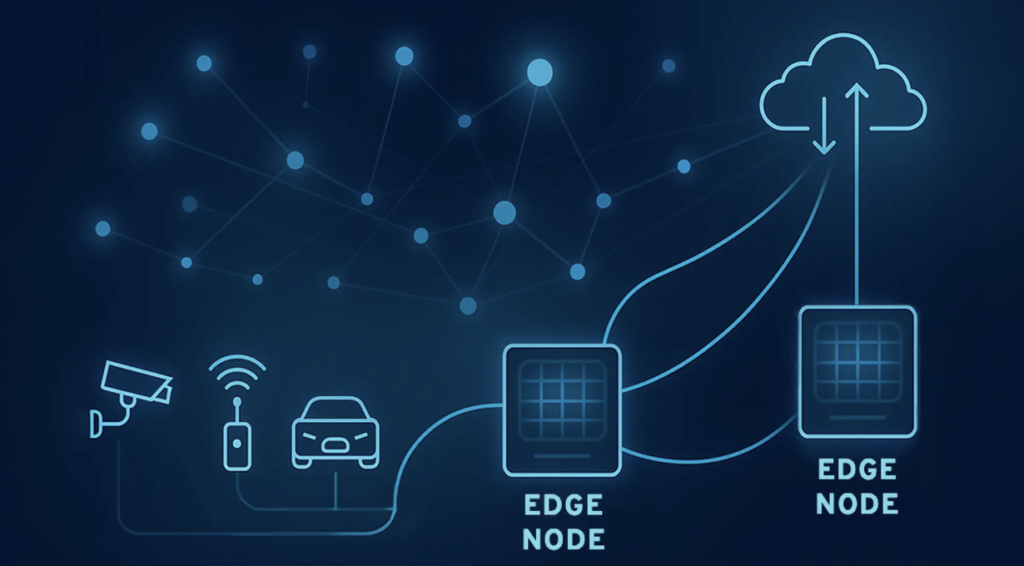
Picking between the two isn’t about determining which one is superior, but about selecting the right tool for specific needs. Instead, it’s about selecting the right tool for the specific workload.
Use Edge Computing When:
- Applications require near real-time responses.
- Large volumes of sensor or video data are generated continuously.
- Internet connectivity is unreliable or intermittent.
- Local data processing is required for privacy or regulatory compliance.
- Critical systems must continue operating even during network outages.
Examples include autonomous vehicles, factory automation, healthcare monitoring devices, retail analytics, smart cities, and industrial IoT deployments.
Use Cloud Computing When:
Cloud computing is a better fit when:
- Long-term data storage is needed.
- Applications require virtually unlimited scalability.
- Teams need access to managed databases, AI services, or analytics platforms.
- Global collaboration is important.
- Development, testing, and software deployment need centralized infrastructure.
Examples include enterprise applications, SaaS platforms, business intelligence dashboards, customer relationship management (CRM) systems, and data backups.
In many organizations, the most effective solution is a hybrid architecture where edge devices process real-time information while cloud platforms handle centralized management, reporting, backups, and advanced analytics.
Businesses evaluating cloud infrastructure should also understand the different cloud service models. Our guide on IaaS vs PaaS vs SaaS: Choosing the Right Cloud Model for Your Business explains which model best fits different workloads and business needs.
Industries Leading Edge Computing Adoption
Several industries across the United States are investing heavily in edge computing because of its ability to reduce latency and improve operational efficiency.
Healthcare
Hospitals and healthcare providers use edge computing to process patient data locally, enabling faster alerts from monitoring devices and reducing delays during emergency situations.
Manufacturing
Manufacturers rely on edge computing for predictive maintenance, robotics, quality inspection, and production monitoring. Processing machine data locally helps identify equipment issues before they lead to costly downtime.
Telecommunications
Telecom providers are integrating edge computing with 5G networks to support applications that demand extremely low latency, including connected vehicles, augmented reality, and smart city infrastructure.
Retail
Retailers use edge-enabled cameras and sensors to monitor inventory, analyze customer movement, reduce checkout wait times, and improve the overall shopping experience.
Energy and Utilities
Oil and gas companies, renewable energy providers, and utility operators often work in remote environments with limited connectivity. Edge computing allows operational systems to continue functioning while synchronizing data with cloud platforms when connections become available.
Agriculture
Modern farming increasingly depends on connected sensors, drones, and smart irrigation systems. Edge computing helps farmers make immediate decisions about watering, fertilization, and crop health without waiting for cloud-based analysis.
Challenges of Edge Computing
While edge computing provides numerous benefits, it also presents new challenges that organizations need to evaluate before implementation.
Some of the most common include:
- Managing thousands of distributed devices.
- Maintaining consistent security across remote locations.
- Updating firmware and software regularly.
- Monitoring device health and performance.
- Integrating edge infrastructure with existing cloud environments.
- Higher upfront hardware investments compared to cloud-only deployments.
Successful edge computing projects typically include centralized management tools, automated updates, and comprehensive security policies from the beginning.
Actionable Steps for Businesses Evaluating Edge Computing
If your organization is considering edge computing, follow these practical steps before making major investments.
1. Identify Latency-Sensitive Applications
Determine which business processes require immediate responses. Not every workload benefits from edge computing, so prioritize applications where milliseconds truly matter.
2. Evaluate Data Generation
Measure how much data your devices generate daily. Large video streams, industrial sensors, and IoT deployments often benefit from local processing because transmitting all raw data to the cloud can become expensive.
3. Review Connectivity
Identify locations where internet connectivity is inconsistent. Remote facilities, warehouses, manufacturing plants, and field operations often benefit most from edge infrastructure.
4. Start with a Pilot Project
Rather than deploying organization-wide immediately, begin with a single location or business process. A pilot allows your team to measure performance improvements, identify operational challenges, and refine deployment strategies before scaling.
5. Build Security into the Design
Implement identity management, encryption, endpoint monitoring, secure device provisioning, and automated patch management from the beginning instead of treating security as a later phase.
6. Choose Experienced Technology Partners
Leading infrastructure providers such as Dell Technologies, Hewlett Packard Enterprise (HPE), Cisco, AWS, Microsoft Azure, and Google Cloud offer enterprise-grade edge solutions that integrate with existing cloud environments and simplify long-term management.
Final Thoughts
The discussion around edge computing versus cloud computing is no longer about choosing one technology over the other. Instead, businesses are increasingly adopting hybrid strategies that combine the strengths of both.
Edge computing excels at processing time-sensitive information close to where it’s generated, reducing latency, conserving bandwidth, and improving operational resilience. Cloud computing continues to provide unmatched scalability, centralized management, advanced analytics, and long-term storage.
Based on the enterprise projects I’ve researched and the conversations I’ve had with infrastructure specialists, organizations that carefully match workloads to the right environment tend to achieve the best outcomes. Real-time operations remain at the edge, while centralized applications and large-scale analytics continue to benefit from the flexibility of the cloud.
As connected devices, artificial intelligence, and 5G networks continue to evolve, edge computing will become an increasingly important part of modern IT infrastructure. Businesses that understand how these technologies work together will be better positioned to improve performance, enhance customer experiences, and support future innovation.
Frequently Asked Questions
1. Is edge computing replacing cloud computing?
Actually, edge computing works alongside cloud computing, enhancing it instead of taking its place. Most modern organizations use a hybrid approach where edge devices handle real-time processing while cloud platforms provide centralized storage, analytics, backups, artificial intelligence training, and application management.
2. What are the biggest benefits of edge computing?
The primary benefits include lower latency, reduced bandwidth usage, improved reliability during internet outages, faster decision-making, enhanced privacy through local processing, and better support for Internet of Things (IoT) applications that generate large amounts of real-time data.
3. Does edge computing offer better security compared to traditional cloud solutions?
Neither technology is inherently more secure. Security depends on proper implementation. Edge computing can reduce data transmission by processing information locally, but organizations must secure every edge device through encryption, authentication, firmware updates, endpoint monitoring, and centralized management.
4. Which sectors stand to gain the most from adopting edge computing technology?
Healthcare, manufacturing, telecommunications, transportation, retail, energy, logistics, and agriculture are among the industries gaining the greatest value from edge computing because they rely on real-time data processing, connected devices, and continuous operations.
5. Can small businesses benefit from edge computing?
Yes. Small businesses increasingly use edge-enabled security cameras, smart sensors, point-of-sale systems, and local AI applications without investing in large data centers. Managed edge solutions offered by cloud providers and hardware vendors have made adoption more affordable and easier to manage for organizations of all sizes.