

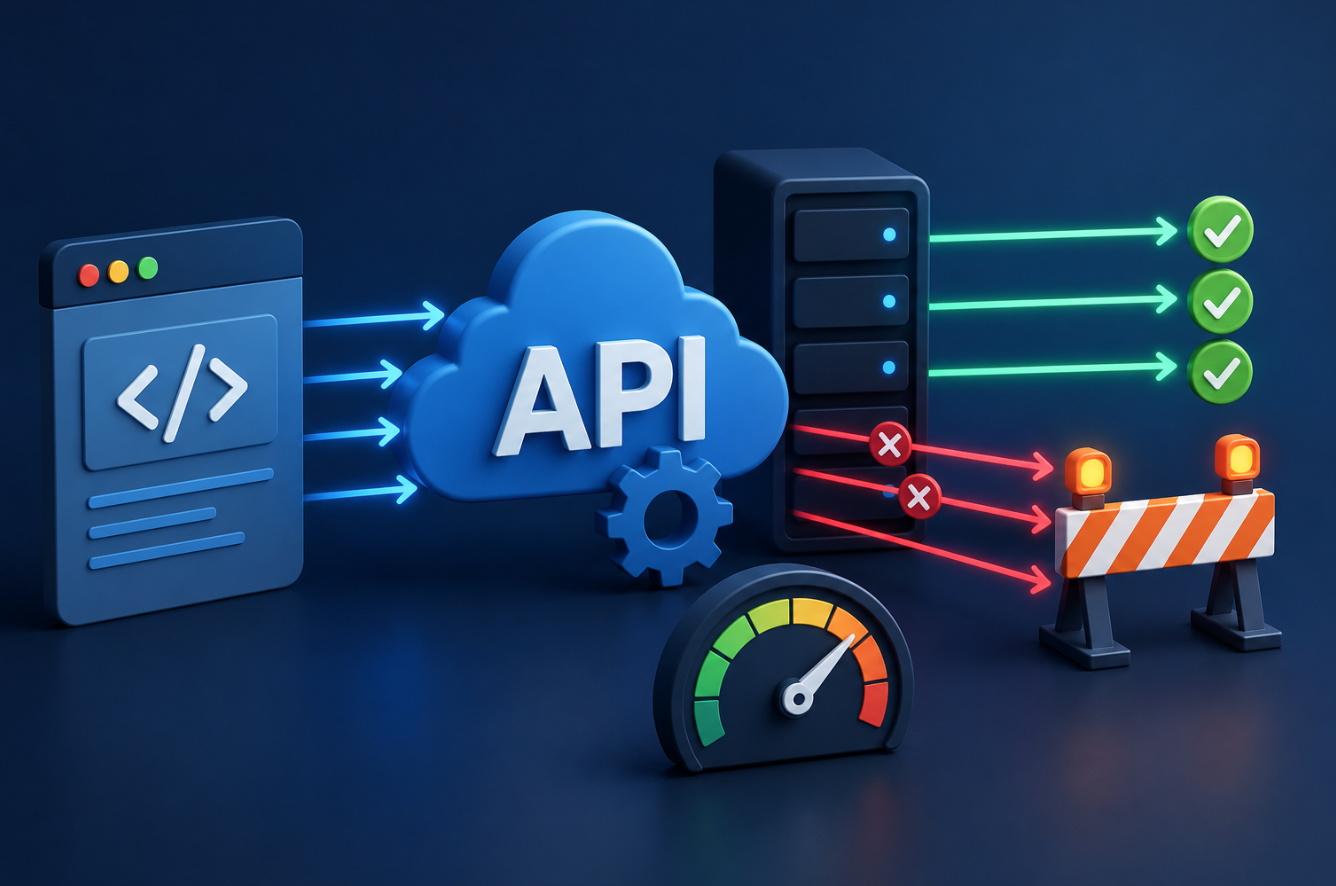
If you’ve ever worked with an API and suddenly received an error message saying you’ve made too many requests, you’ve already encountered API rate limiting.
At first glance, rate limiting may seem frustrating. After all, why would a website or service stop you from accessing its own API? The answer is actually quite simple. Without limits, APIs could easily become overloaded, slow down, or even crash completely.
As APIs continue to power modern applications in 2026, rate limiting has become one of the most important tools for maintaining security, stability, and performance. Whether you’re a developer, website owner, business owner, or simply curious about how internet services work, understanding API rate limiting can help you better understand how today’s digital platforms stay online and responsive.
In this guide, you’ll learn what API rate limiting is, why it exists, how it works, and why it plays such a critical role in modern web services.
What Is API Rate Limiting?
API rate limiting is a technique that controls how many requests a user, application, or device can send to an API within a specific period of time.
Think of it as a traffic director that manages the flow of digital transactions smoothly. Instead of allowing unlimited requests, the API sets a limit to prevent abuse and maintain smooth operation.
For example, an API might allow:
- 100 requests per minute
- 1,000 requests per hour
- 10,000 requests per day
Once the limit is reached, additional requests may be delayed, blocked, or rejected until the limit resets.
Imagine entering a crowded amusement park where everyone gets a fair turn. Only a certain number of people can enter a ride at a time. If too many people try to enter simultaneously, the system slows down or stops working efficiently.
API rate limiting follows the same principle.
Why Do APIs Need Rate Limiting?
Without rate limiting, APIs would be vulnerable to a variety of problems.
Every request sent to an API consumes resources such as processing power, memory, bandwidth, and database access. If millions of requests arrive at once, servers can quickly become overwhelmed.
Rate limiting helps prevent these issues by ensuring that no single user or application consumes an unfair share of resources.
Common reasons APIs use rate limiting include:
- Preventing server overload
- Improving reliability
- Protecting against abuse
- Reducing infrastructure costs
- Maintaining fair access
- Preventing malicious attacks
Major online platforms such as social media networks, payment processors, cloud services, and AI providers all rely heavily on rate limiting.
A Simple Real-World Example
Imagine you’re at a coffee shop with only one barista.
When multiple visitors arrive simultaneously, the system ensures everyone is attended to without delay.
However, if 500 customers suddenly rush through the door, the barista can’t keep up. Orders pile up, service slows down, and customers become frustrated.
The coffee shop may decide to allow only a certain number of customers inside at once.
That’s essentially what API rate limiting does.
It controls traffic so the service remains stable for everyone.
How API Rate Limiting Works
When you send a request to an API, the server checks whether you’ve exceeded your allowed request quota.
If you’re within the limit, the request is processed normally.
If you’ve exceeded the limit, the server returns an error response.
A common response is:
HTTP Status Code 429: Too Many Requests
This message tells you that you’ve sent more requests than the API currently allows.
Most APIs also include helpful information such as:
- Remaining requests
- Time until reset
- Current usage level
- Maximum allowed requests
This helps developers oversee and control their applications more efficiently.
Common Types of API Rate Limiting
Different APIs use different rate-limiting methods depending on their needs.
Let’s look at the most common approaches.
Fixed Window Rate Limiting
This method sets a fixed time period.
For example:
- 100 requests per hour
Once the hour ends, the counter resets and you can start making requests again.
Advantages
- Easy to implement
- Simple to understand
Disadvantages
- Traffic spikes can occur at reset times
Sliding Window Rate Limiting
Instead of fixed periods, the system continuously evaluates requests over a moving timeframe.
For example:
- 100 requests during any rolling 60-minute period
This creates smoother traffic distribution.
Advantages
- More accurate
- Better traffic management
Disadvantages
- Slightly more complex
Token Bucket Method
This is one of the most popular modern approaches.
Imagine a bucket that gradually fills with tokens.
Each API request consumes one token.
If the bucket becomes empty, requests must wait until new tokens are added.
Advantages
- Allows short bursts of traffic
- Maintains overall control
Disadvantages
- More complex configuration
Leaky Bucket Method
This method processes requests at a steady rate regardless of sudden spikes.
Extra requests are queued or discarded.
Advantages
- Consistent traffic flow
- Reduced server strain
Disadvantages
- Some requests may be delayed
API Rate Limiting vs API Throttling
Although these terms are sometimes used as synonyms, they actually have different meanings.
API Rate Limiting
Rate limiting sets the maximum number of requests allowed during a time period.
Example:
- 500 requests per hour
When you hit the limit, any additional requests will be denied or blocked.
API Throttling
Throttling actively slows down request processing when traffic becomes excessive.
Instead of completely blocking requests, the system may delay them.
In practice, many platforms combine both methods to maintain optimal performance.
How API Rate Limiting Improves Security
Security is one of the biggest reasons organizations implement rate limiting.
Without restrictions, attackers could send enormous numbers of requests to overwhelm systems or exploit vulnerabilities.
Rate limiting helps defend against:
Brute Force Attacks
Hackers often attempt thousands of password combinations.
Rate limits slow these attempts significantly.
Credential Stuffing
Malicious actors steal login details to gain unauthorized access to user accounts.
Rate limiting reduces the effectiveness of these attacks.
Denial-of-Service (DoS) Attacks
Massive request floods can overwhelm servers.
Rate limits help absorb and reduce harmful traffic.
Bot Abuse
Automated bots may scrape data or abuse services.
Request limits help prevent excessive automated activity.
As cyber threats continue evolving in 2026, rate limiting remains a core component of API security strategies.
Benefits of API Rate Limiting
Organizations use rate limiting for more than just security.
Additional benefits include:
Better Performance
Servers can respond faster when traffic remains manageable.
Fair Resource Allocation
Every user gets access to a reasonable share of resources.
Lower Infrastructure Costs
Preventing excessive requests reduces server expenses.
Increased Reliability
Applications remain available during traffic spikes.
Improved User Experience
Stable APIs lead to smoother applications and happier users.
These advantages explain why nearly every major API provider implements some form of rate limiting.
Best Practices for Developers Working with Rate Limits
If you’re building applications that rely on APIs, understanding rate limits can prevent unexpected disruptions.
Read API Documentation Carefully
Every provider publishes different limits.
Always review the official documentation before development.
Cache Data When Possible
Avoid making unnecessary requests by storing frequently used information.
Implement Retry Logic
Handle temporary rate-limit responses gracefully.
Wait before retrying requests.
Monitor Usage
Track how many requests your application sends.
This helps avoid unexpected limit violations.
Upgrade When Necessary
Many API providers offer higher request limits through paid plans.
Growing applications may eventually require additional capacity.
Examples of API Rate Limiting in Everyday Services
You probably interact with rate-limited APIs every day without realizing it.
Examples include:
- Social media platforms
- Weather applications
- Online maps
- Payment gateways
- Streaming services
- AI tools
- Cloud storage providers
- E-commerce systems
These services use rate limiting behind the scenes to ensure millions of users can access them simultaneously.
Without these protections, many popular online services would struggle to remain stable.
The Future of API Rate Limiting
As artificial intelligence, cloud computing, and connected devices continue expanding, API traffic is growing at unprecedented rates.
Modern organizations are increasingly adopting:
- AI-driven traffic management
- Adaptive rate limits
- Real-time threat detection
- Dynamic user-based quotas
- Intelligent traffic prioritization
These technologies allow systems to adjust limits automatically based on demand and risk levels.
In the coming years, rate limiting will likely become even more sophisticated as APIs continue serving larger and more complex digital ecosystems.
Conclusion
API rate limiting may sound technical, but the concept is surprisingly simple. It controls how many requests can be made to an API within a certain timeframe, helping maintain performance, reliability, and security.
Without rate limiting, APIs could easily become overloaded, abused, or attacked. By controlling traffic flow, organizations ensure that services remain available and responsive for everyone.
Whether you’re a developer building applications, a business using online services, or simply someone interested in how modern technology works, understanding API rate limiting provides valuable insight into the systems that power today’s internet.
As APIs become increasingly important in 2026 and beyond, rate limiting will continue playing a critical role in keeping digital services secure, stable, and efficient.
Frequently Asked Questions
1. What is API rate limiting in simple words?
API rate limiting restricts how many requests a user or application can send to an API during a specific time period.
2. Why do APIs have rate limits?
APIs use rate limits to prevent server overload, improve security, reduce abuse, and ensure fair access for all users.
3. What occurs if you surpass the allowed number of API requests?
Most APIs return an HTTP 429 “Too Many Requests” error and temporarily block additional requests until the limit resets.
4. Is API rate limiting the same as throttling?
No. Rate limiting restricts request counts, while throttling slows down request processing when traffic becomes excessive.
5. Can API rate limits be increased?
Yes. Many API providers offer higher limits through premium plans, enterprise subscriptions, or custom agreements.
6. How can developers avoid hitting API rate limits?
Developers can cache data, optimize requests, monitor usage, implement retry mechanisms, and follow API documentation guidelines.