


Software development has changed dramatically over the last decade. Businesses no longer want to wait months for new features, updates, or bug fixes. Customers expect digital products to improve quickly, remain available, and provide a smooth experience.
This growing demand has changed how software teams work. Developers need to build applications faster, while operations teams must keep those applications secure, stable, and available. Traditionally, these two teams often worked separately, which could lead to delays and communication problems.
This is where DevOps comes in.
DevOps brings development and operations closer together, helping teams build, test, release, and manage software more efficiently. Cloud computing has made this approach even more powerful by giving businesses access to flexible infrastructure and services on demand.
In this article, we will explain what DevOps is, how it works, and why cloud computing plays such an important role in making modern DevOps practices possible.
What Is DevOps?
DevOps is a combination of two words: Development and Operations.
It is a way of working that encourages software developers and IT operations teams to collaborate throughout the entire software development lifecycle.
DevOps is more than just a single software or technological solution; it encompasses a set of practices and cultural philosophies. It is a combination of culture, processes, and automation practices designed to help teams deliver software faster and more reliably.
Instead of developers creating software and then simply handing it over to operations teams, DevOps encourages shared responsibility.
Both teams work together to improve the process of:
- Planning
- Building
- Testing
- Releasing
- Deploying
- Monitoring
- Maintaining applications
The main goal of DevOps is to shorten the time between writing code and delivering that code to users while maintaining quality and reliability.
Why Was DevOps Created?
Before DevOps became popular, development and operations teams often had different priorities.
Developers usually wanted to release new features quickly. Operations teams focused on stability, security, and reducing risks.
These goals are both important, but when teams work separately, conflicts can happen.
For example, a development team may finish a new application feature, but the operations team may need additional time to prepare servers and configure the environment.
This creates delays.
DevOps helps remove these barriers by encouraging teams to collaborate earlier and automate repetitive processes. Instead of treating software delivery as separate stages managed by separate departments, DevOps treats it as a continuous process.
The Core Principles of DevOps
DevOps practices can vary between organizations, but several core principles are common.
Collaboration
DevOps encourages developers, operations professionals, security teams, and other stakeholders to work together.
Better communication reduces misunderstandings and helps teams solve problems faster.
Automation
Repetitive tasks should be automated whenever possible.
Automation can help with:
- Software testing
- Code integration
- Application deployment
- Infrastructure configuration
- Monitoring
Automation reduces manual errors and allows teams to release software more consistently.
Continuous Improvement
DevOps teams continuously review their processes and look for ways to improve them.
A successful deployment is not the end of the process. Teams continue monitoring applications, collecting feedback, and improving future releases.
Shared Responsibility
In a DevOps culture, software quality and reliability are shared responsibilities.
Developers gain a better understanding of how their applications operate in real-world environments, while operations teams become involved earlier in the development process.
What Is the DevOps Lifecycle?
DevOps is often described as a continuous lifecycle rather than a straight line.
The typical DevOps lifecycle includes several connected stages.
Plan
Teams identify business goals, user needs, and technical requirements.
Planning helps ensure that everyone understands what needs to be built.
Develop
Developers write the code and collaborate using version control systems.
Code reviews and shared development practices help improve software quality.
Build
The application is compiled or packaged into a format that can be tested and deployed.
Modern teams often use automated build processes to make this stage faster and more consistent.
Test
Automated testing checks whether the application works correctly.
Testing may include unit tests, integration tests, security checks, and performance testing.
Release and Deploy
After testing, the application is prepared and released to users.
Automation can make deployments faster and reduce the risk of human mistakes.
Monitor
Teams monitor the application after deployment.
They look at performance, errors, availability, and user experience to identify problems.
Learn and Improve
Information collected from monitoring and users helps teams improve future versions of the application.
Then the cycle begins again.
What Is Cloud Computing?
Cloud computing refers to providing computing services and resources through internet-based platforms, enabling remote access and scalability.
Instead of buying and maintaining all physical servers, businesses can use computing services from cloud providers when they need them.
These services may include:
- Virtual servers
- Storage
- Databases
- Networking
- Security tools
- Application platforms
- Analytics services
Cloud computing allows businesses to access technology resources without building and managing everything in their own data centers.
This flexibility has transformed the way modern applications are developed and deployed.
How Cloud Computing Makes DevOps Possible
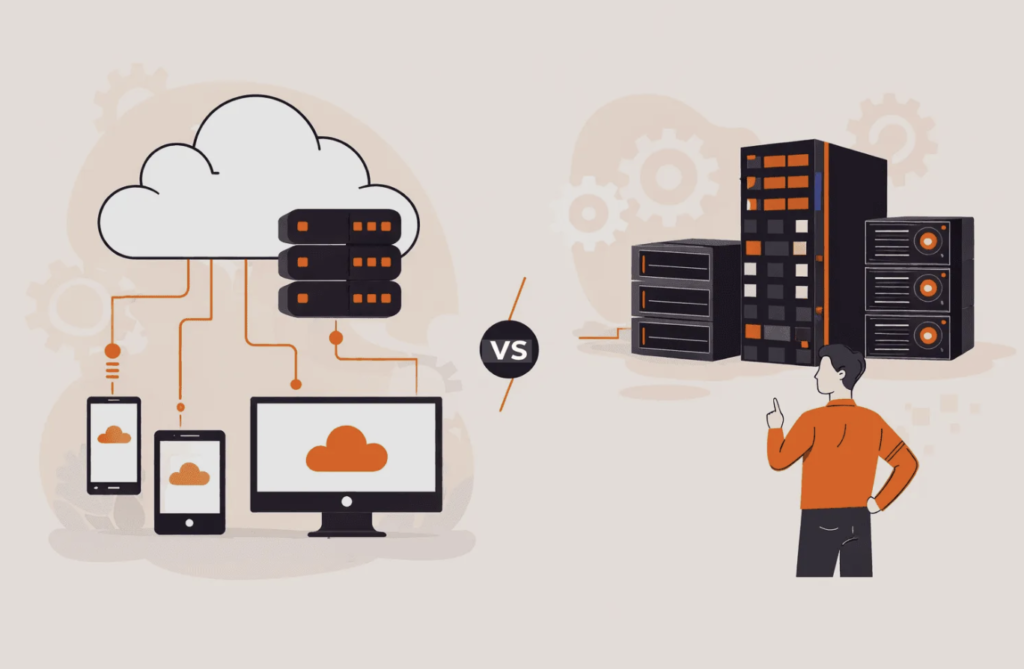
DevOps can exist without cloud computing, but cloud platforms make DevOps practices much easier to implement at scale.
Here are the most important ways cloud computing supports DevOps.
On-Demand Infrastructure
In traditional environments, creating a new server could take days or even weeks. Hardware might need to be purchased, installed, and configured.
Cloud computing allows teams to create computing resources much faster.
A development or testing environment can be created when needed and removed when it is no longer required.
This flexibility helps developers test applications quickly without waiting for physical infrastructure.
Infrastructure as Code
One of the most important connections between DevOps and cloud computing is Infrastructure as Code, often called IaC.
Infrastructure as Code enables teams to specify and manage their infrastructure through written configuration files or scripts.
Rather than setting up servers and networks manually, teams can outline the necessary infrastructure in a consistent, repeatable manner through code.
This provides several benefits:
- Consistent environments
- Faster infrastructure setup
- Easier collaboration
- Fewer manual errors
- Better version control
Infrastructure can be created, changed, and reproduced in a more reliable way.
Faster Software Deployment
Cloud services simplify the process of deploying applications seamlessly across various environments.
For example, a team can move an application through:
- Development
- Testing
- Staging
- Production
Automated tools assist in maintaining uniformity and reliability throughout the deployment process.
This supports one of the main goals of DevOps: delivering software quickly without sacrificing reliability.
Scalability and Flexibility
Applications do not always have the same level of demand.
An online store may receive significantly more traffic during a sale or holiday season. A traditional server environment may struggle to handle unexpected growth.
With cloud computing, adjusting the amount of computing power to match current needs becomes much more straightforward.
This flexibility allows businesses to provide better performance without permanently maintaining large amounts of unused infrastructure.
Scalable infrastructure is essential for DevOps teams to efficiently support applications as they expand and evolve.
Better Collaboration Across Teams
Tools hosted in the cloud enable team members to work together effectively, regardless of their physical location.
Developers, operations engineers, and other team members can access shared environments, code repositories, dashboards, and services.
Such tools are especially beneficial for remote or geographically dispersed teams.
Cloud computing creates a shared technology environment where teams can work together more effectively.
The Role of CI/CD in DevOps
CI/CD refers to the practices of continuously integrating code changes and reliably delivering or deploying software updates.
CI/CD is regarded as a fundamental practice in contemporary DevOps workflows.
Continuous Integration
Continuous Integration encourages developers to regularly combine their code changes into a shared project.
Automated testing can verify the quality of code after modifications are introduced.
This helps teams find problems earlier.
Continuous Delivery
Continuous Delivery prepares software so it can be released safely and quickly.
The primary aim is to ensure that applications remain ready to be deployed at any time.
Continuous Deployment
Continuous Deployment takes automation a step further by automatically releasing approved changes after they pass required tests and checks.
Cloud computing provides flexible infrastructure that can support these automated pipelines.
Together, CI/CD and cloud services allow organizations to deliver software faster and more reliably.
DevOps, Cloud Computing, and Containers
Containers have also become an important part of the modern DevOps environment.
A container packages an application together with the dependencies it needs to run.
It promotes uniformity across development, testing, and live production setups.
Containers support DevOps because they make applications easier to package and deploy.
For example, a developer can create an application container on a local computer, test it in an automated environment, and deploy a similar container to a cloud platform.
This reduces the common problem of software behaving differently across environments.
Popular DevOps Practices
DevOps involves more than using a few tools. Effective teams implement strategies that enhance the overall process of delivering software.
Common DevOps practices include:
- Continuous Integration
- Continuous Delivery
- Automated testing
- Infrastructure as Code
- Continuous monitoring
- Configuration management
- Containerization
- Incident response automation
The exact approach depends on the size and needs of the organization.
A small startup may use a simple workflow, while a large company may operate complex systems across multiple cloud environments.
Benefits of DevOps for Businesses
DevOps provides benefits beyond technical improvements.
Faster Time to Market
Using automation and fostering collaboration enable teams to roll out new features and updates faster.
Improved Software Quality
Continuous testing and ongoing feedback assist teams in detecting issues sooner in the development cycle.
More Reliable Deployments
Repeatable processes reduce the risk of errors caused by manual deployment steps.
Faster Problem Resolution
Ongoing monitoring combined with teamwork allows for faster identification and resolution of problems.
Better Use of Resources
Cloud technology helps organizations optimize their resources and expand their infrastructure as needed.
Such advantages enable companies to adapt swiftly to customer demands and dynamic market trends.
Common Challenges When Adopting DevOps
DevOps adoption is not always easy.
One of the biggest challenges is culture. Teams may be used to working independently, and changing established habits takes time.
Other challenges include:
- Learning new tools
- Managing cloud costs
- Improving security
- Creating effective automation
- Updating older applications
Businesses should avoid trying to change everything at once.
A better approach is to start with one process, improve it, and gradually expand DevOps practices.
DevOps Security and DevSecOps
Ensuring security is a vital aspect of today’s software development practices.
Traditionally, security checks sometimes happened near the end of the development process. This could make problems expensive and difficult to fix.
DevSecOps brings security practices into the DevOps lifecycle earlier.
Security can be included in:
- Code reviews
- Automated testing
- Infrastructure configuration
- Application monitoring
- Deployment pipelines
The goal is to make security a shared responsibility rather than a final step.
Cloud platforms can support this approach by providing security tools, identity management, monitoring, and policy controls.
How Small Businesses Can Start with DevOps
DevOps is not only for large technology companies.
Small businesses and startups can benefit from DevOps principles by starting with simple improvements.
For example, a small development team can:
- Use version control for all application code.
- Automate basic testing.
- Create a simple CI/CD pipeline.
- Use cloud infrastructure for development and deployment.
- Monitor applications after release.
The objective isn’t to utilize all available DevOps tools but to establish a dependable workflow that supports improved software delivery.
The Future of DevOps and Cloud Computing
DevOps and cloud computing will continue to evolve together.
As businesses depend more on digital services, the ability to deliver reliable software quickly will become even more important.
Automation, artificial intelligence, containers, and cloud-native technologies are likely to play larger roles in how teams build and operate software.
However, the core idea behind DevOps will remain the same: better collaboration, continuous improvement, and shared responsibility.
The tools may change, but organizations will continue looking for better ways to turn ideas into reliable software.
Final Thoughts
DevOps is an innovative methodology that unites development and operations teams to accelerate and enhance software delivery through collaboration, automation, ongoing testing, monitoring, and continuous refinement.
Cloud computing has made DevOps more accessible by providing on-demand infrastructure, scalable resources, automation capabilities, and flexible deployment environments.
Together, DevOps and cloud computing help businesses respond quickly to changing customer needs while maintaining reliable applications.
Whether you are a developer, IT professional, business owner, or beginner exploring technology careers, understanding DevOps is increasingly valuable.
There’s no need to learn every tool at once. Begin with understanding the fundamental principles, how cloud infrastructure underpins automation, and gradually experiment with basic CI/CD processes.
The future of software development is built on speed, collaboration, and reliability, and DevOps and cloud computing are helping make that future possible.
Frequently Asked Questions
1. What is DevOps in simple words?
DevOps represents a working culture that merges software development with IT operations, leveraging teamwork and automation to improve the speed and quality of building, testing, deploying, and maintaining applications.
2. Is cloud computing required for DevOps?
No. DevOps can be practiced without cloud computing. However, cloud platforms make DevOps easier by providing flexible infrastructure, scalable resources, and services that support automation.
3. What is the relationship between DevOps and CI/CD?
Continuous Integration and Continuous Delivery (or Deployment) are key DevOps practices that automate the process of integrating, testing, and releasing code, enabling faster and more dependable software updates.
4. Is DevOps difficult to learn?
DevOps involves several technologies and practices, but beginners can start with the basics. Gradually mastering concepts like version control, cloud services, automation, containerization, and CI/CD simplifies the path to effective DevOps implementation.
5. Can small businesses benefit from DevOps?
Yes. Small businesses can use DevOps principles to automate testing and deployment, improve collaboration, reduce errors, and deliver better digital products without building overly complex systems.