

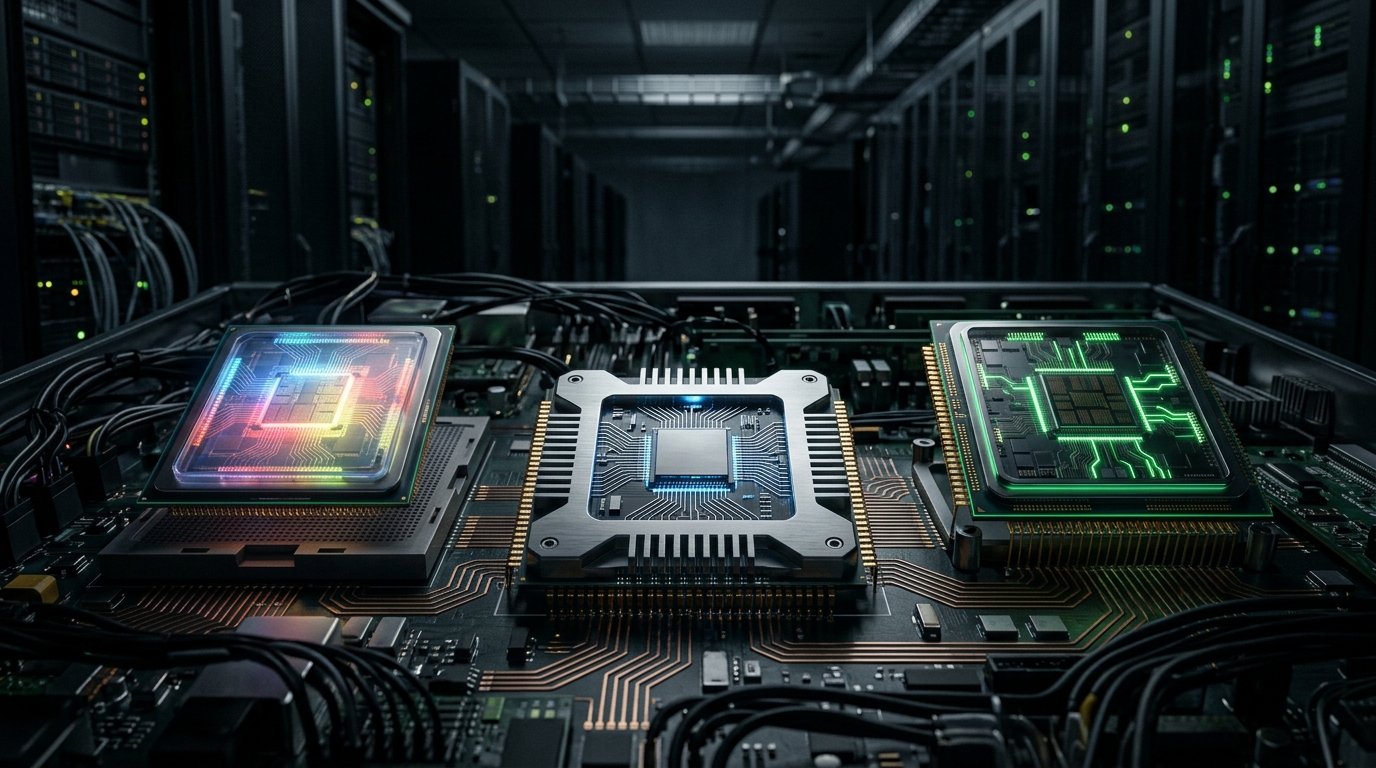
Google and Amazon are challenging Nvidia’s dominance in artificial intelligence infrastructure. Both technology giants want AI developers to have more choices beyond Nvidia’s powerful graphics processing units. Consequently, competition is growing across the chips, cloud computing, and AI development markets.
Nvidia remains a leading supplier of AI accelerators. However, Google and Amazon have developed their own chips to meet growing demand. Their strategy could reshape how businesses build, train, and deploy AI applications.
Why Nvidia Dominates the AI Chip Market
Nvidia built its position through powerful GPUs and a mature software ecosystem. Its CUDA platform helps developers create and optimize demanding AI workloads. As a result, many companies rely on Nvidia when training large language models.
Moreover, Nvidia benefits from strong demand from cloud providers and AI startups. Its hardware supports everything from AI research to enterprise applications. This established ecosystem makes switching to competing platforms difficult.
However, rising AI infrastructure costs are encouraging companies to explore alternatives. Developers are looking for faster computing, clearer costs, and greater choice in how they access processing power.
How Google’s In-House AI Chips Are Competing With Nvidia
Google has invested heavily in its Tensor Processing Units, commonly known as TPUs. These specialized chips accelerate machine learning tasks, including neural network training and AI inference.
Unlike general-purpose GPUs, TPUs target particular AI workloads. Therefore, they can offer attractive performance and efficiency for suitable applications. Google links its custom processors to services available through Google Cloud.
This combination gives developers access to computing resources, software tools, and managed AI infrastructure. Consequently, businesses can build AI applications without depending entirely on Nvidia hardware.
Google’s advantage also extends to its experience operating AI systems at scale. Its internal infrastructure supports demanding workloads across Google’s services and AI research projects.
Why Amazon Is Building Its Own AI Chips
Amazon is pursuing a similar strategy through its AWS cloud platform. The company offers custom silicon, including Trainium for AI training and Inferentia for AI inference.
These processors give AWS customers alternatives to Nvidia-based infrastructure. In addition, Amazon can integrate its chips directly into its cloud services.
This approach may help businesses manage costs as AI workloads expand. Companies developing chatbots, recommendation systems, and generative AI products often need substantial computing capacity.
Furthermore, Amazon controls much of the surrounding cloud environment. It can combine custom chips, storage, networking, and software tools into a single service.
For customers, that integration can simplify deployment. However, actual savings depend on workload requirements, software compatibility, and performance.
Why Google and Amazon Want More AI Developers
AI developers influence which computing platforms become successful. When developers adopt a chip ecosystem, businesses often follow their technical choices.
Therefore, Google and Amazon want to make their platforms attractive to software engineers and AI companies. Better development tools, accessible cloud services, and competitive pricing can encourage adoption.
Google can promote TPUs through its cloud infrastructure and AI development tools. Similarly, Amazon can connect Trainium and Inferentia with its established AWS services.
Both companies also want to reduce their dependence on external chip suppliers. Custom processors give them greater control over infrastructure planning and long-term computing costs.
Nevertheless, attracting developers requires more than manufacturing capable hardware. Companies must also provide reliable documentation, efficient software frameworks, and straightforward migration options.
The Importance of Software Compatibility
Nvidia’s competitive advantage extends beyond its chips. Nvidia’s CUDA platform and related software are now central to how many teams build AI applications.
Consequently, developers may face additional work when moving existing applications to different hardware. Teams might need to adjust code, optimize models, or test performance across platforms.
Google and Amazon must address these challenges to expand adoption. Google’s chips may appeal more to developers when they work smoothly with the frameworks and tools they already use.
Moreover, cloud-based access can reduce the initial barriers to experimentation. Cloud access lets developers try other types of processors without buying or looking after physical equipment.
Still, compatibility varies by framework, model, and application. Businesses should evaluate migration requirements before committing major workloads to another platform.
What This Competition Means for AI Businesses
The growing competition could create several benefits for companies developing AI products.
First, more hardware options may improve pricing negotiations. Businesses can compare different cloud providers instead of relying on a single computing ecosystem.
Second, specialized processors may deliver better efficiency for certain workloads. This matters when companies serve millions of AI requests or operate large models continuously.
Third, competing platforms encourage innovation. Cloud providers have stronger incentives to improve hardware performance, software support, and developer experience.
However, switching platforms can introduce technical complexity. Businesses must consider migration costs, availability, performance consistency, and long-term vendor dependence.
Therefore, the cheapest advertised processor may not deliver the lowest overall cost. Companies should measure real workloads before choosing their infrastructure.
Can Google and Amazon Replace Nvidia?
Google and Amazon are creating credible alternatives, but replacing Nvidia completely remains a significant challenge.
Nvidia benefits from an established developer ecosystem, broad hardware adoption, and extensive software support. These advantages make its platform difficult to displace across the entire AI market.
Meanwhile, Google’s TPUs and Amazon’s custom chips may become increasingly attractive for specific workloads. Their cloud platforms also provide direct access to customers already using their services.
As a result, the market may become more diverse rather than shifting toward one clear winner. Nvidia could remain important while competing processors capture additional workloads.
Which company gains ground will depend on chip speed, costs, compatibility with software, and whether developers choose to use the technology.
The Future of AI Infrastructure Competition
Google’s push to compete with Nvidia is part of a wider transformation in the AI sector. Major cloud providers want greater control over the hardware powering modern AI applications.
Amazon shares this goal, using custom silicon to strengthen its cloud offering. Together, these developments give businesses more options for building AI systems.
Ultimately, Nvidia’s strongest competitors may not need to replace every GPU. They only need to offer compelling alternatives for workloads where cost, efficiency, or cloud integration matters most.
For AI developers, that competition could mean greater flexibility. For businesses, it could create new opportunities to control infrastructure costs while scaling their AI products.