

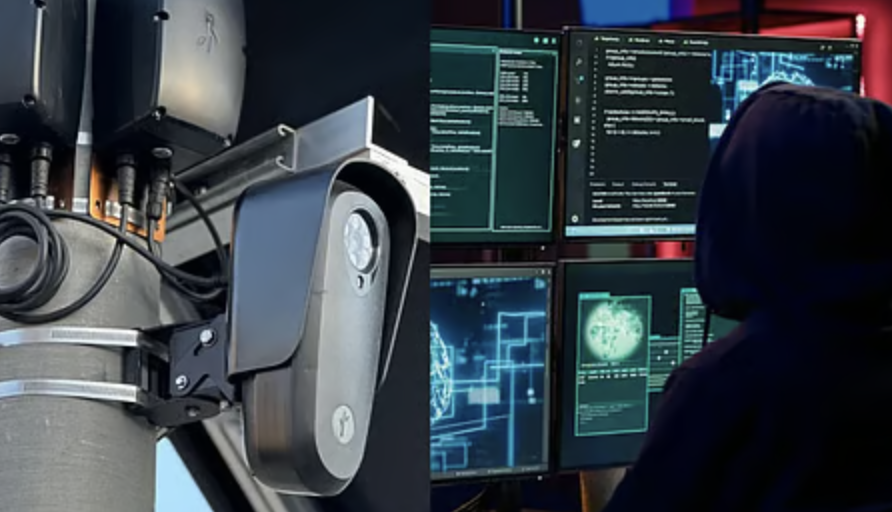
A company that sells license-plate cameras to police departments and private businesses is reportedly about to shed nearly a fifth of its staff, and the timing says a lot about the mood around public surveillance. If you drive anywhere in the United States, a camera like this may already have logged your car today.
In this article we will explore what was reported about the layoffs, how the camera network works, what the polling and political pressure look like, and what residents and local officials can do next.
The Reported Cuts and What Remains Unconfirmed
Reuters reported in early October, citing people with direct knowledge of the matter, that Flock Safety plans to cut about 18 percent of its workforce. That works out to roughly 270 people out of about 1,500 employees. According to the same report, the affected employees are due to leave at the end of the month, and the plan had not yet been made public when the story ran.
Flock declined to comment, so none of this has been confirmed by the company. That distinction matters, and it should stay in your mind through the rest of this piece. Everything about the size, the timing and the departure date comes from unnamed sources speaking to a news agency, not from a press release, a regulatory filing or a statement by an executive. Layoff plans can change before they are carried out, and the final numbers sometimes differ from early reports.
What the Arithmetic Says
The percentages in the report are internally consistent: 270 out of 1,500 is 18 percent, which would leave roughly 1,230 people on the payroll. For a company of this size, that is a large reduction, enough to touch nearly every team. Reuters did not say which functions or locations would be hit, and I cannot tell you whether engineering, sales, field installation or support carries the load. Anyone guessing from outside should resist the urge, because a cut of this size looks very different depending on where it lands. A reduction concentrated in sales would mean something other than one concentrated in hardware support, and neither has been reported.
A Buyout Came First
Reuters noted that the reported cuts follow a voluntary buyout program announced in September, a program that was itself reported by Wired. A buyout offer is a common first step when a company wants to shrink payroll without forced departures.
Employees are invited to take a payment and leave on their own, and if too few accept, a layoff round often follows. Whether that is what happened here is not stated in the reports, so treat it as a familiar pattern rather than an explanation.
What the Company Has Said
The only on-record position the reporting attributes to Flock is a general one: the company has said its technology helps investigate and solve crimes.
That is a statement about the product, not about the job cuts, and it is the same argument police departments make when they ask a city council to approve a contract. It is worth noticing that a company defending its mission rather than explaining a restructuring is a sign of where its attention is. The debate over what the cameras are for has become louder than the debate over how the company is run.
Why a Layoff at This Moment Looks Odd
On paper, a firm with fresh funding and a long customer list does not obviously need to trim a fifth of its people. Reuters did not publish a reason from its sources, and I will not invent one. What can be said is that the reported cuts arrive in the same weeks as a run of unfavorable news about the technology itself, which the later sections cover. Readers can draw their own conclusions, but a cause linking the two has not been reported.
Inside a Camera Network Spanning 49 States
Flock is based in Atlanta and was founded in 2017. According to the reporting, it has raised more than $950 million, including a $275 million round in March led by Andreessen Horowitz that valued the company at $7.5 billion. The reporting says that money is meant to support a new manufacturing facility in the United States and an upcoming push into drone products.
The scale of the installed base is the part that surprises many people. Reuters described a network of around 120,000 AI-powered cameras across 49 states, devices that read license plates and record vehicles. The customer list includes more than 4,800 law enforcement agencies and nearly 1,000 businesses. Put differently, the product is not a niche tool used by a few large cities. It is closer to a utility layer that thousands of small and mid-sized agencies have plugged into.
How a Plate Reader Works in Practice
An automated license plate reader is a camera paired with software. The camera photographs each vehicle that passes, usually from a pole at an intersection or a road entrance. Software then converts the image of the plate into text, a step known as optical character recognition, and stores the result with a time stamp and a location. Modern systems also note other traits of the vehicle, such as color, body type and distinguishing marks, which lets an investigator search for a car even when the plate is partly unreadable.
The classic use is the hot list. The system compares each plate it reads against a list of vehicles of interest, such as a stolen car or a vehicle tied to an alert, and notifies an officer on a match. The less visible use is the search of history. If cameras log every passing car, an investigator can later ask where a particular vehicle was on a given afternoon, or which vehicles were near a given place at a given time. That second use is where most of the privacy concern lives.
Public Agencies and Private Customers
The mix of customers matters. A police department operates under public records laws, budget votes and, in many places, local oversight rules. A business such as a retailer or a neighborhood association operates under different expectations, and its use of the cameras may be less visible to the public.
The reporting gives no breakdown of how much of the network sits on public versus private property, so I cannot say how many of those 120,000 cameras you would find on a public street.
Money, a Factory and Drones
The financing details help explain why a layoff report drew attention. A company valued at $7.5 billion that has raised more than $950 million is not usually described as struggling. The reporting says the March round is meant to support a new US manufacturing facility and an upcoming push into drone products. Building hardware at home and entering a new product category are both expensive moves, and they tend to demand different skills from the ones used to sell a camera subscription. A reshuffle of staff around a change of direction is common in technology companies, though no source here links the reported cuts to that strategy.
The drone plans also raise a general policy question that campaigners and lawmakers have debated for years. The data-collection concerns that attach to a fixed pole-mounted camera apply with more force to a camera that can move. Nothing about the drone products has been described in detail in the coverage I used, so that remains a question rather than a finding.
Public Opinion Has Turned Against the Cameras
The most striking number in the reporting comes from a Reuters and Ipsos poll. It found that 38 percent of Americans support Flock cameras in their community, while 47 percent oppose them. By simple subtraction, the remaining 15 percent did not state a view or gave another answer, though the reporting I am relying on does not break that group down.
| Poll result | Share of Americans |
| Support Flock cameras in their community | 38 percent |
| Oppose Flock cameras in their community | 47 percent |
| Remainder (no stated view or other answers, by subtraction) | 15 percent |
The 85 percent who did take a side is worth dwelling on. Most surveillance technologies start with a large undecided group, because people simply have not met the product. Here, a clear majority has formed a view, and the opposing view is the larger one. A nine-point gap between opposition and support is not a landslide, but for a product that is sold to local governments by way of public votes, it is a worrying number.
Why Local Politics Amplifies the Gap
Cameras like these are bought one community at a time. A contract goes to a city council, a county board or a police committee, and ordinary residents can attend, speak and vote at the next election. When a poll shows plurality opposition nationally, each of those local hearings becomes a place where opposition can be organized. That is a very different sales environment from a consumer gadget, where a bad reputation just lowers sales gradually.
The reporting does not name any city that has cancelled a contract, and I will not suggest otherwise. A poll is a national snapshot, not a count of canceled agreements. Still, vendors that depend on municipal renewals pay close attention to anything that makes renewal votes harder.
Reading the Poll With Care
A few cautions apply to any poll like this. The question wording matters, and the reporting summarizes the result rather than printing the full question. A statement about cameras in your own community can draw different answers than a statement about crime-fighting tools in general. And people often feel differently about a camera on a distant highway than one on the street where they live. The fair reading is that the number reflects real unease, not that it predicts how any specific town will vote.
Another way to read the figures is to ask who counts as the audience. Police chiefs, city managers and business owners are the buyers, but residents are the people who live next to the poles. A vendor can have thousands of satisfied customers and still face an uphill battle if the people those customers serve are unhappy. That gap between buyer and public is why the same product can be popular in a purchasing office and unpopular at a public meeting.
Legal, Political and Investor Pressure Is Building
The poll is only one strand. Reuters described a wider picture of growing scrutiny from regulators, lawmakers and privacy advocates, along with several specific developments that are worth taking one at a time.
Florida’s Highway Ban
In September, according to the reporting, Florida banned automated license plate readers from state highways, citing privacy risks tied to Flock’s cameras. That is a statewide rule rather than a city decision, and it shows the issue moving from council chambers to legislatures. I would not read too much into the scope, because the reporting describes the ban as covering state highways, not every road in the state, and local streets may be governed differently. If you live in Florida, check the actual text of the rule or ask your local government what it covers.
Home Depot Investors
Reuters reported that investors in Home Depot demanded reviews of surveillance technology partnerships after reports that Flock’s data had been used in immigration enforcement. Read that sentence slowly. The investors made a demand, and the demand followed reports about how the data was used. The reporting I have does not say that Home Depot did anything wrong, and nothing here should be taken that way. It does show that the concern has reached shareholders, who tend to care about reputational risk to the businesses they own.
The Virginia Lawsuit
A privacy lawsuit in Virginia alleges that widespread deployment of the cameras amounts to warrantless surveillance. That is an allegation in a court filing, not a ruling, and the outcome is unknown. The legal question underneath it is an old one in new clothing.
Courts have long allowed police to observe things in public view without a warrant, but they have also been wary of technology that lets the government assemble a detailed record of a person’s movements over time. Where a network of plate readers falls on that spectrum is the kind of question that tends to be argued for years.
The Midterm Campaign
Reuters also reported that Flock cameras have become a campaign issue in this year’s midterm elections. Surveillance policy is not usually a headline topic in state and local races, so its arrival says something about how many voters have run into these cameras. For candidates, it creates a simple question to answer at a town hall: who can see the data, and for how long.
Taken together, these items show pressure arriving from four directions at once: a legislature, shareholders, a court and the ballot box. Each moves at a different speed, and each can be influenced by a different group of people. A lawsuit can take years, an investor resolution can be voted on within months, and a campaign promise can change a local policy within a single budget cycle. For a company that sells to thousands of separate buyers, pressure that comes from so many places is harder to answer with one statement.
How Privacy Concerns Map Onto the Technology
The reporting tells us what critics and officials have said, but it helps to separate the different worries, because they call for different fixes. I am drawing here on general knowledge about how plate-reader programs work, not on any detail about the company’s own policies, which the sources do not describe. Contracts and rules vary by agency, and they may change, so check the current terms in your own community.
Retention
The first question is how long images and plate reads are kept. A short retention window limits the ability to reconstruct someone’s movements after the fact, while a long one turns a traffic tool into a historical archive. Agencies and vendors set these periods differently, and some states set limits in law. If you want to know about your town, the retention period is usually written in the contract or policy and can be requested.
Sharing
The second question is who can query the system. A camera owned by one police department might be searchable only by that department, or it might be part of a wider sharing arrangement with neighboring agencies, other jurisdictions or private customers.
The immigration-enforcement reports that prompted the investor demand are a concern about sharing, in that data collected for one purpose may be used for another. The sources do not describe how any specific sharing arrangement works, so I will leave it at the principle: the wider the sharing, the more important the audit trail.
Oversight and Accuracy
The third question is who checks the system. Good programs keep logs of every search, require a stated reason, and let an outside body review the logs. Weak programs rely on trust. Accuracy matters too, because software that misreads a plate can send an officer to the wrong car. No numbers on error rates appear in the sources, so I will not offer any, but a community considering a contract can reasonably ask for the vendor’s documented accuracy and the department’s policy for confirming a hit before acting on it.
The Claimed Benefit
None of this erases the argument on the other side. Police departments say plate readers help recover stolen vehicles, find missing people and develop leads in serious cases, and the company says its technology helps investigate and solve crimes.
Those claims may be true in many cases, but the sources here do not supply evidence either way, so a resident should ask a local department for its own results, such as how many investigations a given camera contributed to, rather than rely on the sales pitch or the criticism.
Safeguards Communities Sometimes Adopt
When communities decide to keep plate readers, they often attach conditions. Common examples include a written policy approved in public, a ban on using the cameras for certain purposes, a requirement for a case number before any search, regular audits with public summaries, and a sunset clause that forces a fresh vote after a set period. Others place cameras only at the edges of town rather than on residential streets.
None of these is described in the sources as having been adopted anywhere in connection with Flock, so treat the list as a menu of ideas drawn from general practice, and check which ones your own government has chosen. A skeptic may feel they do not go far enough, and a supporter may feel they slow useful investigations. Both reactions are reasonable, and the point of a public process is to settle that argument openly.
Final Thoughts: A Practical Order of Steps for Residents and Local Officials
Whatever you think of the cameras, the most useful thing you can do is replace a general feeling with specific facts about your own community. The sequence below works whether you are a skeptic, a supporter or simply curious.
Step One: Find Out if Cameras Are Near You
Start with your city or county website and search for the police department’s technology policy, council meeting minutes and contract approvals. Many agencies post their camera counts or locations. If they do not, a public records request is the normal route, and your local government can tell you how to file one. Rules and fees vary, so check the official guidance for your state.
Step Two: Read the Policy, Not Just the Press
Ask for the written policy on retention, sharing, search logs and access. If you can read only one document, make it the sharing policy, since it tells you who beyond your local department can search the data. A policy that says little about audits is itself an answer.
Step Three: Use the Meeting
Contract renewals and budget votes are public. Short, specific questions work better than speeches: how long is data kept, who has access, how often are the logs reviewed, and what happened the last time an officer searched without a case number. Written follow-ups create a record.
The table below turns those questions into a short list you can carry to a meeting or attach to an email.
| Topic | Question to ask | Why it matters |
| Retention | How long are plate reads stored? | Longer storage allows movements to be reconstructed |
| Sharing | Which outside agencies or businesses can search the data? | Wider sharing raises the chance of use for other purposes |
| Audits | Are searches logged with a reason, and who reviews the logs? | Logs make misuse detectable |
| Accuracy | How is a hit confirmed before an officer acts? | Misreads can send officers to the wrong vehicle |
| Renewal | When does the contract end, and who votes on it? | Sets a date for public reconsideration |
Step Four: For Businesses and Neighborhood Groups
If you manage a store, a parking lot or a homeowners association and you are weighing cameras, treat it like any vendor decision. Ask where the data goes, whether you can limit sharing with law enforcement, how a deletion request works, and what the contract says if you cancel. The investor demand at one large retailer, as reported, is a reminder that customers and shareholders notice these choices.
Step Five: If You Are an Employee in the Sector
If your own job is affected by the reported cuts, remember that nothing in the reporting has been confirmed by the company. Ask your employer for written confirmation of dates and severance terms. An employment lawyer or your state labor department can advise on your specific situation, and nothing in this article is legal advice.
Frequently Asked Questions
How Many Jobs Is Flock Safety Reportedly Cutting?
Reuters reported, citing people with direct knowledge, that about 18 percent of the workforce would go. That is roughly 270 of about 1,500 employees. The company declined to comment, so the figure is unconfirmed.
When Would the Reported Layoffs Take Effect?
According to Reuters, affected employees are expected to leave at the end of the month, meaning the end of October. The plan had not been made public when the report appeared. Dates in reports like this can shift.
Did Flock Confirm the Layoffs?
No. The company declined to comment on the report. It has said that its technology helps investigate and solve crimes, but that statement is about the product, not the staffing plan.
What Did the Reuters and Ipsos Poll Find About Flock Cameras?
It found that 38 percent of Americans support the cameras in their community and 47 percent oppose them. The remaining 15 percent did not state a view or gave another answer. It is a national result, so local opinion may differ.
Has Any City Canceled a Contract With Flock?
The reporting used for this article does not name any city that has done so. That does not mean none exists, only that this coverage does not mention one. Your local council minutes are the best place to check.
How Can I Find Out Whether License-Plate Cameras Are Used in My Town?
Look at your police department and city council websites for technology policies and contract approvals. If nothing is posted, ask the department directly or file a public records request under your state’s rules. Fees and timelines vary, so confirm them with the local clerk.