

Smart glasses have moved from a curiosity to a shelf of products, and Meta’s latest lineup spans prices from $249 to $1,299, so picking the wrong pair is an easy way to waste money. The company showed its new models at the Meta Connect keynote on 23 September 2026, and the reports we reviewed do not agree on every availability detail.
In this article we will discuss each model’s price, features and release window, where the sources differ, and which kind of buyer each pair is likely to suit.
The Lineup Shown at Meta Connect
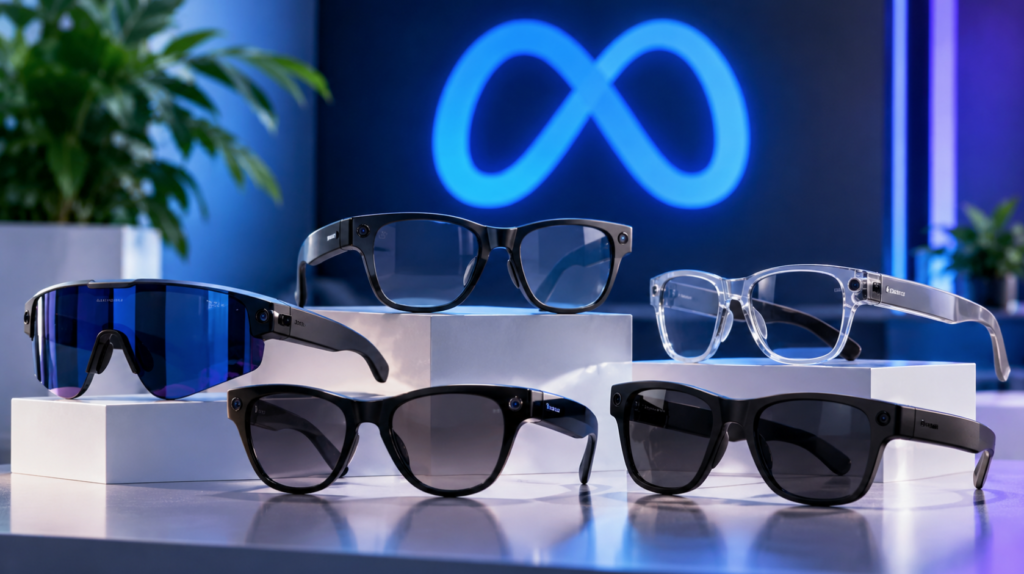
Meta held its Connect keynote on 23 September 2026 and used it to present a spread of eyewear rather than a single flagship. The reporting we rely on comes from SamMobile, in a piece published the next day, and from Tom’s Guide, which ran a live blog of the keynote. Together they describe six products: Ray-Ban Meta (Gen 3), Ray-Ban Meta Audio, Meta Adventurer Glasses, Meta Ray-Ban Display glasses, Meta VR Glasses and Muse Charm.
One caution applies to everything that follows. Some availability details differ between the two sources, and a few products appear in only one of them. Where that happens, this article says which outlet reported what, and it treats single-source details as reported rather than settled. Prices and release dates for smart glasses also vary by country and over time, and promotions can change the price within weeks, so the company’s own product pages are the final word on what you can buy where you live.
The broad logic of the lineup is easy to see once the products are grouped. Three pairs are aimed at everyday wear with different feature sets: a camera model, an audio-only model and a lower-priced camera model. One pair adds a display and a wristband for people who want information in their field of view. Two products, the VR Glasses and Muse Charm, are still ahead on the calendar. The sections below take them in that order, followed by a comparison table with a battery guide, a look at Samsung’s rival effort and a practical way to choose.
Ray-Ban Meta Gen 3 as the All-Round Camera Pair
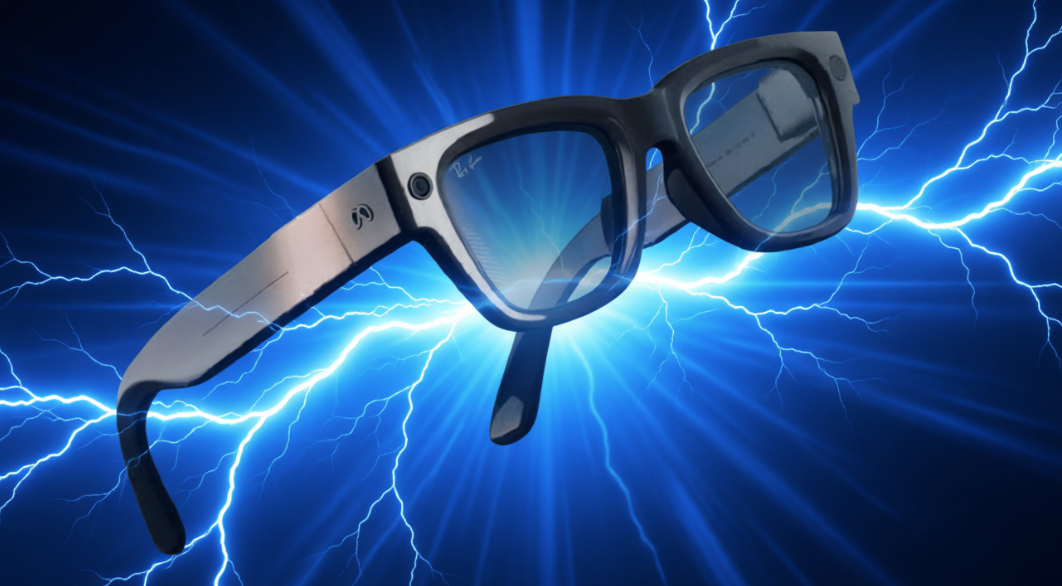
The third-generation Ray-Ban Meta costs $449 and is the model most people will think of first. It is slimmer than the Gen 2, which matters for glasses you wear all day, and it carries a 12MP camera that records video up to 3K at 30 frames per second. Meta rates the battery at up to 9 hours of mixed use, which is one hour more than the Gen 2.
Styles and Fit
The Gen 3 comes in 27 style combinations across Aviator, Wayfarer and new Zena styles. For a product worn on your face, that range is a feature in its own right, since most people will only wear glasses that suit their face shape. If you wear prescription lenses, check with the retailer how they are handled for this model, because the sources we reviewed only confirm prescription support for the Audio model.
What the Specifications Mean in Practice
A 12MP sensor is enough for social posts and casual photos, but it is a small camera in a thin frame, so expect decent results in daylight and softer ones indoors or at night. Video at 3K and 30 frames per second is sharp for a clip shared from a phone, though 30 frames is not the smoothest setting for fast action.
The slimmer body is a real benefit if you wear the glasses for hours, because small changes in weight and thickness are what make glasses comfortable or tiring. One extra hour of rated battery over the Gen 2 is a modest gain, not a reason on its own to upgrade.
Availability: A Point Where Sources Differ
Tom’s Guide said the Gen 3 was available immediately, while SamMobile described it as open for pre-order. These readings may reflect different moments, different regions or simply different wording, and the reports do not settle it. The practical advice is simple: before ordering, look at the product page for your country and see whether it says in stock, pre-order or a ship date.
Who It Suits
This is the default choice for someone who wants photos, short videos and hands-free capture from a pair of glasses that looks like ordinary eyewear. It is a sensible match for travelers, parents and anyone who wants to record moments without holding up a phone. If you rarely take photos and mainly want music and calls, the cheaper audio-only model below may fit better.
Audio-Only and Budget Options for Everyday Wear
Two of the new models give up something to get a lower price. One drops the camera entirely, and the other keeps a camera but trims the battery and arrives later. They suit different buyers.
Ray-Ban Meta Audio
This is Meta’s first audio-only pair of smart glasses, with no camera. It costs $349 in the US and weighs 43 grams, which is light enough to forget you have it on. It comes in Clubmaster and Burbank styles, uses open-ear speakers, and has a six-microphone array for calls and voice commands. Battery life is up to 12 hours of mixed use, and up to 48 hours when the case is counted.
Prescription lenses work with this model, which makes it the clearest choice for glasses wearers who want the technology without switching to contacts. Availability is listed as October, and Tom’s Guide said it ships on 13 October. The absence of a camera is also an advantage in places where cameras are unwelcome, such as some workplaces, gyms, schools and medical settings. A six-microphone array is mainly there to pick out your voice from wind and street noise, which matters on calls and when you speak commands outdoors. Open-ear speakers let you hear your surroundings, but they also leak some sound, so listen at moderate volume in quiet rooms.
Meta Adventurer Glasses
According to SamMobile, which is the only source of this model among those we reviewed, the Adventurer Glasses cost $249 and go on sale on 23 October 2026. They have a 12MP camera that records up to 3K at 30 frames per second, up to 8 hours of mixed use and up to 40 hours with the case. They add 32GB of storage, Wi-Fi 6E and Bluetooth 5.4, and they work with both Android and iOS phones.
On paper, the camera specification matches the Gen 3. The price is $200 lower, and the battery rating is one hour shorter. What the sources do not say is how the two compare on styles, weight, speaker quality or build, so the paper comparison is incomplete. Because the details come from one outlet, wait for hands-on reviews before treating the Adventurer as a bargain Gen 3. It looks well placed for someone who wants a camera on their face at the lowest price in this lineup.
Display Glasses and the Wristband Controller
The Meta Ray-Ban Display glasses are the most ambitious product in the group. They include a full-color 600 by 600 display in one lens, so information appears in your view without taking out a phone. The sources we reviewed do not state a price, so check the company’s page, and treat any number you see in secondhand posts with caution.
How You Control Them
Control comes from taps and swipes on the temple of the glasses, plus the Meta Neural Band, a wristband that reads electromyography signals, which are tiny electrical signals from the muscles in your wrist and hand. In plain terms, the band can detect small finger movements and turn them into commands, so you do not have to talk to your glasses in public. The sources do not say whether the band is required or which functions depend on it, and that is worth confirming before purchase.
Features and Battery
The feature list reads like a smartphone’s lock screen moved onto a lens: directions you can follow without looking down, messages you can glance at, and apps designed for a small, bright panel. A display of 600 by 600 pixels is small by phone standards, so expect short snippets, not web pages. In practice the benefit is speed and discretion, since a quick glance is faster than pulling out a phone, and the drawback is that notifications can become a constant distraction if you leave them all switched on.
Reported features include hands-free navigation, mirroring of phone notifications, new apps and Threads. Battery life is up to 6 hours, and up to 24 hours with the case. Six hours is a normal working morning but short for a full day of travel, so heavy users should plan to return the glasses to their case during the day.
Who It Suits
These are for early adopters who are curious about a heads-up display and are willing to learn a new control method. They also suit people who often check directions or messages while walking and who want to keep their hands free. If you want simple capture or audio, the cheaper models are easier to live with, and a display product at its first stage deserves a patient look at reviews and the return policy.
Two Products Still Waiting on the Calendar
The remaining two products are further out, and the information on them is thin. That makes them poor candidates for a purchase decision today, and good candidates for a wait-and-see approach.
Meta VR Glasses are listed at $1,299 and are due in spring, which Tom’s Guide’s live blog places in spring 2027. That is the highest price in the lineup by a wide margin, more than five times the $249 Adventurer. The sources we reviewed do not describe what the product does, so any comparison with the other glasses would be guesswork. If you are tempted, wait for hands-on reviews and an exact release date.
The timing of the VR Glasses has a practical consequence. A product due in spring 2027 is months away, so any early reviews will be from demonstration units, and the final price can still move before launch. Anyone planning a large purchase should keep the $1,299 figure as a placeholder, not a budget line.
Muse Charm has no announced price and is due this fall or in time for the holidays. A product without a price is not something you can compare, and “in time for the holidays” suggests a window that has not been fixed. If it interests you, hold off on buying a different pair until the price appears, because the new model could change what is good value in the range.
Specifications and Prices Side by Side
The table below gathers the figures reported by the two outlets. “Not stated” means the sources we reviewed did not give the figure, not that the product lacks the feature.
| Model | Price | Camera | Battery (mixed use) | Availability as reported |
| Ray-Ban Meta (Gen 3) | $449 | 12MP, video up to 3K at 30 fps | Up to 9 hours | Available immediately (Tom’s Guide) or open for pre-order (SamMobile) |
| Ray-Ban Meta Audio | $349 in the US | None | Up to 12 hours, up to 48 with case | October; ships 13 October (Tom’s Guide) |
| Meta Adventurer Glasses | $249 | 12MP, video up to 3K at 30 fps | Up to 8 hours, up to 40 with case | 23 October 2026 (SamMobile only) |
| Meta Ray-Ban Display | Not stated | Not stated | Up to 6 hours, up to 24 with case | Not stated |
| Meta VR Glasses | $1,299 | Not stated | Not stated | Spring; spring 2027 per Tom’s Guide |
| Muse Charm | Not announced | Not stated | Not stated | This fall or in time for the holidays |
A few patterns stand out when you read across the rows. The three models with prices under $500 form an even ladder with $100 steps: the Adventurer at $249, the Audio at $349 and the Gen 3 at $449. The gap between the Audio and the Gen 3 is $100, which is roughly what the camera adds, though that gap also covers other differences, such as the slimmer body and the wider style range. Battery life is better on the audio model than on either camera model, which is consistent with, though not proof of, a camera drawing more power.
The table also shows how many cells remain empty. The two newest categories, display glasses and VR glasses, have the least information, which is typical of products that are earlier in their life. If you need a decision by the end of this month, only three of the six are realistic.
Battery Ratings and What Mixed Use Means in Daily Life
Every model in the reports comes with a battery figure, and the phrase “mixed use” appears next to most of them. It is the maker’s way of describing a blend of activities such as listening to music, taking calls, issuing voice commands and recording a few clips. It is not a promise for any one activity, and a day of continuous video will drain a pair of glasses much sooner than a day of occasional photos.
As a rough illustration with invented round numbers, imagine a pair rated for 8 hours of mixed use that you wear for a 10-hour day. If you record ten short clips and listen to an hour of music, you might reach the evening with some charge left. If you film a two-hour event, you may be searching for the case by mid-afternoon. The case matters because it acts as a charger you carry: the Audio model is rated at up to 48 hours with the case, the Adventurer at up to 40 and the Display glasses at up to 24, meaning the case holds several extra charges.
Two cautions help set expectations. First, ratings come from the company and are measured under its own conditions, so independent reviews usually report different numbers, sometimes lower. Second, lithium batteries lose capacity over time, and glasses have little space for a large cell, so a pair that lasts a full day when new may need a mid-day top-up after a year or two. If all-day use is your priority, the Audio model’s 12-hour rating is the strongest of the three that state a mixed-use figure with a case, while the Display glasses’ 6 hours is the shortest.
Samsung’s Glasses and the Wider Market
Meta is not the only company moving in this direction. SamMobile reported that Samsung has presented “Intelligent Eyewear”, its first smart glasses, made with Google, Gentle Monster and Warby Parker and built around Google’s Gemini assistant.
Samsung will, according to the report, “soon” start selling them, with no date given. There is no price either, so there is no basis yet for a comparison with Meta’s models. What the announcement does show is that the category is attracting more than one large company, and that eyewear makers are being brought in because a smart pair of glasses still has to look and fit like glasses. Competition of that kind usually helps buyers over time, through lower prices and faster software improvements, though the first generation of any product is rarely the best value.
The SamMobile author offered an opinion that Meta’s lineup is compelling, that Gemini is more popular than Meta AI, and that Meta has a weak privacy track record. These are the author’s views, not established facts, and readers will weigh them differently. The assistant question is a fair one for buyers, though: smart glasses are only as useful as the software behind them, so it is worth asking which assistant you already use on your phone and whether it works well on the glasses you are considering.
Privacy deserves a calm, practical look no matter which brand you choose. A camera that sits on your face can capture people who have not agreed to be recorded, so check whether the glasses show a visible sign when recording, read the data and storage settings in the companion app, and follow local rules about filming in private places. Another reasonable habit is to read what the companion app says about where photos and voice recordings are stored and for how long, and to look at the options for deleting them. These are normal questions for any connected camera or microphone, whatever the brand. Etiquette matters too: ask before recording in homes, changing rooms and meetings, and remember that an audio-only model sidesteps most of these concerns.
Final Thoughts
Start with the question of whether you want a camera. If you do not, the Ray-Ban Meta Audio is the simplest answer: it is lighter and cheaper than the camera models, works with prescription lenses and has the longest battery rating in the lineup. If you do want one, the choice is between the Gen 3 at $449 and the Adventurer at $249, and the decision depends on whether you value the styles and slimmer body of the Gen 3 or the $200 saving.
Next, check compatibility. The sources say the Adventurer works with Android and iOS, but they do not make the same statement for the other models, so confirm that your phone is supported before you buy any pair. Then look at the retailer’s return policy. Glasses are personal items, and fit and comfort only show up after a few days of wear, so a generous trial period is worth more than a small discount.
Also think about how the glasses will be used with other people around. If you work in an office, ask whether camera glasses are allowed, and if you travel, check the rules for airports, museums and venues that restrict recording. A pair you cannot wear where you most want to use it is poor value at any price.
Finally, decide whether to wait. The display glasses may suit you if you want information in your view, but with no price in our sources and a new control method, a wait for reviews is reasonable. The VR Glasses and Muse Charm are too far off to plan around, and Samsung’s entry has no price or date. A final tip is to avoid being rushed by launch excitement. Early pricing for new gadgets is often the highest it will be, and retailers tend to offer trade-ins and bundles after the first wave of buyers. If you buy this month, the Audio and Gen 3 are the ones to consider, and if you can wait until late October, the Adventurer gives you a third option to compare. As always, final prices, regional availability and specifications should be confirmed on the company’s official pages.
The general advice above can be narrowed by the kind of buyer you are.
If You Wear Prescription Glasses Every Day
The Audio model is the one the sources confirm works with prescription lenses, so it is the safest first stop. Ask an optician or the retailer whether your prescription range is supported, how long the lens work takes and whether returns are possible after lenses are cut, since custom lenses often make a pair non-returnable.
If You Want a Camera on a Budget
The Adventurer at $249 is the cheapest camera pair in the reports, but it comes from a single source and is dated 23 October 2026. Waiting a week or two for owner reports is cheap insurance. If you buy now, the Gen 3 is the better documented product, and the $200 gap buys a slimmer body, an extra hour of rated battery and a wider choice of styles.
If You Are a Gadget Enthusiast
The Display glasses are the product to follow, and the lineup’s most interesting experiment. A lens display plus a wristband controller is a different way to use a computer, and early versions of such ideas tend to improve fast. Buy only if you enjoy being early and can tolerate rough edges, and read the return policy first.
If You Are Shopping for a Gift
Pick the Audio model if you are unsure, since it avoids camera concerns and fits most people. Keep the receipt, and check that the recipient’s phone is supported.
Frequently Asked Questions
How Much Do Meta’s New Smart Glasses Cost?
Reported prices run from $249 for the Adventurer Glasses to $1,299 for the VR Glasses. The Gen 3 is $449 and the Audio model is $349 in the US. The Display glasses and Muse Charm had no price in the sources we reviewed.
Which of the New Meta Glasses Have No Camera?
The Ray-Ban Meta Audio is Meta’s first audio-only smart glasses, and it has no camera. It uses open-ear speakers and a six-microphone array instead.
Do the New Meta Glasses Work With Prescription Lenses?
The sources confirm prescription support for the Ray-Ban Meta Audio. They do not say the same about the other models, so check with the seller before ordering.
When Can I Buy the Meta Adventurer Glasses?
SamMobile reported an availability date of 23 October 2026 and a price of $249. No other source we reviewed mentioned this model, so confirm it on Meta’s official page.
Does the Meta Ray-Ban Display Need the Wristband?
The glasses are controlled by taps and swipes on the temple plus the Meta Neural Band. The sources do not say whether the band is required, so confirm that and the price before buying.
When Will Samsung’s Smart Glasses Go on Sale?
SamMobile reported that Samsung will “soon” begin selling its Intelligent Eyewear, made with Google, Gentle Monster and Warby Parker. No date or price was given.