

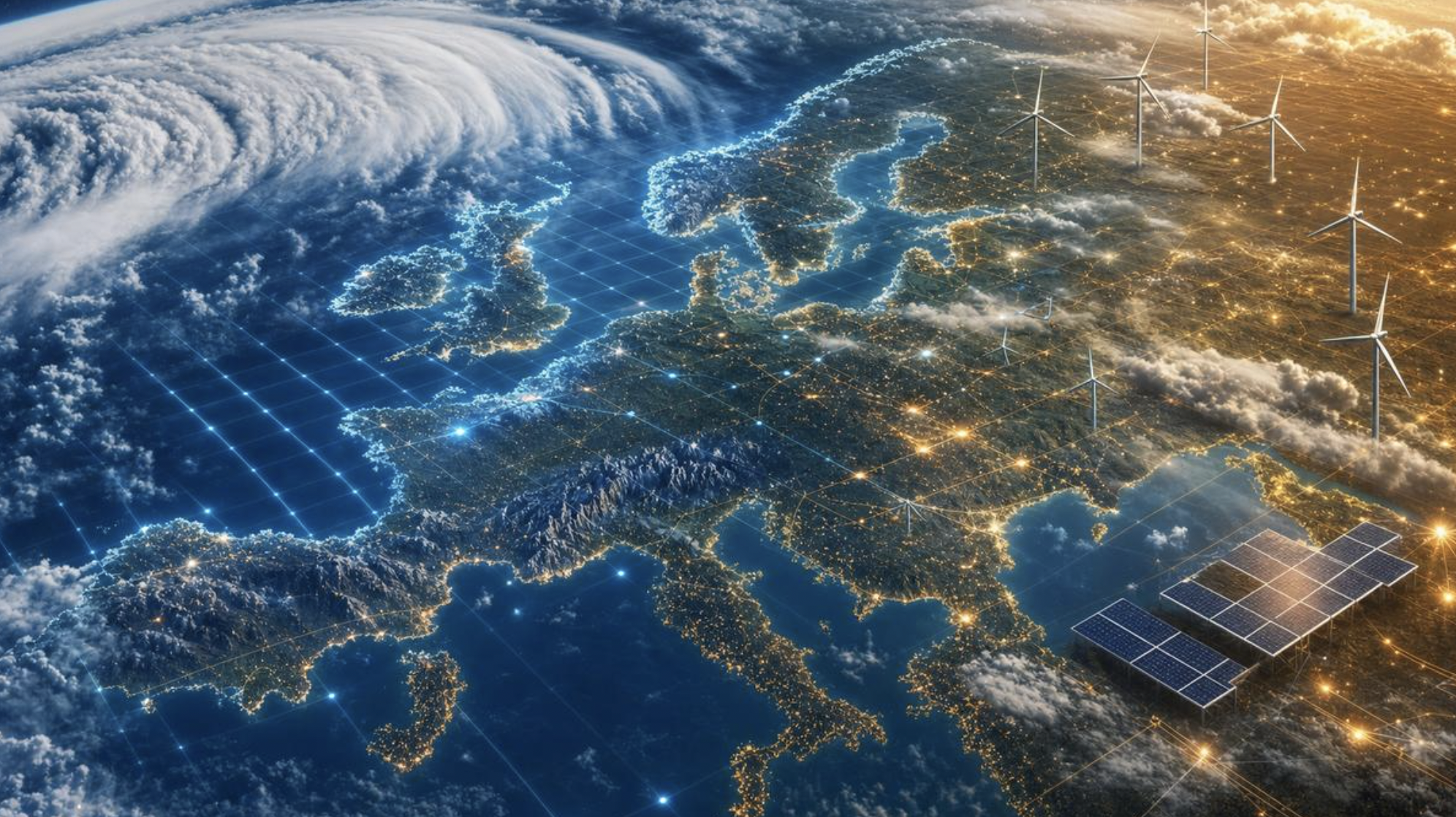
Artificial intelligence is changing how businesses predict weather conditions. Google is advancing this field through AI-powered weather forecasting models. These technologies can help energy companies prepare for changing weather patterns.
Weather forecasts influence electricity production, energy prices, and power grid reliability. Therefore, more accurate predictions can improve decisions across the energy industry. Google WeatherNext 3 represents an important topic in the development of AI-driven weather intelligence.
However, understanding its potential requires examining how weather forecasting works. It also helps explain why renewable energy companies increasingly need better predictions.
What Is Google WeatherNext 3?
Google WeatherNext 3 refers to the next-generation WeatherNext AI forecasting technology discussed in the context of Google’s weather research. Before assuming this version is officially available, check the company’s announcements and published technical materials.
Google’s broader WeatherNext family uses machine learning to generate weather forecasts. These models aim to provide useful predictions faster than many traditional forecasting workflows.
Conventional forecasts are largely built using numerical models that simulate atmospheric conditions. These systems use mathematical equations, atmospheric observations, and powerful computing resources. AI-based systems take a different approach, learning relationships from records of past weather.
As a result, AI can generate forecasts efficiently after training. Some models generate several plausible forecasts, giving users a clearer picture of uncertainty instead of presenting a single outcome as certain.
How AI Weather Forecasting Works
AI weather forecasting combines historical observations with machine learning techniques. The system learns relationships between atmospheric conditions and subsequent weather changes.
Learning From Historical Weather Data
Weather models can train on large datasets containing temperature, wind speed, humidity, pressure, and precipitation. These observations help AI identify patterns that influence future conditions.
For example, a model may learn how atmospheric pressure changes relate to storms. The system draws on those learned patterns to estimate what conditions may come next.
Nevertheless, forecast quality depends on training data, model design, and evaluation methods. AI predictions also require careful validation against real-world observations.
Generating Faster Weather Predictions
Traditional forecasting systems can require substantial computing power. AI models may reduce the time needed to generate certain forecasts.
This could allow energy providers to access refreshed weather guidance sooner. This advantage becomes particularly valuable when conditions change unexpectedly.
However, faster predictions do not automatically guarantee greater accuracy. Users must evaluate forecast performance across different locations and weather conditions.
Why Weather Forecasting Matters to the Energy Market
Weather directly affects electricity demand and renewable energy generation. Therefore, energy companies need dependable forecasts to balance supply and consumption.
Predicting Renewable Energy Production
Solar farms depend on sunlight, while wind farms depend on wind conditions. Cloud cover, storms, and changing wind speeds can affect their electricity output.
AI forecasting can help operators estimate these changes. For instance, a solar farm may adjust its generation expectations when clouds approach.
Similarly, wind farm operators can prepare for periods of stronger or weaker winds. More accurate forecasts can inform operational schedules, maintenance decisions, and strategies for trading electricity.
Managing Electricity Demand
Temperature changes can significantly influence electricity consumption. During heatwaves, households and businesses often increase air conditioning use. Likewise, cold weather can raise heating demand.
AI weather forecasts can help utilities estimate these demand changes. Consequently, grid operators can prepare suitable generation and reserve capacity.
Better planning may reduce the risk of supply shortages. It can also help utilities avoid unnecessary operating costs.
Supporting Electricity Price Forecasts
Weather conditions can influence electricity prices through supply and demand. For example, reduced wind generation may increase reliance on other power sources.
Meanwhile, extreme temperatures can raise consumption across entire regions. These conditions may create additional pressure on electricity markets.
AI weather data can improve the weather inputs used by market forecasting systems. However, prices also depend on fuel costs, transmission constraints, regulations, and market behavior.
How Energy Companies Could Use WeatherNext Technology
Advanced weather intelligence could support several energy-sector operations. The benefits would depend on forecast availability, accuracy, and integration with existing systems.
Improving Grid Stability
Electricity grids must balance supply and demand continuously. Sudden shifts in renewable power output can make these decisions harder.
More timely forecasts could help grid operators prepare alternative power sources. They could also improve reserve planning during challenging weather conditions.
Nevertheless, forecasting remains one part of grid management. Storage, transmission capacity, flexible generation, and demand response remain essential.
Optimizing Battery Storage
Battery operators decide when to store electricity and when to release it. Weather forecasts can help them anticipate renewable generation and future demand.
For example, expected sunshine may signal stronger solar production during the afternoon. Operators could prepare storage systems to capture surplus electricity.
Later, batteries could supply electricity when solar generation declines. Accurate forecasts may support better scheduling, although market prices and battery limitations also matter.
Reducing Operational Risks
Severe weather can disrupt energy infrastructure. Storms, extreme heat, and high winds may affect power lines and generation facilities.
Improved forecasts could help operators prepare maintenance teams and emergency resources. They may also support decisions about inspections and preventive measures.
However, companies should combine AI predictions with established warning systems. They must also account for uncertainty and rapidly developing weather events.
The Benefits and Limitations of AI Weather Forecasting
AI forecasting offers several potential advantages for energy businesses.
- Faster predictions: Some AI models can generate forecasts efficiently.
- Improved planning: Weather data can help refine projections for both power production and consumer demand.
- Renewable integration: Forecasts can help manage variable wind and solar output.
- Operational efficiency: Better preparation may reduce avoidable costs.
- Risk awareness: Multiple scenarios can support contingency planning.
Despite these benefits, AI forecasting still faces important challenges.
First, models can struggle with unusual weather events. Second, forecast quality may vary across regions and prediction periods. Third, inaccurate predictions can lead to poor operational decisions.
Furthermore, energy companies need reliable data pipelines and trained staff. They must also integrate forecasts with existing trading and grid management systems.
What Google WeatherNext 3 Could Mean for the Future
AI-powered weather forecasting could become increasingly important as electricity systems evolve. Renewable energy expansion makes accurate weather predictions more valuable.
For example, electricity markets with substantial solar and wind generation face greater exposure to changing weather. Better forecasts could help market participants prepare for production fluctuations.
Additionally, energy companies may combine weather predictions with demand forecasting and energy storage software. These systems could support more informed operational decisions.
Still, the benefits of WeatherNext 3 specifically depend on its verified capabilities and availability. Businesses should review official technical documentation before selecting it for commercial use.
Conclusion
Google’s WeatherNext research highlights the growing role of AI in weather forecasting. Such tools may help energy businesses prepare for fluctuations in renewable output, shifts in usage, and potential operating challenges.
However, AI forecasts cannot eliminate uncertainty or replace reliable energy infrastructure. Their value depends on accuracy, integration, and practical decision-making.
As clean energy becomes more widespread, sophisticated weather forecasting may prove increasingly valuable. Energy companies should assess confirmed solutions and trial them to see whether they suit their day-to-day requirements.