

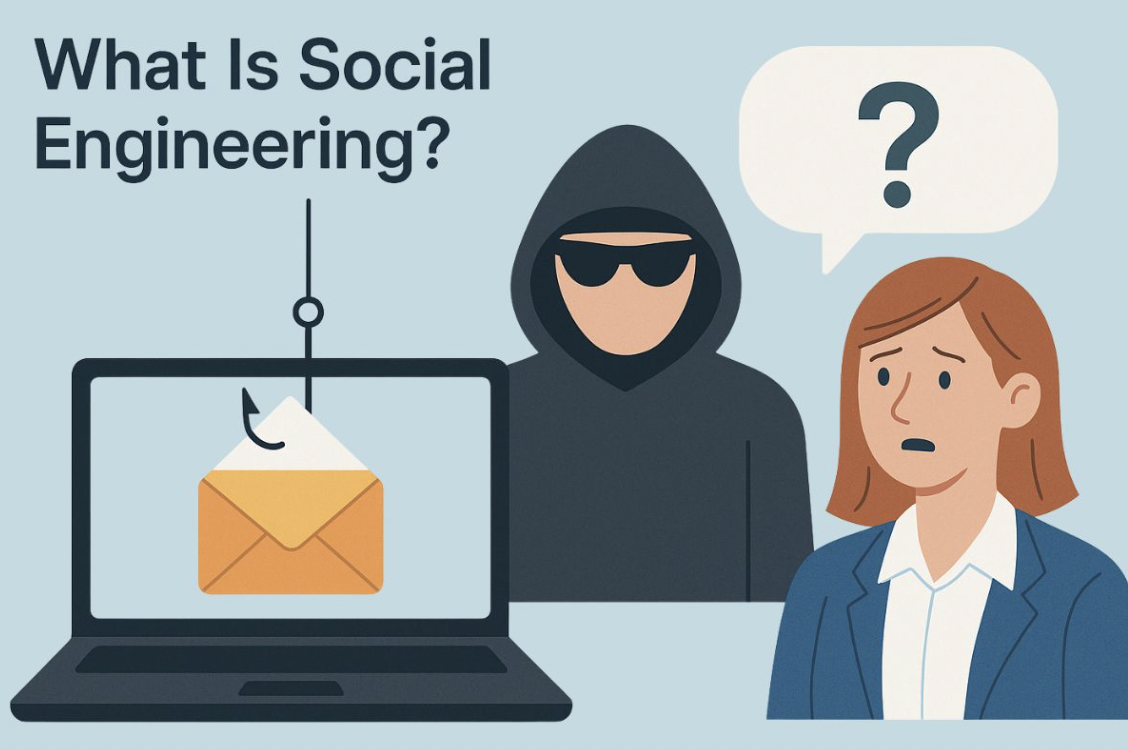
A social engineering attack is one of the most dangerous cybersecurity threats facing businesses today. Instead of hacking software or breaking through firewalls, cybercriminals manipulate people into giving away confidential information. This makes human error one of the weakest links in any organization’s security.
Understanding what is social engineering attack and how businesses get fooled is essential because these attacks continue to increase worldwide. Criminals target employees, managers, and even executives by pretending to be trusted individuals or organizations. Once trust is established, victims often reveal passwords, financial information, or sensitive company data without realizing they have been deceived.
The good news is that social engineering attacks are preventable. With proper awareness, employee training, and security procedures, organizations can significantly reduce their risk.
What Is a Social Engineering Attack?
A social engineering attack is a cybercrime technique that tricks people into revealing confidential information or performing actions that benefit an attacker.
Unlike traditional hacking, social engineering focuses on human psychology rather than technical vulnerabilities. Attackers rely on emotions such as trust, fear, curiosity, urgency, or sympathy.
For example, an employee might receive an email claiming to be from the company’s IT department requesting an urgent password reset. Believing the message is legitimate, the employee enters login credentials into a fake website.
The attacker then gains unauthorized access to company systems.
Why Social Engineering Works
Cybercriminals understand that people naturally trust familiar names and authority figures.
Several psychological factors make these attacks successful:
- Trust in well-known brands
- Fear of losing access to accounts
- Urgency that pressures quick decisions
- Curiosity about unexpected files
- Desire to help coworkers or managers
Even experienced professionals can become victims when attackers create convincing scenarios.
Common Types of Social Engineering Attacks
Phishing
Phishing is the most common social engineering attack.
Attackers send fake emails pretending to come from banks, software companies, or employers. These emails usually contain malicious links or attachments designed to steal login credentials.
Spear Phishing
Unlike regular phishing, spear phishing targets specific individuals.
The attacker researches the victim and creates personalized emails that appear highly believable.
Because the messages contain personal details, victims are much more likely to trust them.
Baiting
Baiting uses an attractive offer to lure victims.
Examples include:
- Free software downloads
- USB drives left in office parking lots
- Fake giveaways
- Exclusive discounts
Once accessed, malware is installed on the victim’s device.
Pretexting
Pretexting involves creating a believable story.
For instance, an attacker may pretend to be an HR representative requesting employee records or a bank employee verifying account information.
The victim willingly shares confidential data because the request appears legitimate.
Tailgating
Tailgating occurs when an unauthorized individual follows an employee into a secure building.
Instead of forcing entry, the attacker simply asks someone to hold the door open.
This simple trick can bypass expensive physical security systems.
10 Warning Signs Businesses Should Never Ignore
Businesses should train employees to recognize these common warning signs:
- Unexpected requests for passwords
- Urgent financial transfer instructions
- Poor grammar and spelling
- Unknown email addresses
- Suspicious attachments
- Requests to bypass security procedures
- Offers that seem too good to be true
- Pressure to act immediately
- Requests for confidential customer data
- Unexpected phone calls requesting verification
Recognizing these signs early can prevent costly security incidents.
How Businesses Get Fooled
Many organizations invest heavily in cybersecurity software but overlook employee awareness.
Businesses often become victims because of:
- Weak security training
- Reused passwords
- Lack of multi-factor authentication
- Poor email verification
- Inadequate access controls
- Outdated security policies
Attackers continuously adapt their techniques, making ongoing employee education essential.
Best Ways to Prevent Social Engineering Attacks
Organizations should combine technology with employee awareness.
Effective prevention strategies include:
Conduct Regular Security Training
Employees should learn how to identify phishing emails, suspicious phone calls, and fake websites.
Training should include real-world examples and simulated phishing exercises.
Enable Multi-Factor Authentication
Multi-factor authentication adds an additional verification step, making stolen passwords far less useful.
Verify Every Request
Employees should independently verify requests involving:
- Money transfers
- Password resets
- Customer information
- Payroll changes
A quick phone call using a trusted number can stop many attacks.
Keep Software Updated
Regular software updates close security vulnerabilities that attackers may exploit after obtaining access.
Limit User Permissions
Employees should only have access to the systems necessary for their jobs.
Restricting permissions reduces the damage if an account is compromised.
Create an Incident Response Plan
Every business should know exactly what to do if a social engineering attack succeeds.
The response plan should include:
- Reporting procedures
- Password resets
- Device isolation
- Security investigation
- Customer notification if required
Preparation minimizes downtime and financial loss.
Conclusion
Understanding what is social engineering attack and how businesses get fooled is essential in today’s digital world. Cybercriminals continue to refine their tactics, but organizations that invest in employee education and strong cybersecurity practices are far better prepared to defend themselves.
Technology alone cannot stop every attack. Employees remain the first line of defense, and informed teams are much less likely to fall for scams. By recognizing warning signs, verifying unusual requests, and following established security policies, businesses can protect their data, customers, and reputation from costly cyber threats.
Frequently Asked Questions
1. What is the most common social engineering attack?
Phishing remains the most common attack because it is inexpensive, scalable, and highly effective.
2. Can small businesses become victims?
Yes. Small businesses are frequently targeted because attackers assume they have weaker security.
3. Is antivirus software enough?
No. Antivirus software helps detect malware, but it cannot prevent employees from voluntarily sharing sensitive information.
4. How often should employees receive security training?
Experts recommend cybersecurity awareness training at least every six to twelve months, along with regular phishing simulations.
5. What information do attackers usually want?
Attackers commonly seek passwords, banking details, customer information, employee records, and confidential business documents.
6. How can companies reduce risk?
Strong passwords, multi-factor authentication, employee education, software updates, and clear verification procedures all help reduce the risk of social engineering attacks.