

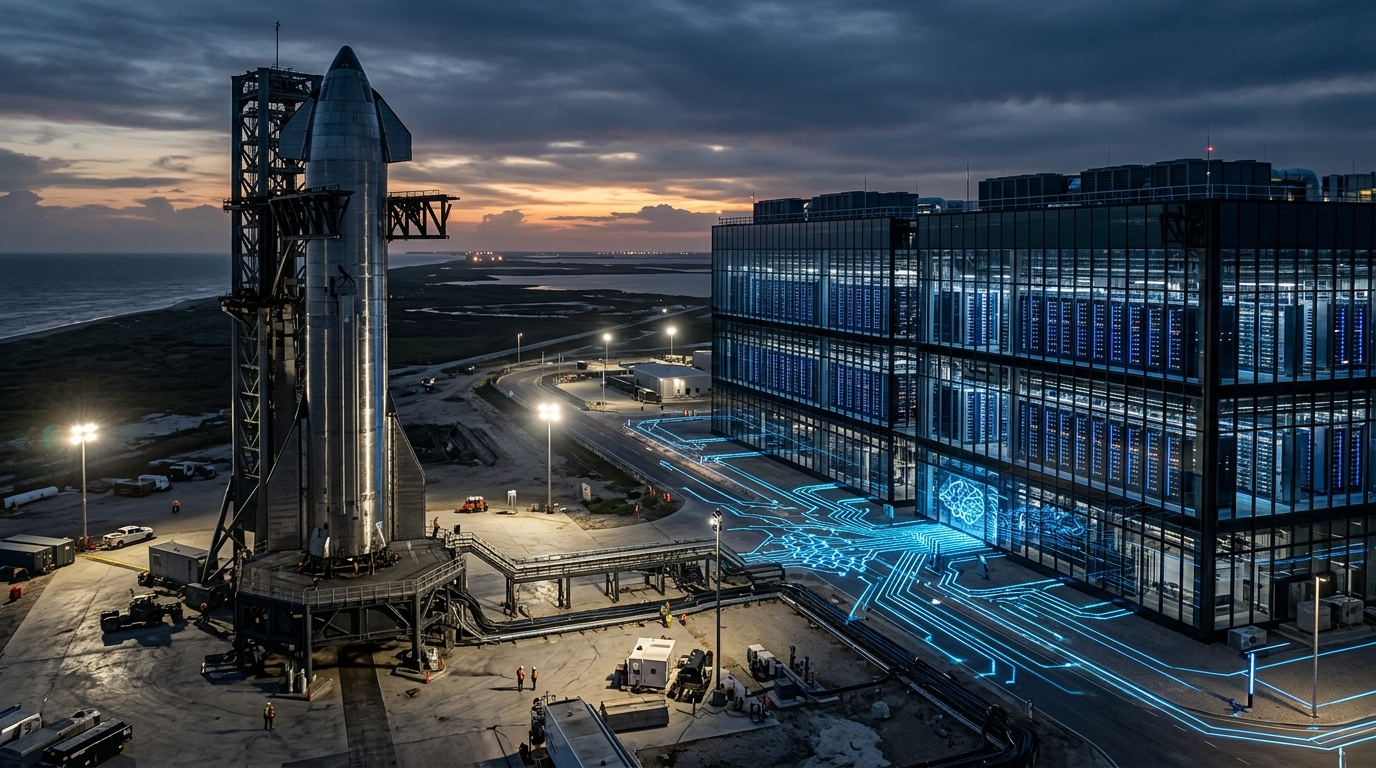
SpaceX is rapidly expanding beyond rockets and satellite internet. Its artificial intelligence business has become a major source of revenue. In the third quarter of 2026, the company reported approximately $7.56 billion in AI-related revenue. This represented an extraordinary increase compared with earlier periods. According to recent earnings coverage, the AI division has become SpaceX’s largest revenue segment.
The results highlight a major shift in the company’s business strategy. Although SpaceX remains famous for space exploration, artificial intelligence now plays a central role. Several factors explain this remarkable financial performance.
How SpaceX AI Revenue Reached $7.6 Billion
SpaceX reported total third-quarter revenue of approximately $14.6 billion. Meanwhile, its AI division generated $7.56 billion. Consequently, artificial intelligence contributed more than half of the company’s quarterly revenue.
The business has benefited from growing demand for computing infrastructure. AI companies need powerful systems to train models and operate applications. Therefore, access to computing capacity has become increasingly valuable.
SpaceX has invested heavily in infrastructure to serve this market. Its expanding computing capacity allows the company to support demanding AI workloads. Additionally, its software products create opportunities to attract more customers.
According to SpaceX’s third-quarter earnings release, the company achieved 1.7 gigawatts of installed computing capacity by September 30, 2026.
Why AI Infrastructure Is Driving Revenue Growth
Modern AI systems require enormous computing resources. Companies need specialized chips, reliable electricity, advanced cooling, and extensive data-center infrastructure. However, building these systems independently can require substantial capital.
SpaceX can generate revenue by providing computing capacity to other businesses. As a result, customers can access powerful infrastructure without building every component themselves.
Furthermore, demand for AI computing continues to attract technology companies. Businesses developing advanced models need reliable capacity to support their operations.
This creates an opportunity for SpaceX to establish recurring commercial relationships. Instead of relying exclusively on rocket launches, the company can serve customers throughout the year.
Nevertheless, infrastructure expansion requires careful financial management. Building and operating large computing facilities involves significant expenses. Therefore, revenue growth alone cannot establish long-term profitability.
SpaceX Super Intelligence Expands Beyond Traditional Space Business
SpaceX has repositioned its AI operations under the Super Intelligence name. This business combines computing infrastructure with AI models and software applications.
The strategy connects several technologies within one corporate structure. For example, computing capacity supports model development and commercial AI services. Meanwhile, software applications help bring these capabilities to customers.
Consequently, SpaceX can pursue multiple revenue opportunities across the AI market.
Its growing AI business also changes how investors may evaluate the company. Previously, many observers focused primarily on rockets, spacecraft, and Starlink. Now, AI infrastructure represents another major component of its financial performance.
However, success will depend on the company’s ability to convert its technological investments into sustainable earnings.
How Cursor and Grok Support the AI Strategy
Software products can help SpaceX expand its presence beyond infrastructure services. Grok, associated with Elon Musk’s AI ecosystem, provides conversational AI capabilities. These tools can support research, content creation, coding, and business workflows.
Meanwhile, Cursor offers AI-powered coding assistance for software developers. Its technology helps programmers understand code, generate solutions, and complete development tasks more efficiently.
By combining software products with computing infrastructure, SpaceX can address different customer needs. For instance, developers may use AI coding tools while businesses purchase computing capacity for their own applications.
Additionally, this approach could create opportunities for cross-selling products and services. Customers using one offering may eventually adopt other products within the ecosystem.
Nevertheless, competition remains intense. Established technology companies continue investing in AI models, cloud platforms, and developer tools. SpaceX must therefore demonstrate consistent product quality and customer value.
Starlink Remains an Important Part of SpaceX Revenue
Despite the rapid AI expansion, Starlink remains a significant business. The satellite internet service provides connectivity to consumers, businesses, and government customers.
SpaceX reported approximately $5.25 billion in connectivity revenue during the third quarter. This performance reflects continued demand for satellite broadband services.
Unlike some AI infrastructure contracts, subscription-based connectivity can generate recurring revenue. Therefore, Starlink provides an important foundation for the company’s broader business strategy.
Furthermore, SpaceX can serve customers across multiple markets. Its space operations support launches, while Starlink provides internet access. At the same time, the company’s AI unit is working to meet growing demand for computing power and software.
This diversification could reduce dependence on any single source of income. However, each business faces different costs, competitive pressures, and operational challenges.
What the AI Revenue Surge Means for SpaceX Investors
The latest results demonstrate the financial potential of AI infrastructure. SpaceX reported approximately $14.6 billion in total revenue, representing 161% year-over-year growth.
Additionally, the company reported $4.4 billion in net income. Its adjusted EBITDA reached approximately $8.8 billion during the quarter.
These figures suggest that SpaceX is developing a broader business model. However, investors should examine capital spending alongside revenue growth.
The company reported approximately $19.6 billion in capital expenditures during the quarter. Much of this investment supported its expanding AI operations.
Consequently, infrastructure spending remains a major consideration. Strong revenue growth may create opportunities, but future returns depend on operating efficiency and customer demand.
Investors should also consider competition, financing requirements, and changing AI market conditions. Therefore, one exceptional quarter does not guarantee continued growth.
The Challenges Behind SpaceX’s AI Expansion
SpaceX faces several challenges as it expands its AI business. First, computing infrastructure requires substantial investment. Facilities must support reliable electricity, cooling, networking, and specialized hardware.
Second, competitors are expanding their own computing capacity. Major cloud providers already serve thousands of businesses worldwide. Therefore, SpaceX must offer competitive pricing and dependable performance.
Third, AI demand could change over time. Companies may adjust their spending as technology improves or economic conditions shift.
Finally, rapid expansion creates operational complexity. SpaceX must manage infrastructure, software development, and existing space operations simultaneously.
Nevertheless, strong customer demand could justify continued investment. The key question is whether future revenue will grow faster than the costs required to support it.
Conclusion: SpaceX Is Becoming a Major AI Infrastructure Player
SpaceX’s $7.6 billion in third-quarter AI revenue highlights a significant transformation. Artificial intelligence now represents a major part of its business model.
Computing infrastructure, software applications, Grok, and Cursor provide several potential growth drivers. Meanwhile, Starlink continues generating substantial connectivity revenue.
However, sustaining this performance will require disciplined investment and strong customer relationships. The company must also navigate competition and the high costs of expanding AI infrastructure.
Ultimately, SpaceX’s next chapter may depend as much on computing and artificial intelligence as on rockets. How well it manages these different operations may have a significant impact on its financial results over the next few years.