

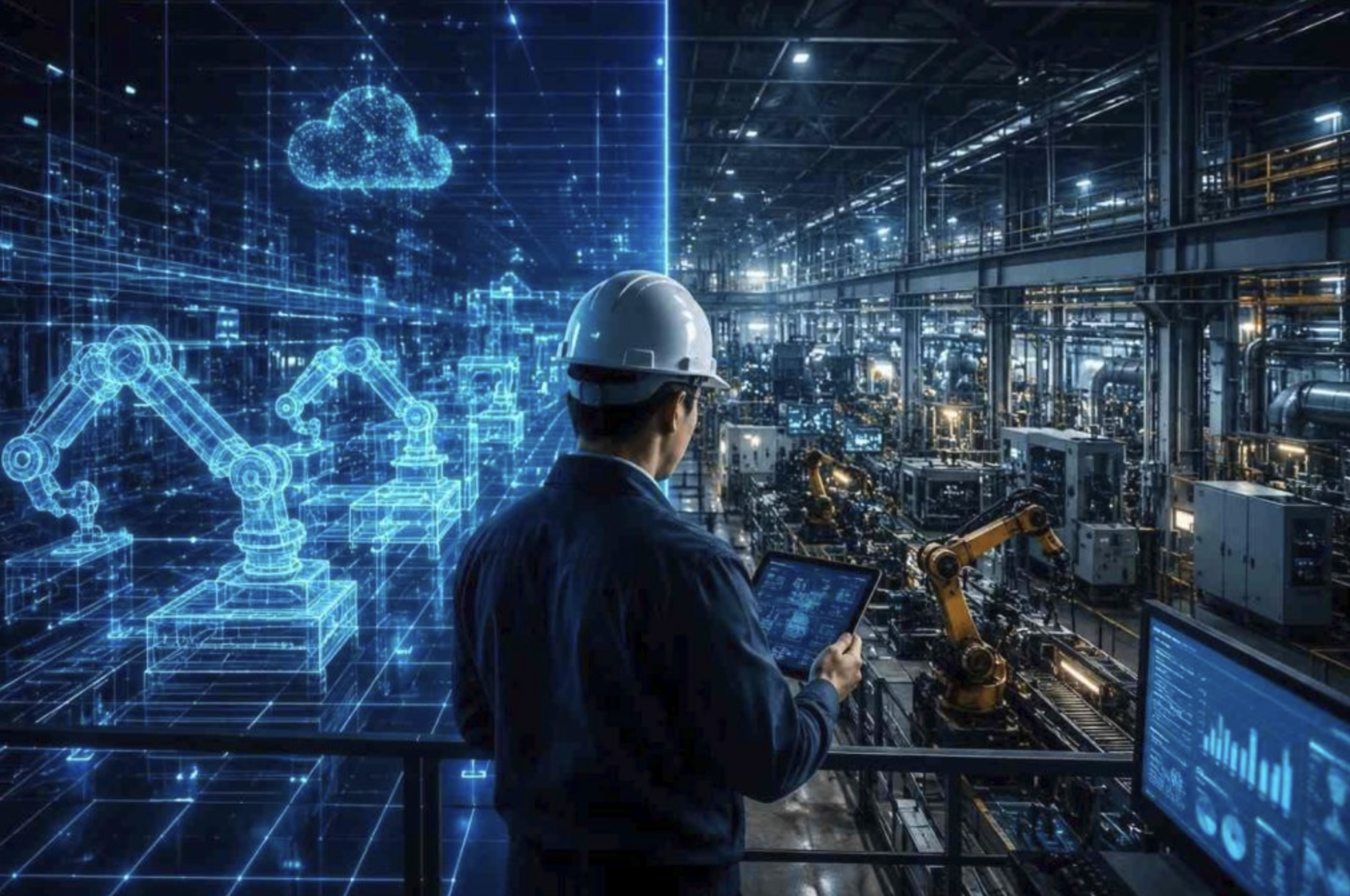
Engineers used to rely on physical prototypes and educated guesswork to predict how a machine, building, or system might behave under real-world stress. Digital twins have changed this by creating a continuously updated virtual replica of a physical object or process, fed by real sensor data, allowing engineers to test scenarios, predict failures, and optimize performance without touching the actual physical asset at all.
This technology has moved well beyond its original manufacturing roots, now appearing across healthcare, urban planning, and logistics. Understanding what genuinely separates a digital twin from a simple simulation or 3D model clarifies why this approach has attracted such significant investment across so many different industries.
What Separates a Digital Twin From an Ordinary Simulation
A traditional simulation models how something might behave under certain assumed conditions, built once and used to answer a specific question. A digital twin goes considerably further, maintaining a continuous, live connection to its physical counterpart through sensor data, meaning the virtual model updates in near real time as the actual physical object changes, ages, or experiences new conditions.
This ongoing synchronization is what makes a digital twin genuinely useful for operational decision-making rather than just one-time analysis. Engineers can observe how a specific physical machine is actually performing right now, not merely how a generic version of that machine might theoretically perform under idealized conditions that rarely match messy, unpredictable reality.
Core Elements That Define a True Digital Twin
- A virtual model that mirrors a specific physical object or system
- Continuous data feeds from sensors monitoring the physical counterpart
- Real-time or near-real-time synchronization between physical and virtual states
- The ability to run predictive scenarios based on current, actual conditions
How Manufacturing Pioneered This Technology
Manufacturing plants were among the earliest adopters of digital twin technology, using virtual replicas of production lines and individual machines to identify inefficiencies without disrupting actual physical operations. Engineers could test a proposed change to a production process against the digital twin first, catching potential problems before ever touching the real, physical line.
Predictive maintenance emerged as one of the most valuable applications within this space, since a digital twin fed by continuous sensor data can flag early signs of equipment wear long before a physical failure would otherwise become apparent to a human inspector. This shift from reactive repairs, fixing equipment after it breaks, to predictive maintenance, addressing problems before they cause a costly, disruptive failure, has saved manufacturers substantial money and unplanned downtime.
- Testing proposed process changes virtually before implementing them physically
- Predictive maintenance catching equipment wear before failures actually occur
- Reduced unplanned downtime through earlier, more accurate problem detection
- Optimization of production line layouts without disrupting ongoing operations
Healthcare’s Growing Use of Personalized Digital Twins
Healthcare researchers have begun exploring digital twins of individual patients, built from medical imaging, genetic data, and ongoing health monitoring, to model how a specific person’s body might respond to different treatment options before actually administering them. This personalized approach differs meaningfully from generic clinical guidelines built around average patient outcomes.
Cardiac digital twins represent one of the more advanced applications currently in use, modeling an individual patient’s heart based on their specific anatomy and function, allowing doctors to test how a particular device or surgical approach might perform for that exact patient before committing to an actual procedure with real, irreversible consequences.
- Personalized treatment modeling based on an individual patient’s specific data
- Cardiac digital twins testing device and surgical approaches before real procedures
- Reduced trial-and-error in treatment selection compared to generic clinical guidelines
- Ongoing research expanding applications into additional areas of personalized medicine
Smart Cities Building Digital Twins of Entire Urban Areas
Urban planners have begun constructing digital twins of entire cities, incorporating traffic patterns, energy usage, building infrastructure, and environmental data into a unified virtual model. This allows planners to test the impact of a proposed new building, road change, or public transit route before committing significant public funds to actual construction.
Singapore has built one of the more widely cited examples of this approach, creating a detailed virtual model of the entire city-state that officials use to simulate everything from flood risk to pedestrian traffic flow.
Other major cities have pursued similar projects, recognizing that testing changes virtually first reduces the risk of costly infrastructure mistakes that would be difficult and expensive to reverse once physically built.
- Testing proposed infrastructure changes virtually before physical construction begins
- Simulating traffic flow, energy usage, and environmental factors across an entire city
- Reducing costly infrastructure mistakes through advance virtual testing
- Supporting more informed, data-driven urban planning decisions overall
The Sensor and Connectivity Infrastructure Behind This Technology
Digital twins depend entirely on a steady, reliable stream of sensor data from their physical counterpart, meaning the broader growth of connected devices and improved wireless networks has directly enabled digital twin technology to become practical at scale. Without affordable, reliable sensors capable of transmitting data continuously, a digital twin would quickly become outdated and lose the real-time accuracy that makes it valuable in the first place.
This dependency also means digital twin implementations inherit some of the same challenges facing connected device networks broadly, including sensor reliability, data transmission costs, and the sheer volume of information that needs processing and storing continuously to keep a virtual model genuinely synchronized with its physical counterpart.
- Reliable sensor networks form the essential foundation for accurate digital twins
- Improved wireless connectivity has made continuous data transmission more practical
- Data volume and processing demands scale directly with a twin’s complexity
- Sensor reliability issues can directly degrade a digital twin’s accuracy over time
Where Digital Twin Technology Still Faces Real Obstacles
Building and maintaining an accurate digital twin requires substantial upfront investment in sensors, data infrastructure, and specialized modeling expertise, putting this technology out of reach for many smaller organizations despite its genuine, demonstrated value. Integration with existing legacy systems, particularly in older manufacturing facilities or infrastructure built long before digital twin technology existed, presents another significant practical hurdle.
Data quality also remains a persistent challenge, since a digital twin is only as accurate as the sensor data feeding it. Faulty sensors, transmission gaps, or poorly calibrated equipment can introduce inaccuracies that undermine confidence in the entire virtual model, sometimes in ways that aren’t immediately obvious until a prediction based on that flawed data proves incorrect in practice.
- Substantial upfront investment limits accessibility for smaller organizations
- Legacy system integration presents genuine technical and financial challenges
- Data quality issues from faulty sensors can undermine overall model accuracy
- Specialized expertise required for implementation remains relatively scarce currently
The Role of Cloud Computing in Making This Technology Accessible
Early digital twin implementations required substantial on-premises computing infrastructure to process the enormous data volumes involved, putting this technology largely out of reach for organizations without significant existing technical resources. Cloud computing platforms have changed this considerably, offering the processing power and storage needed to run sophisticated digital twins without requiring a business to build and maintain that infrastructure independently.
This shift toward cloud-based digital twin platforms has lowered the barrier to entry meaningfully, allowing mid-sized manufacturers and other organizations to experiment with digital twin technology without committing to the substantial upfront capital investment that earlier, on-premises implementations typically required.
Several major cloud providers now offer dedicated digital twin services specifically designed to simplify this kind of implementation for businesses lacking specialized internal expertise.
- Cloud platforms have significantly reduced the infrastructure barrier to entry
- Mid-sized organizations can now experiment with digital twins more affordably
- Dedicated cloud services simplify implementation for businesses without specialized expertise
- This accessibility shift continues expanding the range of organizations exploring the technology
How Digital Twins Support Workforce Training and Simulation
Beyond operational monitoring, digital twins increasingly serve as training environments where employees can practice complex procedures on a virtual replica before ever touching actual physical equipment. This application has proven particularly valuable in industries where hands-on training carries genuine safety risk or where physical equipment access remains limited due to cost or scheduling constraints.
Aircraft maintenance technicians, for instance, can practice diagnosing and repairing issues using a digital twin of an engine, gaining valuable hands-on experience without the risk or expense associated with training on actual, operational equipment.
This training application has expanded considerably as digital twin fidelity has improved, allowing virtual practice environments to feel increasingly realistic and genuinely useful for building practical skills that transfer effectively to real-world situations.
- Digital twins provide safe, cost-effective environments for complex procedural training
- This application reduces risk associated with hands-on training on actual equipment
- Improving fidelity has made virtual training increasingly realistic and genuinely useful
- Industries with high training costs or safety concerns particularly benefit from this use
A Concrete Example From the Aviation Industry
Consider a commercial airline maintaining digital twins of individual jet engines within its fleet, each one continuously updated with data from hundreds of sensors monitoring temperature, vibration, and performance throughout every flight.
When one particular engine’s digital twin begins showing subtle patterns associated with early bearing wear, maintenance teams schedule an inspection during the aircraft’s next routine ground time, well before the issue could develop into an actual in-flight problem.
Without this technology, that same engine might have continued flying until a scheduled inspection eventually caught the issue, or worse, until the wear progressed into a more serious, potentially dangerous failure. The airline avoided both an unplanned grounding and the substantially higher repair cost that typically accompanies addressing a problem only after it has already worsened considerably.
Real-World Lessons From Early Digital Twin Failures
Not every digital twin implementation succeeds on its first attempt, and studying documented failures provides valuable lessons for organizations considering their own implementation. Several early manufacturing digital twin projects failed specifically because organizations underestimated the ongoing effort required to keep sensor data clean and properly calibrated, eventually producing a virtual model that drifted noticeably from physical reality without anyone immediately noticing the growing discrepancy.
Other documented failures stemmed from organizations building overly ambitious digital twins covering far more scope than their initial sensor infrastructure could reliably support, resulting in projects that consumed substantial budget without delivering the promised operational insights.
These lessons have informed a more measured, incremental approach among organizations now entering this space, favoring smaller, well-validated pilot implementations before committing to more ambitious, comprehensive digital twin deployments across an entire facility or system.
- Poor ongoing sensor calibration has caused several documented digital twin project failures
- Overly ambitious initial scope has also contributed to failed or underdelivering implementations
- These lessons favor smaller, validated pilots before broader, more ambitious deployment
- Learning from documented failures helps new organizations avoid repeating similar mistakes
What the Future Likely Holds for This Technology
As sensor costs continue declining and artificial intelligence tools improve at interpreting the enormous data volumes digital twins generate, this technology is likely to become accessible to a considerably wider range of organizations beyond the large manufacturers and government agencies that have driven early adoption. Smaller manufacturers, individual healthcare providers, and mid-sized municipalities may increasingly find digital twin implementations within realistic reach.
The combination of digital twins with artificial intelligence, allowing virtual models to not just reflect current conditions but actively predict and recommend optimal actions, represents an especially active area of ongoing development, suggesting this technology’s practical applications will likely continue expanding considerably beyond its current, already substantial footprint across industries.
Conclusion
Digital twins have moved from a specialized manufacturing tool into a genuinely versatile technology reshaping how industries approach everything from equipment maintenance to personalized medicine and urban planning.
As the underlying sensor and computing infrastructure continues maturing, this approach to modeling physical reality virtually looks positioned to become an increasingly standard part of how complex systems get designed, monitored, and improved.
Frequently Asked Questions
1. How is a digital twin different from a regular 3D model?
A 3D model is typically static, while a digital twin continuously updates based on real sensor data from its physical counterpart, reflecting current, actual conditions rather than a fixed snapshot.
2. Do small businesses have any realistic access to digital twin technology?
Access has traditionally been limited due to cost, though declining sensor prices and cloud-based platforms are gradually making simplified versions more accessible to smaller organizations.
3. Can a digital twin exist for something that doesn’t physically exist yet?
Yes, digital twins are sometimes built during a design phase to test a product before manufacturing, evolving into a live twin once the physical version actually gets built and deployed.
4. How accurate are digital twins compared to their physical counterparts?
Accuracy depends heavily on sensor quality and data completeness, and well-maintained digital twins can closely mirror physical reality, though gaps or faulty sensors can introduce meaningful inaccuracies.
5. Is digital twin technology only useful for large, complex physical systems?
While most current applications involve complex systems, the underlying concept can scale down to smaller applications too, as implementation costs continue to decrease over time.
6. What industries are expected to adopt digital twins next?
Beyond current leaders like manufacturing and healthcare, retail supply chains, agriculture, and energy grid management are increasingly exploring digital twin applications for their own specific needs.
7. How do digital twins connect with artificial intelligence?
AI increasingly analyzes the data streams feeding a digital twin, helping identify patterns and predict outcomes automatically rather than requiring engineers to manually interpret every data point themselves.
8. Can a digital twin help reduce a company’s environmental footprint?
Yes, many organizations use digital twins to model energy consumption and identify inefficiencies, allowing them to test sustainability improvements virtually before implementing costly physical changes.
9. Do digital twins require ongoing maintenance after initial setup?
Yes, keeping a digital twin accurate requires continuous sensor data feeds and periodic model refinement, since a twin that stops receiving updates gradually loses its value as conditions change.
10. What role does artificial intelligence play in the future of digital twins?
AI is expected to increasingly automate the interpretation of digital twin data, moving from simple monitoring toward systems that autonomously recommend or even implement optimizations based on observed patterns.