

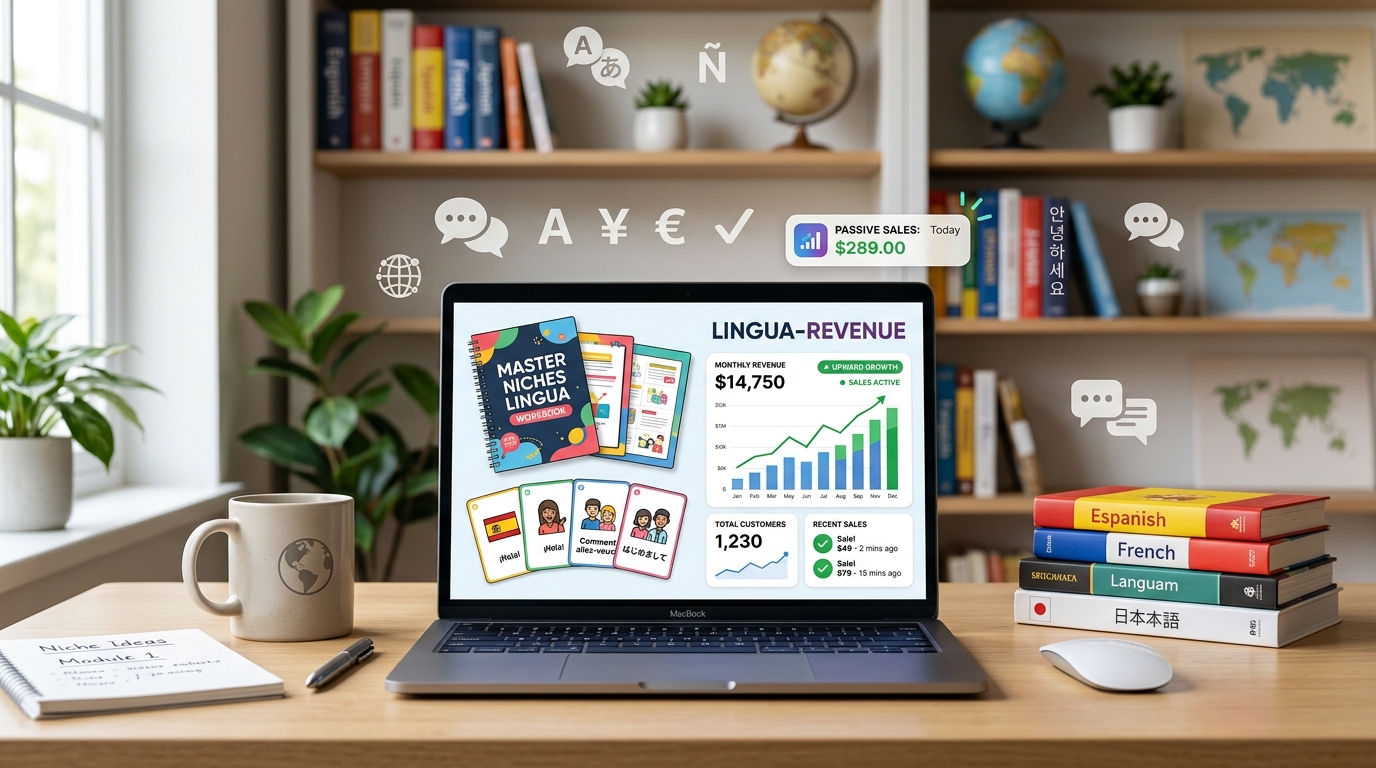
Learning a language can feel overwhelming for beginners. Fortunately, focused resources can make the process easier. A niche language learning resource solves one specific problem. It also creates an opportunity for passive income.
Instead of targeting everyone, focus on a small audience. Then, create something genuinely useful for that audience.
Choose a Profitable Language Learning Niche
First, identify a specific language learning problem. Avoid creating a generic language course immediately.
For example, target English learners preparing for job interviews. Alternatively, create resources for travelers learning basic Japanese.
You could also focus on business vocabulary, pronunciation, or conversational phrases. A narrow topic makes your resource easier to market.
Moreover, niche audiences often have stronger buying intent.
Research Your Target Language Learners
Next, learn what your audience actually needs. Search forums, social media groups, and question websites.
Look for repeated questions and common frustrations. These problems can become excellent product ideas.
For instance, learners may struggle with everyday conversations. Others might need help remembering vocabulary.
Therefore, collect real questions before creating your product.
Create a Simple Language Learning Product
You do not need expensive software to start. A useful digital product can remain simple.
Consider creating:
- Language learning worksheets
- Vocabulary flashcards
- Printable study guides
- Pronunciation cheat sheets
- Conversation practice PDFs
- Grammar reference guides
- Language learning planners
- Digital vocabulary notebooks
Choose one format that matches your audience.
Furthermore, make the resource easy to use without additional instructions.
Solve One Specific Learning Problem
Successful digital products usually solve clear problems. Therefore, avoid adding unnecessary information.
Suppose your audience struggles with Spanish conversation. Create a practical conversation phrasebook.
Include common greetings, questions, responses, and pronunciation tips. Add realistic examples for everyday situations.
As a result, learners can immediately apply what they learn.
Make Your Resource Highly Practical
People buy resources that save time and reduce confusion. Consequently, focus on practical learning instead of excessive theory.
Use simple explanations and real-world examples. Include exercises that encourage active practice.
You can also add checklists and quick-reference pages. These features increase the product’s everyday usefulness.
Additionally, organize information into short, manageable sections.
Add Value With Bonus Materials
A strong bonus can make your product more attractive. However, keep bonuses closely related to the main resource.
For example, add a vocabulary tracker to a language workbook. You could also include pronunciation audio files.
Another option involves printable revision cards. These additions can increase perceived value without significant extra work.
Optimize Your Language Learning Resource for Search
SEO can help your product attract organic traffic. Start by researching relevant language learning keywords.
Target specific phrases with clear search intent. Examples include “French vocabulary for travelers” and “Japanese phrases for beginners.”
Then, use these keywords naturally in your content. Include them within titles, headings, descriptions, and supporting pages.
However, never sacrifice readability for keyword placement.
Create a Search-Friendly Sales Page
Your sales page should explain the product clearly. Start with the main problem your resource solves.
Next, explain who should use it. Then, highlight the most valuable features.
Include screenshots or sample pages when possible. These visuals help potential buyers understand your product.
Also, answer common questions before visitors reach checkout.
Use Content Marketing to Generate Traffic
Passive sales require consistent traffic. Content marketing can provide that traffic over time.
Create helpful blog posts around your niche. For example, write articles about vocabulary, grammar, and study techniques.
Link those articles naturally to your digital resource. Consequently, helpful content can become a long-term sales channel.
Pinterest, YouTube, and search engines can also support your strategy.
Automate Your Digital Product Sales
Automation makes passive selling possible. Choose a platform that automatically delivers purchased files.
After payment, customers should receive instant access. You can also automate confirmation emails.
Furthermore, create an FAQ page to reduce repetitive support requests.
A simple automated system can operate while you focus elsewhere.
Build an Email List
An email list gives you direct access to interested learners. Therefore, offer a useful free resource.
For example, provide a free vocabulary checklist. Ask visitors to enter their email before downloading it.
Then, send helpful language learning tips regularly. Eventually, introduce your paid resource naturally.
This approach builds trust before asking for a purchase.
Update Your Language Learning Product
Languages change, and learning preferences evolve. Therefore, review your resource periodically.
Fix outdated examples and grammar explanations. Also, improve confusing sections based on customer feedback.
Small updates can keep your product competitive. They can also create additional value for existing customers.
Turn One Resource Into Multiple Products
A successful resource can become a product collection. For example, start with a vocabulary workbook.
Then, create a pronunciation guide from the same audience research. Later, add conversation cards or study planners.
This strategy lets you reuse your research efficiently. Consequently, one niche can produce several income opportunities.
Focus on Long-Term Passive Income
Passive income does not mean zero effort. Initially, you must research, create, promote, and optimize your resource.
However, digital products can continue selling after publication. Search traffic and evergreen content can support future sales.
Therefore, choose problems that remain relevant for years.
Track Sales and Customer Behavior
Finally, monitor your product performance. Track sales, traffic sources, and customer feedback.
Identify which pages generate the most visitors. Then, improve pages with weak engagement.
Also, observe which products customers prefer. These insights can guide your next digital product.
Final Thoughts
Creating a niche language learning resource can become a practical passive income strategy. The key involves solving one clear problem.
Start with a specific audience and research their needs. Then, create a simple resource that provides immediate value.
Next, optimize your content for search and automate delivery. Finally, improve the product using real customer feedback.
With patience and consistent optimization, one useful resource can become a lasting digital asset.